On Wednesday, OpenAI put a $750 billion price tag on the physical future of AI, a commitment through 2030 that turns model competition into a fight over land, power, chips, and financing.
XOOMAR Intelligence
Analyst Take
The new figure is 25% higher than OpenAI’s estimate earlier this year and is roughly equivalent to Sweden’s GDP, according to TechCrunch. That comparison isn’t just headline bait. It shows how far AI has moved from software economics into nation-scale infrastructure planning.
Wednesday’s $750B Signal: OpenAI Infrastructure Spending Is Now Nation-Scale
OpenAI infrastructure spending is no longer a back-office cost. It is becoming the strategy itself.
The reported $750 billion plan lands as OpenAI’s Stargate data center project “appears to have stalled,” per TechCrunch. That timing matters. If Stargate is moving slower than expected, Project Camellia in Georgia looks less like a side project and more like a reset in how OpenAI secures capacity.
XOOMAR analysis: OpenAI increasingly resembles a hybrid of AI lab, cloud customer, platform operator, data center developer, and energy buyer. That’s a very different company from one defined mainly by model releases.
Readers tracking OpenAI’s product layer can see the downstream pressure in our prior coverage of Six Agent Keys Turn OpenAI AI Keypad Into Coder Bait, ChatGPT Voice Grabs the Desktop and Starts Doing Work, and Satya Nadella’s AI warning. The Georgia announcement is about the harder part behind that software: making enough compute and electricity available at industrial scale.
Project Camellia Is the First Georgia Test of the $750B Plan
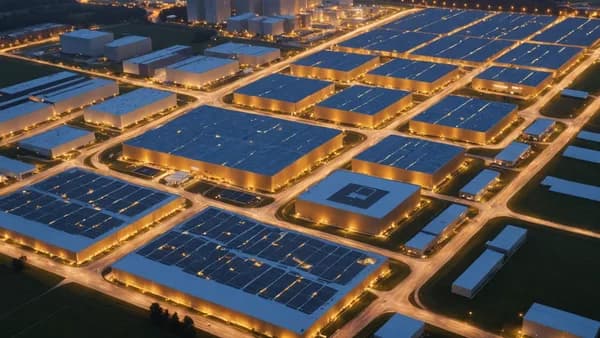
The first named piece of the spending push is Project Camellia, a $20 billion data center campus northwest of Savannah.
| Project Camellia detail | Source-supported figure |
|---|---|
| Planned investment | $20 billion |
| Land footprint | 1,400 acres |
| Power draw | At least 3.2 gigawatts |
| Utility | Georgia Power |
| Capacity availability | 2028 to 2032 |
| Local tax incentive | 50% property tax abatement for 15 years |
OpenAI said it would:
“pay the full cost of the infrastructure and electric-service costs”
That line is crucial because the Georgia Public Service Commission adopted a rule last year aimed at preventing utilities from passing on costs tied to new users drawing more than 100 megawatts. Project Camellia is far above that threshold.
Georgia Power also said OpenAI will cut its power draw by up to 1 gigawatt during high-demand periods on the grid, the kind of constraint behind looming data center power cuts. That demand-response pledge reduces one obvious political risk: a private AI campus soaking up power when the grid is stressed.
XOOMAR analysis: The structure tries to answer the first objection before it becomes a fight. OpenAI wants capacity, Georgia wants investment, and regulators don’t want ordinary ratepayers subsidizing a giant AI load.
The 2028 to 2032 Power Window Puts Megawatts Ahead of GPUs
The most revealing timeline is not when OpenAI says the first model will train. OpenAI did not give that date. The hard timeline is power: Georgia Power’s generating capacity for Project Camellia is expected to become available between 2028 and 2032.
That tells us where the bottleneck sits.
OpenAI infrastructure spending is not just about buying GPUs. The source material points to a broader stack: data center construction, electric-service infrastructure, power procurement, grid connection, cooling needs, networking, storage, and redundancy. The article does not break down the $750 billion by category, so any precise allocation would be speculation.
The same applies to annualized spending. The plan runs through 2030, but the source does not provide a year-by-year schedule. A straight-line annual estimate would be misleading because data center programs spend unevenly. Land, grid work, equipment procurement, and commissioning do not arrive in neat calendar-year chunks.
The sharper takeaway is simpler: OpenAI is committing to infrastructure on a scale where the power queue may matter as much as the chip queue.
December PSC Approval Points to a Gas-Heavy Buildout
Neither OpenAI nor Georgia Power has said how Project Camellia will be powered. TechCrunch asked both companies for specifics and did not immediately receive a reply.
Regulatory filings fill in part of the picture. In December, Georgia Power received PSC approval to produce an additional 9,885 megawatts. The utility told the PSC it expects to have all that capacity contracted by the end of 2026. The OpenAI deal accounts for about a third of it.
Based on Georgia Power filings cited by TechCrunch:
- Natural gas: About 5.8 gigawatts of new capacity will be built or bought from third parties.
- Simple-cycle turbines: About a quarter of that natural gas capacity will come from more polluting simple-cycle turbines.
- Fleet impact: The new fossil fuel capacity will more than double Georgia Power’s natural gas fleet.
- Other sources: The remainder will come from grid-scale batteries and solar.
XOOMAR analysis: This is the core trade-off in OpenAI’s buildout. The company can say it will pay the infrastructure bill, but power sourcing still carries public consequences. A data center campus that draws at least 3.2 gigawatts becomes part of regional energy planning, not just a private corporate project.
Brett Mayo’s Hire Raises the Speed Question
OpenAI has not said when the first GPU at Project Camellia will be turned on. TechCrunch notes that could happen before 2028, partly because OpenAI recently hired Brett Mayo to lead data center construction.
Mayo previously worked at xAI, where he oversaw the Colossus data center in Memphis. That facility was built in record time, according to TechCrunch, but it has also drawn legal scrutiny. A lawsuit filed by the NAACP and the Southern Environmental Law Center alleges harm to local air quality, and TechCrunch reports that the xAI data center has been running dozens of unpermitted natural gas turbines while claiming exemption from federal clean air regulations.
That comparison does not prove Project Camellia will follow the same path. It does show the regulatory risk attached to speed.
XOOMAR analysis: AI companies want data centers built on software timelines. Power systems, permitting, and local air concerns move on infrastructure timelines. The gap between those clocks is where conflict tends to emerge.
Customers, Regulators, and Suppliers Will Read This Differently
The same $750 billion number sends different signals to different groups.
For customers, it suggests OpenAI is trying to secure the capacity needed for more demanding AI services. The source does not provide pricing details, so claims about higher subscription fees or usage costs would be unsupported. Still, XOOMAR analysis says buyers should watch whether premium AI capability becomes more closely tied to compute availability.
For regulators and grid operators, Project Camellia is already a live test of cost allocation, demand management, land use, and power sourcing. The PSC rule on loads above 100 megawatts shows Georgia has already moved to limit who pays for these new users.
For suppliers, OpenAI’s demand is large enough to shape planning decisions. Georgia Power’s 9,885 megawatts capacity approval and expectation that it will be contracted by the end of 2026 show how quickly AI-related load can become central to utility forecasts.
For OpenAI, the risk is capital discipline. The company needs enough infrastructure to avoid being constrained by compute, but the source does not establish how revenue will match the spending plan. That unanswered question sits under the whole announcement.
The 2030 Test for OpenAI Infrastructure Spending
By 2030, OpenAI’s $750 billion plan will be judged less by the headline number than by three pieces of evidence.
First, whether Project Camellia receives power on the expected 2028 to 2032 schedule. Second, whether Georgia Power’s gas-heavy capacity expansion triggers deeper public or regulatory pushback. Third, whether OpenAI can turn massive infrastructure commitments into reliable AI capacity without building more than it can profitably use.
The thesis is clear: OpenAI infrastructure spending has become the clearest signal that the AI race is moving from model demos to physical control of compute, energy, and construction timelines.
The watch item now is Georgia. If OpenAI can build Project Camellia while covering its grid costs, managing peak demand, and avoiding a Colossus-style permitting fight, the $750 billion plan starts to look executable. If power delivery slips, gas sourcing becomes politically toxic, or the first GPUs arrive long before clean capacity is ready, the spending spree will expose the oldest problem in infrastructure: committing capital before the market and the grid prove they can carry it.
Impact Analysis
- OpenAI’s $750 billion commitment shows AI competition is shifting from software to physical infrastructure.
- The stalled Stargate project makes Project Camellia a key test of how OpenAI secures compute capacity.
- AI growth is increasingly tied to land, power, chips, and financing at nation-scale levels.
OpenAI Infrastructure Push: Stargate vs. Project Camellia
| Project | Status or Role | Reported Figure |
|---|---|---|
| Stargate data center project | Appears to have stalled | Not specified |
| Project Camellia | First named Georgia test of the new infrastructure push | $20 billion |
| OpenAI infrastructure commitment through 2030 | Nation-scale AI compute and power buildout | $750 billion |
OpenAI Reported AI Infrastructure Spending
Primary Sources & Disclosures

Written by
XOOMAR Insights Team
Research and Editorial Desk
The XOOMAR Insights Team pairs automated research with human editorial judgment. We track hundreds of sources across technology, fintech, trading, SaaS, and cybersecurity, cross-check the facts, and explain what happened, why it matters, and what to watch next. We do not just rewrite headlines. Every article is fact-checked and scored for reliability before it goes live, and we link back to the original sources so you can verify anything yourself.