
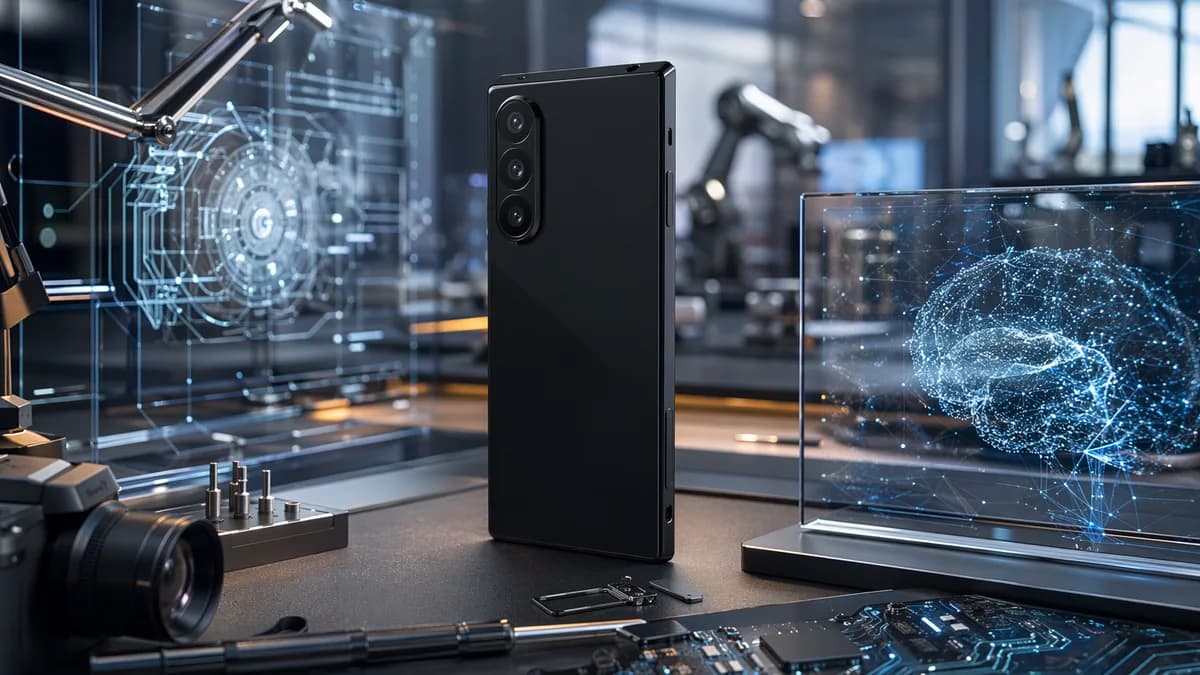
Sony Xperia 1 VIII is Sony’s clearest admission yet that its flagship phone line needs to look less stubborn, while still serving the loyalists who buy Xperia because it refuses to behave like every other premium Android phone.
TechnologyJune 21, 2026· 8 min read· By XOOMAR Insights Team
Sony Xperia 1 VIII Dumps Zoom Trick to Keep Fans Hooked
Updated on June 22, 2026
XOOMAR Intelligence
Analyst Take
73/ 100
4 sources analyzedMedium confidenceTrend10Freshness100Source Trust88Factual Grounding94Signal Cluster20
The new model gets a major visual redesign, drops the continuous optical zoom telephoto that defined the last four generations, and still keeps the 3.5mm headphone jack, microSD card slot, front-facing speakers, and thick bezels, according to The Verge. That mix tells you who this phone is really for. Sony wants broader appeal, but not badly enough to abandon the Xperia faithful.
Sony Xperia 1 VIII loyalists get a redesign without losing the old hardware rituals
The Xperia 1 VIII breaks with a design language that, per The Verge, had made Sony’s Xperia 1 phones look “almost identical” since 2020. The old vertical camera strip is gone. In its place is a blockier camera island and a textured rear finish that gives the device a more severe, tactile look.
That matters because Xperia’s problem has rarely been that it lacked identity. If anything, it had too much of it. Sony phones have long catered to buyers who care about physical camera controls, wired audio, expandable storage, and uninterrupted displays more than they care about chasing whatever design cue dominates the broader flagship market.
Sony didn’t erase that identity. It edited around it.
Still here:
- Headphone jack: A rare feature at this price tier.
- microSD card slot: Still valuable for media-heavy users.
- Front-facing stereo speakers: Housed in those thicker top and bottom bezels.
- Two-stage camera shutter button: A classic Xperia control.
- No camera cutout: The screen remains uninterrupted.
The result is a strange but deliberate compromise: the outside looks newly assertive, while the inside still reads like a checklist for people who never accepted the direction mainstream phones took. If Sony changed the shell but kept the habits, is this reinvention or just better packaging?
Sony’s refusal to drop legacy hardware also fits a broader niche tech pattern. Some buyers still want devices that respect older workflows, as we’ve covered in $179 NTS Radio Player Rescues Old Hi-Fi From Phone Apps. Xperia plays in that same emotional register: physical ports, local files, dedicated controls, fewer forced compromises.
Sony’s camera team traded continuous zoom for a bigger telephoto bet
The biggest technical shift is in the camera system. Sony has dropped the continuous optical zoom telephoto that had set recent Xperia flagships apart and moved to a 2.9x, 70mm-equivalent telephoto with a much larger sensor.
The Verge says the new telephoto uses a 48-megapixel, 1/1.56-inch-type sensor, the same size as the ultrawide sensor and close to the 1/1.35-inch-type main camera sensor. The main, ultrawide, and 12-megapixel selfie camera are otherwise described as unchanged from last year.
“This is definitely Sony’s best phone camera yet”
That line from The Verge is the strongest argument for Sony’s trade. The old continuous zoom system was distinctive, but distinctiveness only matters if the results justify the complexity. XOOMAR analysis: Sony appears to have prioritized image quality and consistency over optical cleverness. The source does not state Sony’s internal reasoning, so cost, thickness, reliability, and manufacturing complexity remain plausible but unconfirmed factors.
The risk is obvious. Xperia fans often prize the oddball hardware because it feels closer to a dedicated camera. Removing a signature feature can look like dilution, even if the new setup takes better pictures. The same tension shows up across enthusiast gear: once a device’s appeal rests on unusual hardware, every simplification feels political. We saw a lighter version of that nostalgia-meets-function dynamic in Game Boy Camera Escapes Game Boy With a $50 Phone Trick, where the charm came from preserving a specific way of making images.
The problem is Sony then undercuts its own cleaner camera pitch with the new AI Camera Assistant. The Verge calls it “dreadful,” saying it frequently throws up AI-suggested edits before a shot is taken and that the suggestions were “markedly worse than the default camera settings.” The feature can be turned off, but its presence says Sony knows manual-first photography is no longer enough for casual flagship buyers. Can Sony court those buyers with AI while still respecting the camera purists who came for control?
The £1,399 price turns Xperia enthusiasm into a hard purchase decision
The Sony Xperia 1 VIII starts at £1,399 / €1,499, roughly $1,850, and rises to £1,849 / €1,999 for the 1TB version. It is not launching in the US, according to The Verge.
That price makes the phone less a mainstream flagship contender and more a loyalty test. The Verge points readers toward alternatives such as Xiaomi’s 17 Ultra and the Vivo X300 Ultra at this level, while also criticizing the Xperia for middling battery life, uneven performance, and limited Android update support.
| Area | Xperia 1 VIII detail | Buyer implication |
|---|---|---|
| Starting price | £1,399 / €1,499 | Premium pricing with little room for weakness |
| Top model | £1,849 / €1,999, 1TB storage | Very expensive unless expandable storage and Sony design matter |
| US launch | No US launch | Harder for US buyers to access through normal channels |
| Battery | 5,000mAh, Sony claims two days | The Verge found daily charging more realistic |
| Charging | 30W max | Slow versus many rivals named in reviews |
| Software support | Four OS updates, six years security support | A concern at this price |
| Display | 6.5-inch, 120Hz OLED, 1080p | Clean screen, but low resolution for the grade |
The performance criticism is especially damaging because the phone uses the Qualcomm Snapdragon 8 Elite Gen 5, the kind of flagship silicon buyers expect to feel effortless. The Verge reports repeated stuttering and slowdowns, especially in the camera or while switching apps, and says the phone became hot during a press event recording session with real-time AI transcription.
That is the worst place for Xperia to stumble. Sony’s pitch depends on control, craft, and media credibility. If the camera app feels sluggish or the phone heats under sustained use, the fan hardware starts carrying too much of the argument. At £1,399, how many compromises can a niche flagship ask buyers to rationalize?
Camera purists, Xperia fans, and casual flagship buyers will grade this phone differently
Longtime Xperia users will likely see the Xperia 1 VIII as reassuring. The headphone jack stayed. The microSD slot stayed. The front speakers stayed. The screen avoids a notch or punch-hole. The shutter button is still there.
Camera purists may be more divided. The larger telephoto sensor appears to deliver better quality, based on The Verge’s review, but the loss of continuous optical zoom removes one of the hardware flourishes that made Xperia feel different. Some users will prefer the stronger, simpler setup. Others will see it as Sony becoming less Sony.
Mainstream premium buyers have a colder calculation. The Verge gave the phone a 6 score and listed “middling battery life,” “uneven performance,” “only four years of Android updates,” and “dreadful AI Camera Assistant” among the negatives. Those are not minor complaints when the starting price is close to £1,400.
Sony’s design choices make more sense if you stop judging the phone as a Galaxy, Pixel, or iPhone rival. XOOMAR analysis: this is a direct-to-faithful product in spirit, even where sold through normal retail channels. It is built for buyers who already understand why a microSD slot matters and who see thick bezels as an acceptable price for front speakers and an uninterrupted display. Does that audience grow when the phone gets more modern, or does it simply become happier with what it already wanted?
Sony’s next test is whether a fan phone can stay premium without getting smaller
The Sony Xperia 1 VIII shows Sony trying to prune the Xperia formula without killing it. The old tall-screen era is gone. The continuous optical zoom is gone. The design has finally moved on. Yet the ports, buttons, bezels, speakers, and creator-coded camera priorities remain.
That makes this phone less a clean relaunch and more a controlled retreat from the parts of Xperia weirdness that no longer seemed to pay off. The new telephoto may be better. The new design is more striking. The software is simpler in places. But Sony still has not solved the central tension: its most loyal buyers reward difference, while premium pricing punishes anything that feels unfinished.
The next signal to watch is not whether Sony copies bigger rivals. The evidence that would strengthen this strategy is narrower: better sustained performance, less intrusive AI, battery life that matches Sony’s claim, and camera gains that make fans stop mourning continuous zoom. The evidence that would weaken it is just as clear: if the faithful complain about lost Xperia character and casual buyers still choose alternatives, the line risks becoming even more boutique than it already is.
Key Takeaways
- Sony is trying to modernize Xperia without abandoning the niche features its loyal users value.
- The loss of continuous optical zoom marks a major shift for a phone line built around camera differentiation.
- The Xperia 1 VIII remains one of the few premium phones still prioritizing wired audio, expandable storage, and an uninterrupted display.
Sony Xperia 1 VIII vs Recent Xperia 1 Models
| Area | Xperia 1 VIII | Recent Xperia 1 predecessors |
|---|---|---|
| Design | Major redesign with a blockier camera island and textured rear finish | Looked almost identical since 2020 with a vertical camera strip |
| Telephoto camera | Drops continuous optical zoom | Continuous optical zoom defined the last four generations |
| Fan-focused hardware | Keeps headphone jack, microSD slot, front-facing speakers, thick bezels, shutter button, and no camera cutout | Known for prioritizing physical controls, wired audio, expandable storage, and uninterrupted displays |
Sources

Written by
XOOMAR Insights Team
Research and Editorial Desk
The XOOMAR Insights Team pairs automated research with human editorial judgment. We track hundreds of sources across technology, fintech, trading, SaaS, and cybersecurity, cross-check the facts, and explain what happened, why it matters, and what to watch next. We do not just rewrite headlines. Every article is fact-checked and scored for reliability before it goes live, and we link back to the original sources so you can verify anything yourself.
Explore More Topics
Related Articles
 Technology
Sony’s Headphones Plans Revealed to Block Rivals
Sony is rumored to launch a more affordable WH-1000XM4 variant in 2026, a tactical play to retain its massive user base and defend its market share against comp
Aug 7, 20267 min
 Technology
Human Curation Beats AI Doomscrolls for Tech Fans
A tech newsletter is thriving by focusing on how gadgets make you feel better, not their raw specs.
Aug 8, 20266 min
 Technology
Apple Traps Creative Pros With $260 Mac Studio Discount
Apple raised Mac Studio trade-in values by $260 and added Android devices to its program, a direct subsidy to poach creative professionals during their upgrade
Aug 8, 20267 min
 Technology
Birdfy's Smart Bird Feeder Hits $60 for Beginner Birdwatchers
Birdfy's smart bird feeder, the Feeder Rookie, is on sale for $59.99, making AI-powered birdwatching and live-streaming your backyard more accessible than ever.
Aug 8, 20268 min
 Technology
Wacom Debuts $500 Pocket Canvas for Pro-Grade Sketching
Wacom's $500 Movinkpad 11 tablet packs its professional-grade pen into a portable, beginner-friendly package for sketching on the go.
Aug 7, 20268 min
 Technology
Anthropic Erases Claude's Default Permission Prompts
Anthropic is making its Claude Code AI autonomously execute actions by default for paid users, a stark change after data showed human reviewers missed over 86%
Aug 9, 20267 min
 Trading
Global Stocks Smash Records as Inflation Fears Collapse
A global wave of record highs hit stocks from the US to Europe and Asia, as investors bet that plunging oil prices and softer inflation will force central banks
Aug 9, 20266 min
 Technology
Aldi Laundry Detergent Matches Omo in Lab Test
An independent lab test by consumer group Choice found Aldi's budget laundry powder matched the cleaning performance of Unilever's premium Omo brand, challengin
Aug 9, 20265 min
 Global Trends
Nigerian Army Frees 33 Hostages in Gunfight Rescue
Nigerian troops rescued all 33 people abducted just one day earlier in a firefight, forcing the kidnappers to flee into the bush.
Aug 9, 20264 min
 Global Trends
Zelenskyy Demands Patriots as Kyiv Missile Toll Rises
Ukraine lacks the specific Patriot systems needed to intercept ballistic missiles, a critical weakness laid bare by a deadly Russian attack on Kyiv.
Aug 9, 20266 min
Don't miss the signal
Get our weekly roundup of the stories that matter across tech, fintech, and trading. No noise, just signal.
Free forever. No spam. Unsubscribe anytime.