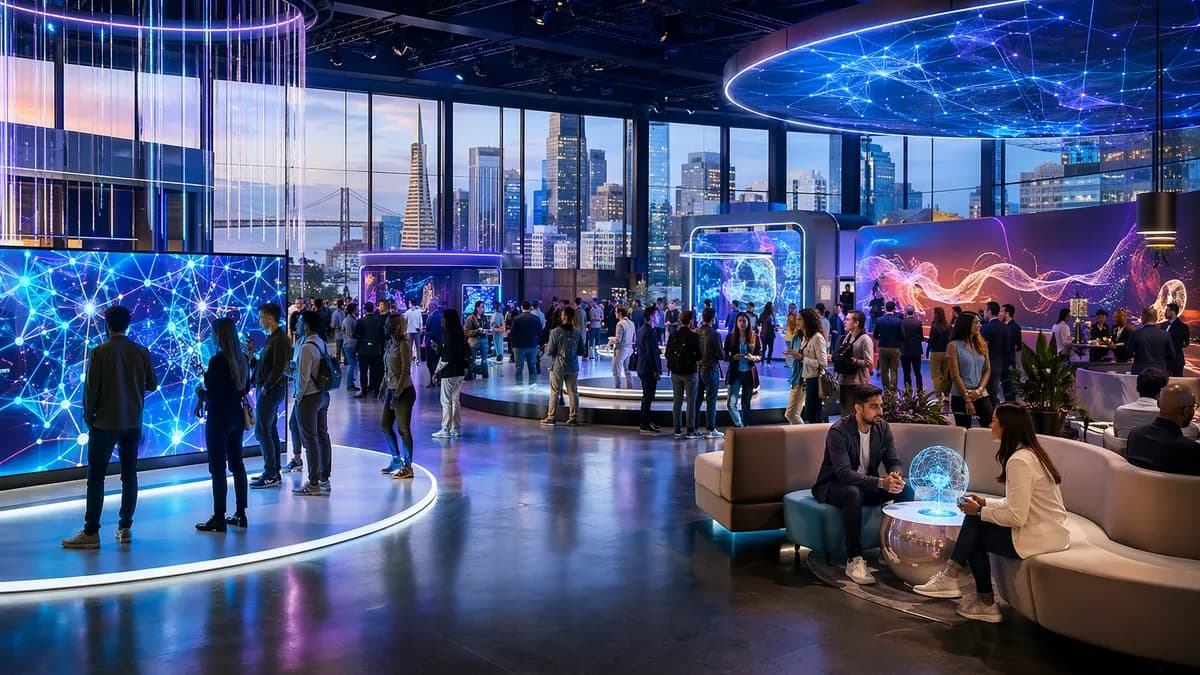
TechCrunch Disrupt 2026 Side Events signal a blunt reality about startup conference week: the official agenda is no longer the only place brands try to own attention. From October 10-16, TechCrunch is inviting companies, investors, and community builders to host Side Events around TechCrunch Disrupt 2026 in San Francisco, where over 10,000 innovators, founders, investors, and industry leaders are expected, according to TechCrunch.
XOOMAR Intelligence
Analyst Take
“From October 10-16, host a Side Event and command the room.”
That line is the tell. This is not just an event listing. It’s a signal that brand strategy around major tech conferences is shifting from passive sponsorship toward owned moments: smaller rooms, sharper formats, and direct conversations with the people a company actually wants to reach.
TechCrunch Disrupt 2026 Side Events Turn Conference Week Into a Fight for Focus
The thesis is simple: during a major startup week, attention becomes scarce before startup capital does. TechCrunch is giving outside hosts a formal path to capture some of that attention by proposing Side Events tied to Disrupt 2026.
The source says hosts can run industry roundtables, VC office hours, deep-dive workshops, casual networking happy hours, and intimate dinners. That range matters. A roundtable and a happy hour are not the same product. One promises depth. The other promises access. A workshop can position a company as technically serious, while VC office hours can turn a sponsor into a gatekeeper for founder conversations.
The strongest counterpoint is obvious: more events can make the week harder to navigate. If every brand claims to have the must-attend room, the phrase loses value. The risk is calendar clutter.
Still, the TechCrunch pitch lands because it gives hosts something a generic presence cannot: control over the format and message. The source does not say hosts control guest lists, private rooms, or admissions. It does say they can design the format around their own vision. That is the strategic opening.
October 10-16 Creates a Seven-Day Attention Window in San Francisco
The hard data here is limited but meaningful: one week, one city, more than 10,000 expected participants, and a September 4 proposal deadline. TechCrunch says Side Events take place from October 10-16, with proposals due by September 4.
That calendar creates two planning problems for hosts. First, the event has to be specific enough to earn a place on crowded attendee schedules. Second, it has to justify the time spent planning, promoting, staffing, and following up. TechCrunch says there is “Zero cost to apply or participate,” but it does not spell out every operational detail a host may face, so serious teams should still treat the event as a campaign, not a one-off gathering.
The more revealing detail is TechCrunch’s guidance on timing. It says evening events on October 13-15 are “highly encouraged,” citing fewer competing events, more meaningful conversations, and an undivided audience.
| Side Event format | Best strategic use | Main risk |
|---|---|---|
| Industry roundtable | Positioning around a specific market or technical problem | Too broad a topic produces weak discussion |
| VC office hours | Direct founder-investor access | Can feel extractive if poorly structured |
| Deep-dive workshop | Showing expertise through practical content | Requires real substance, not slides with logos |
| Networking happy hour | Broad relationship-building | Easy to become interchangeable |
| Intimate dinner | Focused senior-level conversation | Small room means weak curation hurts more |
The metric that matters is not raw attendance. XOOMAR analysis: a smaller event with the right founders, investors, or operators can beat a bigger room that generates no follow-up conversations.
Hosted Rooms Are Becoming the Real Media Layer Around Startup Conferences
TechCrunch’s Side Event push shows how conference participation is becoming more like publishing. A host is not just buying proximity to Disrupt 2026. It is creating a format, choosing a message, and deciding what kind of conversation deserves time.
That is why the list of suggested formats is so broad. A company can run a technical workshop. A VC can create office hours. A community builder can host a dinner or happy hour. Each format says something different about the host’s role in the market.
The counterpoint is that not every company is good at programming. A weak panel with vague branding does not become strategic because it happens near a major conference. Bad events still waste time.
Specificity is the defense. A focused room has a better chance of being remembered than a general “future of tech” gathering. The same editorial logic applies in coverage: narrow angles such as Free Gemini AI Image Generation Mines Your Google Data or TIDAL Cuts Off AI Music Royalties as Uploads Explode are easier to grasp than generic AI or media-tech chatter.
Founders, Investors, Sponsors, and Attendees Are Not Seeking the Same Room
The Side Event model works only if the host understands which audience it is serving. TechCrunch’s pitch names several groups: VCs, companies, and community builders. It also frames the broader Disrupt audience as founders, investors, innovators, and industry leaders.
Founders want useful access. That might mean investor conversations, partner introductions, customer discovery, or a technical session that actually helps them build. They do not have infinite time for vague networking.
Investors want signal. A smaller format can help if it filters for founders in a specific sector, stage, or problem area. But a broad room packed with unfocused pitches can be worse than no event at all.
Sponsors and companies want visibility, but the best version of that visibility is earned through usefulness. A workshop, roundtable, or dinner needs a reason to exist beyond brand exposure. Attendees can smell a sales funnel with snacks.
A Brand-Owned Stage Needs a Clear Reason to Exist
The best Side Events won’t merely borrow TechCrunch Disrupt 2026’s gravity. They’ll add a useful layer to the week. TechCrunch says hosts can design the format around their vision, goals, and logistical needs. That freedom is valuable, but it also raises the bar.
A strong Side Event needs four things:
- Audience thesis: Who exactly should be in the room?
- Credible host: Why should this brand lead the conversation?
- Specific theme: What problem, market, or opportunity anchors the event?
- Useful format: Why is this better as a live gathering than a blog post or webinar?
A founder-only roundtable, an AI infrastructure breakfast, a fintech policy salon, a climate hardware demo, an LP and GP dinner, or a hands-on product workshop all have clearer premises than a generic reception. The host is making a promise before anyone walks in.
The weak version is easy to spot: overstuffed panels, vanity speakers, vague themes, and registration lists that never become relationships. Another useful reference point is specificity in subject matter, such as XOOMAR’s Rare Lymphoma Forced Connor Christou Into AI Cancer Fight, where a narrow story creates a sharper frame than a broad AI headline.
The Side-Event Program Can Extend Disrupt, but It Can Also Dilute It
For TechCrunch, official Side Events can expand Disrupt 2026 across the week without forcing every conversation onto the main stage. That strengthens the conference’s reach. It gives brands a reason to build around the event, not merely attend it.
For startups, the opportunity is access. The risk is time waste. A founder should judge each Side Event by who will be there, what format is promised, and whether the room matches the company’s actual goals.
For sponsors, the implication is sharper. Event strategy now has to behave like content strategy. The pitch, format, audience, and follow-up need to align before the first invite goes out. Otherwise the event becomes noise.
What would weaken this thesis? If the Side Events around TechCrunch Disrupt 2026 end up dominated by generic happy hours with little follow-through, the format will look more like calendar filler than strategic programming. What would confirm it? High-quality rooms with clear themes, credible hosts, and conversations attendees could not have found inside a broader crowd.
The 2026 Side-Event Race Will Reward Scarcity, Not Volume
The next test is not whether brands apply. TechCrunch has already made the invitation clear, with a September 4 proposal deadline and zero cost to apply or participate. The harder test is whether hosts build events people feel they can’t skip.
XOOMAR analysis: the likely winners will not be the loudest brands around Disrupt week. They will be the ones that define a precise audience, make a strong promise, and use the room to create conversations that would not happen by accident.
The watch item is the October 13-15 evening window. TechCrunch says those events have a strategic advantage because there are fewer competing events and more room for meaningful conversations. If the best hosts cluster there with sharp formats, the Side Event program could become one of the most important layers of TechCrunch Disrupt 2026. If the week fills with indistinct networking pitches, attendees will tune out fast.
The Bottom Line
- Brands are shifting from passive conference sponsorships to owned, curated experiences.
- Side Events give companies more control over format, audience, and message during a crowded startup week.
- The growing number of events could make attention harder to capture as conference calendars become more cluttered.
TechCrunch Disrupt 2026 Side Event Formats
| Format | Strategic Use |
|---|---|
| Industry roundtables | Creates focused discussion around a sector or theme |
| VC office hours | Gives hosts direct access to founder conversations |
| Deep-dive workshops | Positions a company as technically serious |
| Casual networking happy hours | Prioritizes access and relationship-building |
| Intimate dinners | Offers a smaller, higher-touch setting for targeted conversations |
Primary Sources & Disclosures

Written by
XOOMAR Insights Team
Research and Editorial Desk
The XOOMAR Insights Team pairs automated research with human editorial judgment. We track hundreds of sources across technology, fintech, trading, SaaS, and cybersecurity, cross-check the facts, and explain what happened, why it matters, and what to watch next. We do not just rewrite headlines. Every article is fact-checked and scored for reliability before it goes live, and we link back to the original sources so you can verify anything yourself.