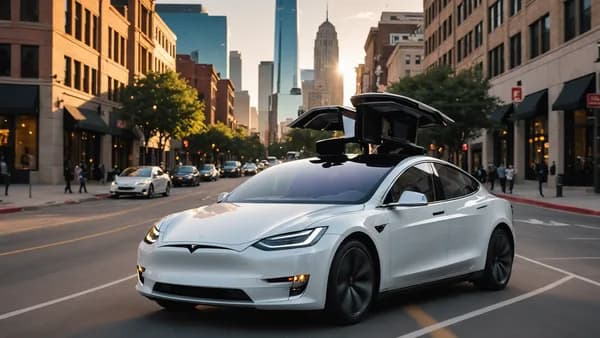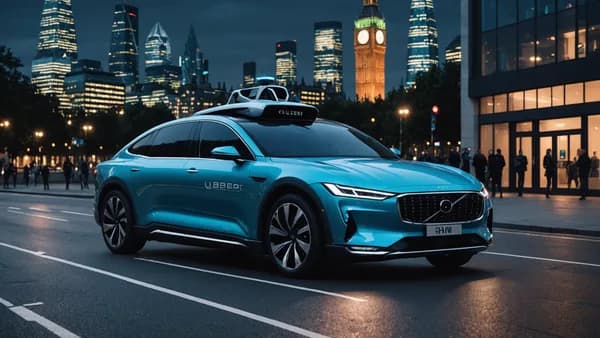
New Jersey robotaxi bill could make Tesla’s camera-only driverless strategy illegal for commercial deployment in the state before it ever launches there.
XOOMAR Intelligence
Analyst Take
The proposal, expected to come up for a vote later this year, would require companies operating fully autonomous vehicles in New Jersey to use cameras plus two other sensing technologies, most commonly lidar and radar, according to The Verge. That would put Tesla Robotaxi directly in the blast zone, since Tesla’s approach relies exclusively on cameras.
This is the fight behind the bill: whether self-driving safety should be judged by outcomes alone, or whether lawmakers should be allowed to dictate the hardware stack before a vehicle ever carries paying passengers.
“This is not anti-Tesla,” Democratic state Sen. Andrew Zwicker, the bill’s primary sponsor, told The Verge. “I’m pro-New Jersey safety.”
Why could New Jersey's robotaxi sensor bill decide whether Tesla can launch driverless rides there?
The New Jersey robotaxi bill would create a three-year pilot program for testing and deploying fully autonomous vehicles. Companies would need state authorization before commercial driverless service, would have to report certain crashes, and would need at least 50,000 miles of supervised testing in New Jersey without a major incident before removing the human safety driver.
The sensor rule is the sharp edge. A company would need cameras plus two other sensing technologies. Tesla does not build its Robotaxi strategy around that model.
That matters beyond one state. If New Jersey becomes the first state to write a hardware mandate into law, it gives other state lawmakers a template. Neighboring New York already has a nearly identical proposal pending action, per The Verge.
The bill does not ban people from buying Teslas. It also does not target ordinary driver-assistance systems that require a licensed human behind the wheel. Zwicker said the proposal applies to fully autonomous vehicles operating under the state pilot program.
That distinction is central. Tesla’s political message to New Jersey owners warned that the legislation “specifically bans Tesla from the New Jersey market.” Zwicker argues the bill is narrower than that.
What would New Jersey require robotaxis to carry besides cameras?
New Jersey’s proposal would require redundant sensing. In practice, that means a robotaxi would need cameras, plus other systems such as lidar and radar.
The safety theory is simple. If glare, darkness, rain, fog, or an unusual object confuses one sensor, another can check the scene from a different physical method. Cameras read visual detail. Radar is useful for distance and relative speed, especially in poor weather. Lidar uses lasers to build a three-dimensional picture of nearby objects.
The bill would push that redundancy from engineering preference into legal requirement.
Here is the practical split:
| Approach | Sensor stack | Legal risk under New Jersey proposal |
|---|---|---|
| Tesla Robotaxi | Cameras only | Could fail the sensor requirement |
| Waymo-style robotaxi | Cameras, lidar, radar | Clears the architecture hurdle, still faces other approvals |
| Driver-assistance Tesla | Human driver required | Not the target of the pilot program |
The fight is not about whether autonomy can exist in New Jersey. Zwicker said he rode in a Waymo robotaxi in Phoenix and came away convinced the technology could transform transportation.
“I was amazed how quickly you get used to it,” he said.
How does Tesla's camera-only self-driving bet clash with the lidar and radar model?
Tesla’s bet is that AI plus cameras can solve driving at scale. Elon Musk has argued that humans drive with vision, so sufficiently advanced AI should eventually do the same. He has also said removing lidar and radar lowers hardware costs and avoids sensor disagreement.
Musk wrote on X last year:
“Lidar and radar reduce safety due to sensor contention. If lidars/radars disagree with cameras, which one wins? We turned off the radars in Teslas to increase safety. Cameras ftw.”
Most major autonomous vehicle developers disagree. Waymo and Zoox use cameras, lidar, and radar together. Their argument is not that cameras are useless. It is that cameras alone are too brittle for broad driverless deployment today.
Philip Koopman, a Carnegie Mellon electrical and computer engineering professor and autonomous vehicle safety expert, told The Verge that camera-only systems may eventually work, but not yet.
“It’s pretty clear that today camera-only technology is not up to the challenge.”
Koopman’s point cuts to the policy question. New Jersey is not waiting for the market to settle the technical debate. It is trying to pick the minimum acceptable architecture for public roads.
For readers tracking how software decisions change the driving experience, XOOMAR has also covered practical in-car tech friction in Messy CarPlay Apps Hide an iPhone Fix Drivers Miss. Different topic, same lesson: interface and automation choices become safety issues once they hit real roads.
What would happen if a Tesla robotaxi tried to operate under the proposed New Jersey rules?
Take a hypothetical Tesla service in Hoboken, Jersey City, or Newark using a camera-only autonomous stack. Under the proposed bill, the first problem would arrive before the first paid ride.
If the vehicle lacks the required redundant sensors, state regulators could deny authorization under the pilot program. Tesla could still argue that its system performs safely, but the bill would make hardware compliance a threshold issue.
A rival using cameras, lidar, and radar would not automatically win approval. It would still need supervised testing, crash reporting, and state authorization. But it would clear the sensor architecture test.
Tesla’s choices would narrow:
- Redesign: Add non-camera sensors for New Jersey.
- Skip: Avoid the market if the rule stands.
- Challenge: Fight the law politically or legally.
- Lobby: Push for performance-based standards instead of hardware mandates.
Tesla has already lobbied against the legislation, according to Zwicker. He said company representatives told lawmakers that AI advances make extra sensor types unnecessary.
Why are lawmakers stepping into the camera versus lidar fight now?
Robotaxis are moving from demos to public streets, and states are being forced to decide how much risk they will accept before passengers climb in.
Federal oversight leaves room for state action. The National Highway Traffic Safety Administration does not preapprove new vehicle technologies, it told Fortune after contacting Tesla following videos from its Austin Robotaxi launch. NHTSA said it “will take any necessary actions to protect road safety,” but that model is mostly reactive.
New Jersey is trying to be more prescriptive.
The bill also reflects pressure from safety advocates. SAVE-US, a nonprofit pushing stricter autonomous vehicle regulation, supports redundant sensing systems. Its national campaign director, Shua Sanchez, told The Verge:
“We don’t have a problem with Tesla as a company. We have a problem with camera-only autonomous vehicles.”
That does not make the policy risk-free. A strict sensor mandate could build public trust, but it could also freeze one technical view into law before autonomy matures. Tesla’s strongest argument is that regulators should judge driving performance, not prescribe parts.
XOOMAR has tracked similar law-versus-market-access fights outside transportation, including DEA 7-OH Ban Puts Gas Station Kratom on 2-Year Clock. The common thread is simple: once regulators define the gate, business models either adapt or get locked out.
How could New Jersey's robotaxi law reshape the national self-driving car race?
If the New Jersey robotaxi bill passes, the robotaxi race changes from a technology contest into a state-by-state compliance fight.
Multi-sensor companies would gain a clearer path in New Jersey. Tesla would face a harder choice because its camera-only strategy is not a minor configuration detail. It is core to the company’s autonomy thesis.
The bigger question is whether other states copy New Jersey’s model. If they do, camera-only autonomy becomes harder to scale across the US without hardware changes or legal carveouts. If they don’t, companies may face a patchwork: one state judging performance, another mandating lidar and radar, another allowing lighter self-certification.
The practical watch item is the bill text that emerges before the vote. Sensor mandates, supervised-mile thresholds, safety-driver rules, and reporting requirements will decide whether New Jersey becomes a cautious launchpad for robotaxis, or a state Tesla avoids until the law changes.
Impact Analysis
- The bill could make Tesla’s camera-only robotaxi strategy illegal for commercial use in New Jersey.
- A state-level hardware mandate could become a model for other states, including New York.
- The proposal shifts the robotaxi safety debate from performance outcomes to required vehicle sensor design.
Tesla Robotaxi Strategy vs. New Jersey Proposal
| Issue | Tesla Robotaxi | New Jersey Bill |
|---|---|---|
| Sensor approach | Camera-only system | Cameras plus two other sensing technologies, commonly lidar and radar |
| Commercial deployment | Could be blocked under the proposed rule | Requires state authorization before driverless service |
| Testing requirement | Not aligned with the proposed hardware mandate | At least 50,000 supervised miles in New Jersey without a major incident |
Primary Sources & Disclosures
- [1]The Verge
- [2]Tesla urges New Jersey owners to oppose new bill that could block Robotaxi
- [3]U.S. regulators are circling after Tesla’s Robotaxi launch included unexpected behavior and potentially broken traffic laws | Fortune
- [4]Why would NHTSA allow Tesla, a car with only an L2 rating, to operate as an L4 autonomous vehicle? And operate a Robotaxi with passengers? The law doesn't exist? This is NHTSA's incompetence.

Written by
XOOMAR Insights Team
Research and Editorial Desk
The XOOMAR Insights Team pairs automated research with human editorial judgment. We track hundreds of sources across technology, fintech, trading, SaaS, and cybersecurity, cross-check the facts, and explain what happened, why it matters, and what to watch next. We do not just rewrite headlines. Every article is fact-checked and scored for reliability before it goes live, and we link back to the original sources so you can verify anything yourself.