Valar Atomics is seeking a $6 billion valuation while building reactors that have not yet reached industrial scale, a number that says as much about AI valuation mechanics as it does about nuclear power.
XOOMAR Intelligence
Analyst Take
The three-year-old El Segundo startup is in talks to raise new capital, with Sequoia expected to lead the deal, according to TechCrunch. The Information first reported that Valar is raising a $1 billion round. TechCrunch adds the key wrinkle: part of that capital was previously raised at a lower valuation.
That wrinkle is the story. Valar Atomics funding is being discussed as if one clean price now defines the company. The source material suggests something messier: a multi-stage round where different investors may not be entering on the same terms, at the same time, or at the same effective price.
Valar Atomics' $6 billion valuation puts nuclear startups in AI's pricing theater
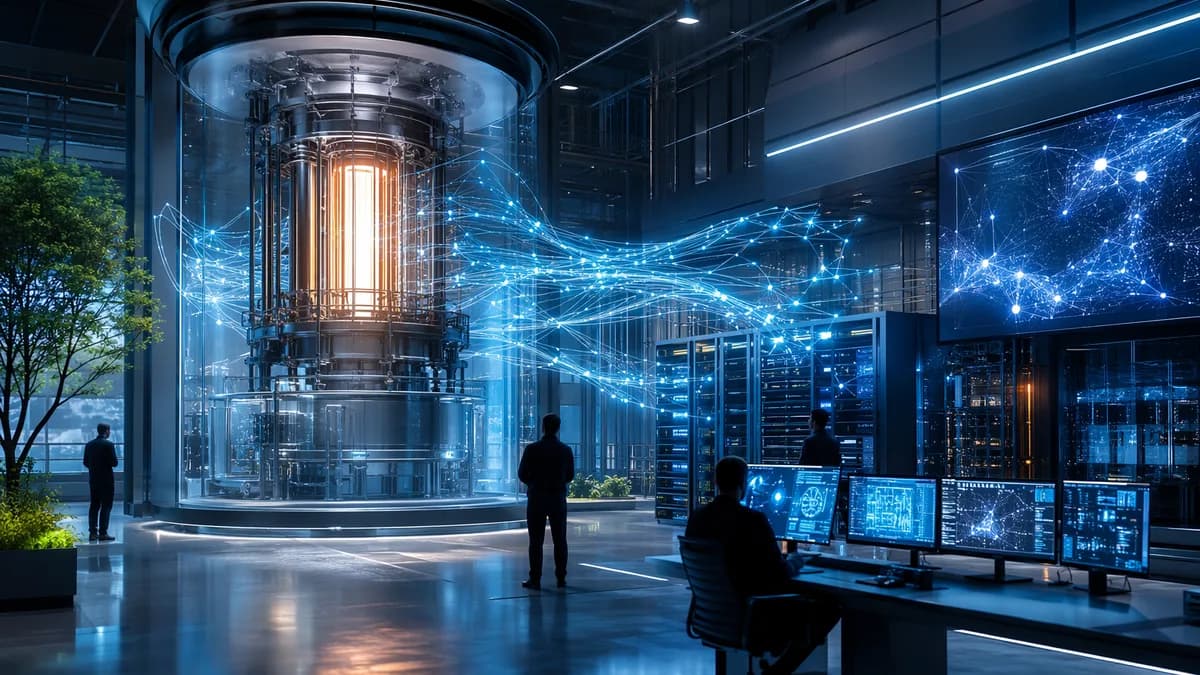
Valar is building small modular nuclear reactors, specifically a helium-cooled, high-temperature gas reactor. The pitch is direct: make nuclear smaller, factory-built, and repeatable enough to serve energy-hungry industrial customers, including data centers.
The company has also tied itself tightly to the AI power story. Earlier this month, Valar showed that its reactor provided a small amount of power to an Nvidia AI chip, and Valar and Nvidia announced a partnership to explore nuclear energy for future AI data centers.
Valar’s own site frames the demand case bluntly:
“AI models will require over 200 terawatt hours of additional grid power by 2030. Only nuclear can meet the demand.”
That claim is Valar’s, not an independently verified market forecast in the supplied material. But it explains why investors would even entertain a multibillion-dollar valuation for a pre-scale nuclear startup. The company is not selling a near-term software margin story. It is selling a path into strategic infrastructure.
XOOMAR analysis: that makes the $6 billion Valar Atomics valuation both powerful and fragile. Powerful because data center power constraints give nuclear a sharper commercial story than it had in many prior cycles. Fragile because licensing, construction, fuel sourcing, demonstration, and repeat deployment don’t move on software timelines.
The hidden math inside Valar Atomics funding matters more than the sticker price
TechCrunch reports that Valar previously raised $450 million, including $340 million in equity and $110 million in debt, at a $2 billion valuation, citing a Bloomberg report from March. The new talks are around a much higher headline figure.
The important part is not just the jump from $2 billion to $6 billion. It is the structure.
TechCrunch says deals executed in multiple installments at varying valuations are becoming more common in today’s AI-fueled fundraising environment. These deals can make it appear that capital entered at one uniform valuation when investors in the same round may have paid different prices.
That does not mean fraud. It means the headline valuation can be a weak signal.
For startups, the incentive is clear:
- Momentum: A large valuation helps keep the story hot.
- Recruiting: A bigger number can make equity feel more valuable.
- Partnerships: Strategic customers may read valuation as validation.
- Optics: Structured fundraising can avoid the clean pain of a plain valuation reset.
No supplied source says Valar’s pending deal includes warrants, ratchets, side letters, or other specific investor protections. The verified issue is narrower and still important: some capital appears to have been raised previously at a lower valuation, while the current funding talks center on a higher number.
That makes Valar Atomics funding a case study in why late-stage private valuations now need footnotes.
For readers tracking AI-adjacent valuations, this rhymes with the broader pattern we examined in Altman Shreds Space Data Centers as AI Valuation Bait: infrastructure narratives can pull huge numbers forward before the operating proof fully arrives. The same valuation pressure also shows up in software markets, as seen in $130M Round Crowns Emergent AI Coding Startup Unicorn, though the capital risk profile is very different.
Nuclear's capital needs collide with venture capital's return clock
The source material gives enough numbers to see the collision.
| Item | Reported detail |
|---|---|
| Company age | Three years old |
| Target valuation | About $6 billion |
| Reported round size | $1 billion, first reported by The Information |
| Earlier capital | $450 million, including $340 million in equity and $110 million in debt |
| Earlier valuation | $2 billion, per Bloomberg report cited by TechCrunch |
| Technology | Helium-cooled, high-temperature gas reactor |
| Stated ambition | Build hundreds of SMRs to power data centers |
That is a lot of valuation before industrial proof.
SMRs are theoretically cheaper to manufacture than traditional reactors, but TechCrunch says the technology is still nascent and it is unclear how long deployment at industrial scale will take. That uncertainty matters because nuclear milestones are physical and regulatory, not just commercial.
A software company can ship, measure usage, adjust pricing, and grow revenue in tight loops. A nuclear company has to prove design credibility, move through licensing, secure sites, source fuel, build demonstration projects, win bankable customers, and then show that repeated manufacturing actually lowers cost.
XOOMAR analysis: at a $6 billion valuation, Valar’s investors are not just underwriting a better reactor. They are underwriting the idea that nuclear can become a repeatable infrastructure product for AI data centers and heavy industry. That is a much harder thing to prove than customer demand.
Investors, employees, customers, and regulators will read the same number differently
The Valar Atomics valuation is not one message. It lands differently depending on who is reading it.
| Stakeholder | How the valuation looks |
|---|---|
| Venture investors | A premium bet on nuclear as a potential answer to data center power demand and industrial energy needs |
| Employees and early shareholders | A high paper mark, but one that depends on the actual financing terms and eventual exit structure |
| Customers | Less relevant than licensing credibility, delivery timelines, and long-term service obligations |
| Regulators | Private capital may fund innovation, but it does not remove safety review or licensing constraints |
Valar has already taken an aggressive posture toward regulation. Last year, it joined several states and rival startups in suing the Nuclear Regulatory Commission, arguing the agency wrongly applies the same lengthy licensing process to small test reactors that it uses for full-size commercial plants. TechCrunch reports the case remains unresolved, with both sides repeatedly pausing litigation, suggesting some kind of settlement may be in the works.
That legal fight cuts to the core tension. Valar wants speed. Nuclear regulation is built around caution.
Capital can fund engineering and legal pressure. It cannot, by itself, prove safety, shorten every review, or guarantee that customers will accept deployment risk.
Valar Atomics is walking through a nuclear market with scar tissue
The supplied source does not support a broad retelling of earlier clean-tech venture cycles, so the useful comparison is tighter: nuclear itself carries known baggage.
TechCrunch describes nuclear power as long plagued by cost overruns and regulatory bottlenecks. That is the scar tissue Valar has to overcome. The company’s strategy is to move away from bespoke, project-based nuclear and toward repeated builds on what it calls “gigasites,” serving grid-independent products such as hydrogen, data center power, heavy industrial power, and clean hydrocarbon fuels.
Valar says its reactor uses high-temperature gas reactor design principles, with TRISO fuel, graphite moderator, and helium coolant. It also says it eventually plans to build hundreds of SMRs to power data centers.
XOOMAR analysis: the word “hundreds” is doing heavy lifting. If Valar can turn reactors into a repeatable product, a venture-style valuation starts to make more sense. If each project remains bespoke, slow, and regulatorily complex, the valuation will look less like a market-clearing price and more like a financing narrative.
Valuation opacity is becoming part of the private-market model
The immediate lesson from Valar Atomics funding is not that the company is overvalued. The supplied facts do not prove that. The lesson is that private-market valuation headlines are getting less clean.
A single number can hide timing differences. A round can include previously raised capital. Debt and equity can sit beside each other. Different investors can face different effective prices even when the public story points to one headline valuation.
That matters for employees evaluating equity offers, limited partners assessing venture marks, secondary buyers pricing shares, and competitors benchmarking themselves against Valar. In private markets, the valuation is often the most visible data point. It may also be the least complete.
For nuclear specifically, misunderstood valuations could create unrealistic expectations around deployment speed, cost curves, and exit outcomes. The sector needs patient capital. It does not need a hype cycle that confuses fundraising success with reactor deployment.
Valar Atomics' next test is execution, not another bigger number
The next meaningful signal will not be whether Valar can print a larger valuation. It will be whether the company converts capital into concrete milestones.
Watch for evidence in four areas:
- Regulatory progress: Movement on licensing, testing, or the unresolved NRC dispute.
- Deployment proof: More than a small power demonstration to an Nvidia AI chip.
- Customer commitments: Bankable agreements tied to real sites and timelines.
- Repeatability: Signs that Valar’s model can reduce cost through repeated reactor builds.
If the $6 billion Valar Atomics valuation is backed by measurable deployment progress, it could mark a serious venture breakthrough for advanced nuclear. If the number mainly reflects staged financing optics, it will become a warning label for the next wave of hard-tech fundraising.
The Bottom Line
- Valar’s reported $6 billion valuation shows how AI-driven power demand is reshaping nuclear startup funding.
- The deal structure may be more complex than a single headline valuation suggests.
- Investors are betting on small modular reactors before Valar has proven industrial-scale deployment.
Valar Atomics Funding Talks
Primary Sources & Disclosures

Written by
XOOMAR Insights Team
Research and Editorial Desk
The XOOMAR Insights Team pairs automated research with human editorial judgment. We track hundreds of sources across technology, fintech, trading, SaaS, and cybersecurity, cross-check the facts, and explain what happened, why it matters, and what to watch next. We do not just rewrite headlines. Every article is fact-checked and scored for reliability before it goes live, and we link back to the original sources so you can verify anything yourself.