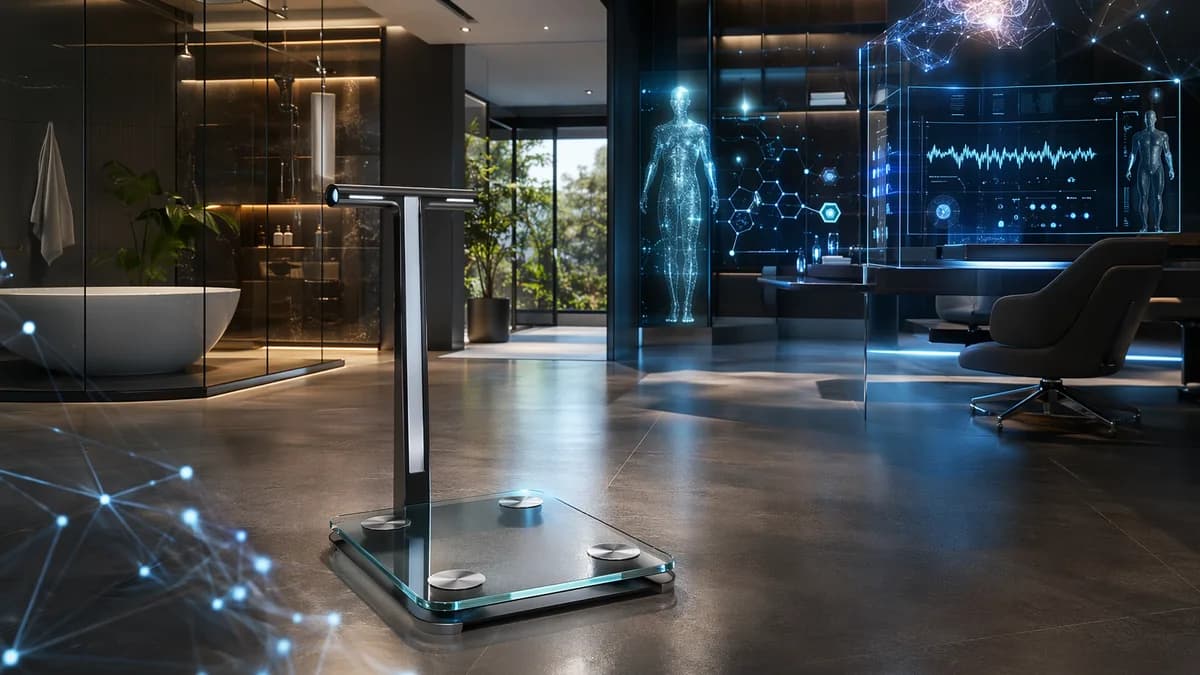
July 15: Withings Body Scan 2 reaches U.S. buyers at $600
On July 15, 2026, Withings put the Withings Body Scan 2 on sale in the U.S. after receiving the needed regulatory approvals, pricing the at-home health scale at $599.95, effectively $600.
XOOMAR Intelligence
Analyst Take
The device is available through Withings’ website and arrives with a free one-month Withings+ trial, according to Engadget. Withings first showed the scale back in January, then waited for clearance to sell it in the U.S.
Withings says the scale will offer data of comparable quality to a clinical-grade DEXA scan.
That is the core pitch. This is not being sold as a nicer bathroom scale. Withings is positioning Body Scan 2 as premium connected health hardware for people who want deeper, repeated health readings at home rather than relying only on a wearable or occasional clinical measurement.
The company says the new scale can analyze over 60 biomarkers, up from 40 on the first model. It also brings in measurements that push the product closer to medical-adjacent territory: Impedance Cardiography, Bioimpedance Spectroscopy, hypertension risk flagging, a six-lead ECG for atrial fibrillation detection, and a dedicated SpO2 sensor in the handle.
January’s CES reveal turns into a 60-biomarker sales pitch
Withings showed Body Scan 2 in January. The U.S. sale date now turns that CES-era promise into an actual purchase decision.
The hardware is built around a tempered-glass platform with eight ITO electrodes and a retractable handle with four stainless steel electrodes, for 12 electrodes in total. The handle now includes a built-in color display, so users can view readings while holding the device rather than routing everything immediately to a phone.
The company says a scan takes roughly 90 seconds. The scale can break down fat and muscle across 6 zones, up from 5 zones on the original Body Scan, and syncs measurements to the Withings app over Wi-Fi or Bluetooth. The data can also feed into Apple Health.
Here is the practical split across Withings’ current high-end scale lineup, based on the supplied launch details:
| Product | U.S. price | Positioning | Key differences cited |
|---|---|---|---|
| Withings Body Scan 2 | $599.95 | Premium home “longevity station” | Over 60 biomarkers, hypertension risk flag, six-lead ECG, SpO2 sensor, color display in handle |
| Original Body Scan | $499.95 | Prior premium scale | 40 biomarkers, lacks the new hypertension and six-lead ECG features |
| Withings BodyFit | $279.95 | Lower-priced body-composition model | Similar retractable handle, but lacks Body Scan 2’s color display, hypertension flag, and ECG features |
The technical additions matter because Withings is no longer just asking buyers to care about weight trends. Impedance Cardiography, or ICG, is used here to monitor the heart’s capacity to pump blood to organs. Bioimpedance Spectroscopy, or BIS, sends a low-level electrical current through the body to estimate total body water, cellular age, active cell mass, and metabolic efficiency.
At $599.95, trust carries more weight than the glass platform
A $599.95 bathroom scale has to clear a higher bar than a cheaper connected scale. The hardware spec sheet is only part of the argument. Withings also has to make the results understandable, repeatable, and useful inside the app.
That is where the wording matters. “Clinical-grade” is a powerful sales phrase, but buyers should separate measurement from diagnosis. The supplied launch details describe atrial fibrillation detection, hypertension risk flagging, body composition analysis, and metabolic indicators. They do not turn the scale into a replacement for a clinician.
The subscription layer also matters. Every order includes a one-month Withings+ trial, and the supplied source material lists Withings+ at $9.95 per month or $99.50 per year. Advanced scores such as Heart Age and Glucose Resilience are tied to Withings+.
Analysis: That makes the real cost question bigger than the checkout price. If the most useful interpretation sits behind a paid service, buyers are not just buying a scale. They are buying into Withings’ health dashboard.
Privacy sits in the same bucket. The device collects sensitive biometric data, and the supplied material says Withings cites GDPR, HIPAA, ISO 27001, and ISO 27701 compliance. Those labels won’t matter much if users don’t understand what is being collected, where it syncs, and which insights require the subscription.
For readers following premium pricing across XOOMAR’s broader coverage, compare the consumer-choice questions in Spotify Managed Accounts Escape Premium Family Paywall and REI Arc'teryx Sale Cracks Premium Gear Pricing at $19. Body Scan 2 is a different product category, but the buyer test is familiar: what exactly makes the premium tier worth paying for?
After launch day, independent testing becomes the next hurdle
The next phase is not the launch. It is proof.
Independent reviews will need to test whether Withings Body Scan 2 produces stable readings in normal home use, especially for the advanced metrics that separate it from the original Body Scan and BodyFit. Accuracy, repeatability, app clarity, and subscription value will decide whether the $600 price feels justified.
Regulatory positioning will also stay in focus. The U.S. launch followed necessary approvals, while the supplied material says the device had a European debut in June 2026 and that EU and UK releases confirmed CE marking for the atrial fibrillation detection feature.
The most useful near-term signal will be how Withings explains uncertainty. A scale that tracks more than 60 biomarkers can generate a lot of numbers. If the app turns those numbers into clear trends and sensible alerts, the premium case gets stronger. If it overwhelms users or hides too much value behind Withings+, Body Scan 2 risks becoming a niche wellness device for buyers already comfortable spending heavily on personal health hardware.
Key Takeaways
- Withings is pushing smart scales further into medical-adjacent home health tracking.
- At $599.95, Body Scan 2 targets users willing to pay a premium for deeper biometric data.
- Regulatory approval makes the device a real U.S. purchase option after its CES reveal.
Withings Body Scan 2 vs. First Model
| Feature | Body Scan 2 | First Model |
|---|---|---|
| Biomarkers analyzed | Over 60 | 40 |
| U.S. availability | On sale July 15, 2026 | Previously available model |
| Positioning | Ultra-premium at-home health scale | Earlier connected health scale |
Primary Sources & Disclosures

Written by
XOOMAR Insights Team
Research and Editorial Desk
The XOOMAR Insights Team pairs automated research with human editorial judgment. We track hundreds of sources across technology, fintech, trading, SaaS, and cybersecurity, cross-check the facts, and explain what happened, why it matters, and what to watch next. We do not just rewrite headlines. Every article is fact-checked and scored for reliability before it goes live, and we link back to the original sources so you can verify anything yourself.