
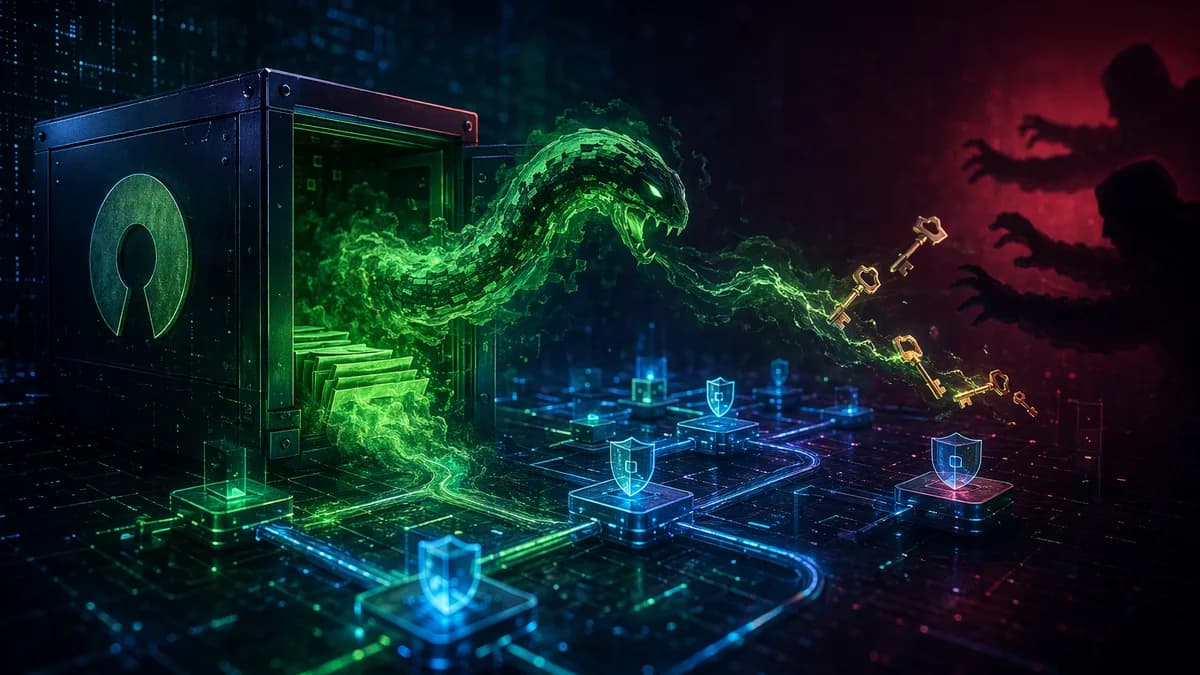
Miasma’s source code briefly appearing on GitHub turns a developer-targeted worm from a contained threat into something other attackers may study, copy, and reshape.
CybersecurityJune 10, 2026· 7 min read· By XOOMAR Insights Team
Leaked Miasma Worm Hands Hackers a GitHub Attack Map
Updated on June 10, 2026
XOOMAR Intelligence
Analyst Take
58/ 100
4 sources analyzedLow confidenceTrend10Freshness99Source Trust88Factual Grounding92Signal Cluster20
The credential-stealing framework was briefly published in repositories named "Miasma-Open-Source-Release" through numerous compromised developer accounts, according to BleepingComputer, which cited reporting from SafeDep. The repo was short-lived, but short-lived is not the same as harmless.
For open-source maintainers, CI/CD owners, and teams using AI coding tools, the risk is blunt: Miasma targets the credentials that make software delivery work.
Developers: why the brief Miasma leak matters now
The core danger isn’t that researchers can inspect Miasma. Defenders benefit from that. The danger is that a working attack framework may have been copied before GitHub removed it.
Why should developers care if the code was only public briefly? Because malware source code doesn’t need a long public shelf life. Mirrors, local clones, downloads, screenshots, and automated scrapers can preserve material after the original repository disappears.
BleepingComputer reports that Miasma appears to be an evolution of the earlier Shai-Hulud worm, which was also previously leaked on GitHub and shares many features, techniques, and code. That history matters because the earlier leak was followed by more advanced variants, including Miasma, and increased attack rates, according to the source material.
The leak changes the attacker math
A private tool limits reuse. A leaked tool lowers the bar.
| Threat model | Who can use it | Practical effect |
|---|---|---|
| Private malware framework | Original operators | Slower adaptation, fewer hands on the code |
| Briefly leaked source code | Anyone who copied it | Faster testing, modification, and reuse |
| Defender-accessible code | Security teams and researchers | Better detection logic and hardening guidance |
That balance is uncomfortable. The same exposure that helps defenders write better rules can also help attackers strip out known indicators and rebuild the payload.
Builders: how Miasma steals from software supply chains
Miasma is a credential-stealing attack framework aimed at developer machines, package workflows, and software delivery infrastructure. Its basic playbook is simple: infect a developer environment, steal secrets, then use those secrets to compromise legitimate repositories and packages.
What does Miasma want most? Tokens and credentials with publishing power.
The source material says the framework harvests credentials from cloud providers, CI/CD systems, password managers, Kubernetes, and secret stores. It can abuse that access to compromise npm, PyPI, and RubyGems packages, plus GitHub repositories, Actions workflows, and JFrog Artifactory instances.
The most valuable secrets include:
- GitHub tokens: Access to repositories, workflows, and sometimes organization resources.
- Package publishing credentials: Tokens for npm, PyPI, RubyGems, or internal registries.
- CI/CD secrets: Deployment keys, cloud credentials, and build-time environment variables.
- SSH keys: Lateral movement into servers or developer infrastructure.
- Cloud access keys: Paths into AWS, Azure, GCP, or other hosted services.
Miasma’s behavior shows why developer credentials now deserve the same seriousness as production database passwords. A compromised maintainer token can become a poisoned release. A compromised CI secret can become a build-system foothold.
That’s also why teams evaluating developer infrastructure should treat platform choices as security decisions, not just workflow preferences. XOOMAR has covered the operational tradeoffs in Pick the Wrong Self-Hosted Git Platform, Pay Later, and the same logic applies here: access control debt compounds fast.
End users: how a poisoned package reaches downstream projects
A Miasma-style attack doesn’t need to break GitHub or npm. It abuses trust.
Picture a maintainer of a popular JavaScript package who runs a malicious script on a laptop or inside CI. The script steals an npm token or GitHub token. The attacker then publishes a trojanized package update under the real package name.
What happens to downstream users? Many projects accept routine updates from known dependencies. Automated dependency tools may open pull requests. Developers may see a familiar package and a normal version bump. CI may install it without suspicion.
That’s where the worm-like design matters. The malware can look for more credentials on developer systems or build servers, then use them to reach more repositories, packages, and workflows. One compromised account becomes a distribution channel.
BleepingComputer describes Miasma as using stolen credentials to compromise legitimate repositories and packages, then publish trojanized versions that infect downstream developers and repeat the cycle. That is the supply-chain multiplier.
The AI coding tool angle is especially ugly
The source material says Miasma can poison configurations of AI coding tools such as Claude, Gemini, Cursor, Copilot, Kiro, and Cline. SafeDep also documented attacks in which repository configuration files were used to trigger payload execution through developer tools.
That makes the threat more practical for modern teams. A developer may not install a package manually. They may simply open a repository in an AI-assisted coding environment.
For teams weighing those tools, the security question is no longer only, “Will this assistant leak code?” It’s also, “Can this assistant be tricked into running project-local instructions?” That concern fits directly with our earlier coverage of Private AI Code Assistants Face the Code Leak Test.
Security teams: what the GitHub exposure reveals about Miasma’s design
Miasma’s leaked code exposed design choices that defenders can turn into controls.
The most striking detail is that the toolkit does not require traditional command-and-control infrastructure. BleepingComputer reports that Miasma uses GitHub for that purpose.
"Requires NO C2 infrastructure. No dealing with takedowns or maintaining infrastructure. Stolen GitHub PATs are all that is necessary."
That matters because defenders often look for attacker-owned domains, servers, or IP infrastructure. A malware framework that routes coordination through GitHub search and stolen tokens is harder to disrupt with classic blocking alone.
Another exposed feature is a dead-man switch tied to a stolen GitHub token used as an exfiltration channel. The component checks token validity every minute. If the token is revoked, it runs a destructive command that recursively deletes files and directories in the user’s home and Documents folders. BleepingComputer says the monitor runs as a systemd user service on Linux or a LaunchAgent on macOS and remains active for up to 72 hours.
That creates an ugly response problem. Revoking a stolen token is still necessary, but responders need to account for destructive local persistence before or during containment.
The leaked build pipeline also raises the detection bar. SafeDep’s analysis, as reported by BleepingComputer, found a five-stage process that generates unique payloads for each build using per-file AES-256-GCM encryption, randomized string obfuscation, source transformations, JavaScript obfuscation, and a self-extracting loader wrapped in three encryption layers. Random keys and randomized outer encoding make each sample differ from earlier builds.
Signature-only detection will struggle against that.
Maintainers: the practical response after the Miasma exposure
Teams don’t need panic. They do need to treat developer credentials as production infrastructure.
Start with credential hygiene. Rotate exposed or long-lived tokens. Remove unused secrets. Cut permissions to the minimum required. Shorten token lifetimes where the platform allows it.
Harden the publishing path next:
- Repository access: Enforce MFA, protected branches, and tighter maintainer permissions.
- Package publishing: Review who can publish, require stronger authentication, and watch for unexpected releases.
- CI/CD secrets: Scope secrets narrowly and avoid exposing powerful credentials to untrusted build paths.
- Release integrity: Use signed commits or signed releases where they fit the workflow.
- Dependency intake: Pin dependencies, delay adoption of new package releases for multiple days, and validate builds in isolated test environments, as BleepingComputer reports developers are advised to do.
Monitoring needs to focus on behavior, not just known hashes. Watch for new maintainers, sudden package releases, unfamiliar CI jobs, outbound calls from build environments, credential access from unusual locations, and project configuration files that run code when a folder opens.
The next scenario to watch is not whether Miasma’s original repository reappears. It’s whether its tactics show up in modified form, with different triggers, different obfuscation, and the same target: the credentials that let trusted developers ship trusted code.
Impact Analysis
- A short-lived GitHub leak can still spread if attackers cloned, mirrored, or scraped the code before removal.
- Miasma targets developer credentials, putting open-source maintainers, CI/CD systems, and software supply chains at risk.
- The worm’s link to Shai-Hulud suggests leaked malware code can fuel more advanced variants and higher attack activity.
How Miasma's Exposure Changes the Threat Model
| Threat model | Who can use it | Practical effect |
|---|---|---|
| Private malware framework | Original operators | Slower adaptation and fewer people working with the code |
| Briefly leaked source code | Anyone who copied it | Faster testing, modification, and reuse by other attackers |
| Defender-accessible malware code | Security researchers and defenders | Improved analysis, detection, and defensive preparation |
Sources

Written by
XOOMAR Insights Team
Research and Editorial Desk
The XOOMAR Insights Team pairs automated research with human editorial judgment. We track hundreds of sources across technology, fintech, trading, SaaS, and cybersecurity, cross-check the facts, and explain what happened, why it matters, and what to watch next. We do not just rewrite headlines. Every article is fact-checked and scored for reliability before it goes live, and we link back to the original sources so you can verify anything yourself.
Explore More Topics
Related Articles
 Cybersecurity
Clean GitHub Repo Tricks AI Coding Agents Into Malware
A clean GitHub repo can trick AI coding agents into fixing setup errors that execute malware and open a reverse shell.
Jun 27, 20268 min
 Cybersecurity
CI/CD Vulnerabilities Hand Attackers Keys to Millions of Repos
Cordyceps could let outsiders hijack CI/CD workflows, steal secrets, and compromise millions of open source repositories.
Jun 28, 20268 min
 Cybersecurity
Fake OpenAI Invites Lure Security Staff into ChatGPT Trap
Attackers are using real OpenAI invite emails to lure security staff into fake ChatGPT workspaces built for data theft.
Jun 27, 20268 min
 Cybersecurity
Fake Receipts Hijack Shop App in Callback Phishing Trap
Scammers are planting fake receipts inside Shop, turning trusted order histories into phone scam bait.
Jun 26, 20267 min
 Cybersecurity
Ghost Accounts Forge Attack Maps With GitHub API Abuse
More than 50 dormant GitHub accounts used the public API to map orgs, users, and repos, turning metadata into recon fuel.
Jul 11, 20267 min
 Global Trends
Stormed Gas Lines Push Libya Energy Complex Crisis to Brink
Protesters shut gas lines at Mellitah, turning Libya's power outages into a direct threat to Tripoli's grip on the grid.
Jul 28, 20268 min
 Global Trends
10-Week Congo Ebola Outbreak Races Toward Worst-Ever Record
Congo’s Ebola outbreak hit 3,262 cases in 10 weeks, exposing a response strained by violence, unpaid workers and mistrust.
Jul 28, 20267 min
 Technology
Samsung Chip Workers Plot Exit as SK Hynix Pays $476K
Samsung's foundry talent problem is now a pay war, with SK Hynix bonuses making its HBM gap harder to close.
Jul 28, 20268 min
 Global Trends
150,000 Told to Evacuate as Japan Earthquake Injures Dozens
A 7.1 Japan earthquake injured dozens, triggered brief tsunami fears, and pushed 150,000 people toward shelters.
Jul 28, 20265 min
 Future Fiction
The Ceasefire Engineer of Lagrange Market
In 2069, nations no longer send armies across borders; they release swarms, exploits, orbital shields, and autonomous legal agents into a constantly contested battlespace called the Quiet Front. Naya Voss, a civilian conflict-auditor stationed at a neutral space-based defense hub, discovers that an escalating machine-to-machine war over water rights is being driven not by hatred, but by incompatible definitions of surrender.
Jul 28, 202615 min
Don't miss the signal
Get our weekly roundup of the stories that matter across tech, fintech, and trading. No noise, just signal.
Free forever. No spam. Unsubscribe anytime.