The Orchard Above L5
When nations fight with satellites, swarms, and sabotage, a widowed agronomist becomes the unlikely negotiator of a war no army can enter.
1. The War That Arrives as Weather
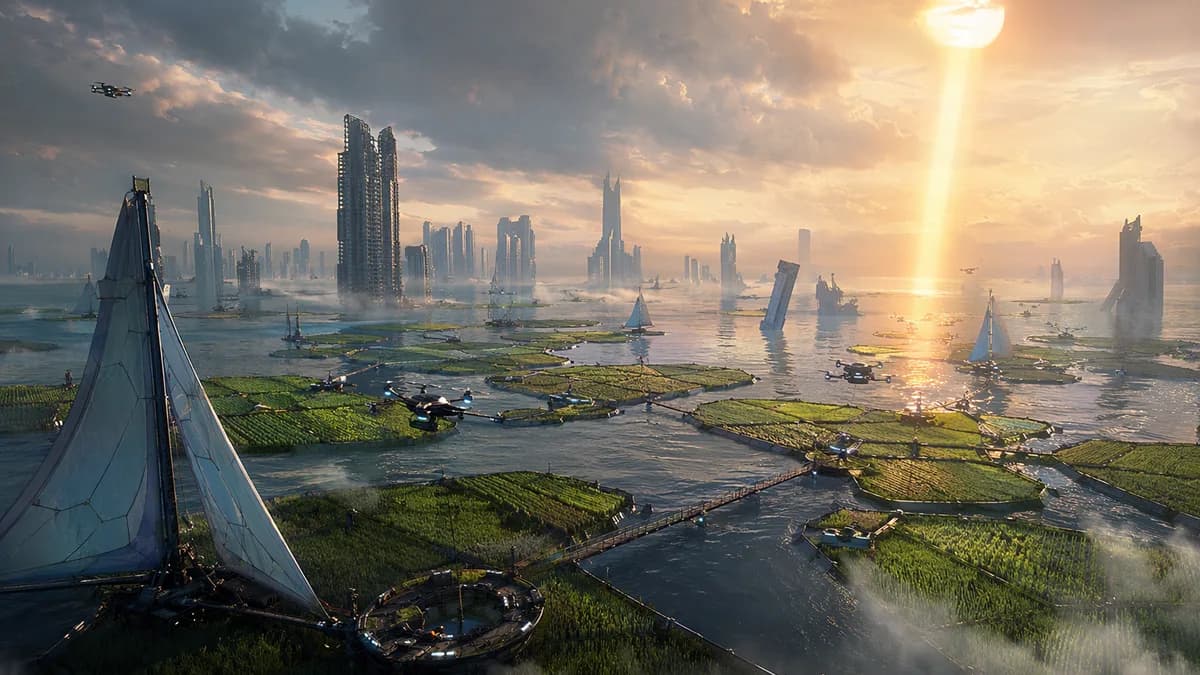
At dawn, Manila Bay is a field of mirrors and green blades.
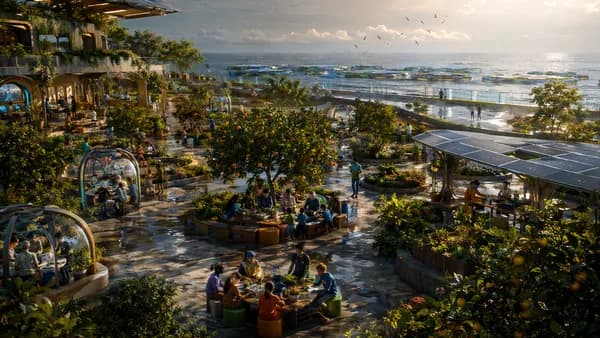
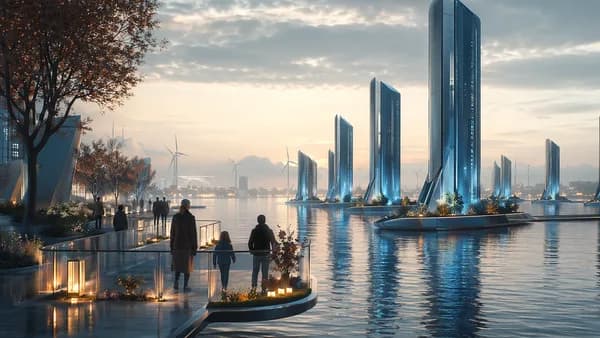
Mira Solano stands barefoot on the flex-deck of Platform Twelve, ankle-deep in warm washwater, watching the rice wake. The floating paddies shift gently under her, stitched together by algae ropes and smart buoys, each square glowing faintly where root sensors breathe data into the cooperative mesh. Beyond them, the drowned city rises in fragments, church spires, condo crowns, the upper stories of a mall where egrets nest in the old cinema.
Above, the pollinator drones hum like a hive with metal throats.
“Light cycle begins in three minutes,” says the farm system in Tagalog, its voice soft from too many updates.
Mira looks up.
The sky brightens from the west.
Not the east, where the sun is still a red coin behind storm haze. West. A clean white blade of light cuts across the bay, sharp enough to make the water flash silver and the young rice bend away as if from a hand. Heat prickles across Mira’s face. On the platform rail, droplets sizzle and vanish.
“That’s wrong,” she says.
Kenji, on a maintenance skiff below, squints through his cracked visor. “Ate Mira?”
The orbital reflector should be feathering sunlight over the inland reservoirs, not burning a path across the bay. It is one of the old defense mirrors, repurposed after the Cascades Treaty, still capable of dazzling missiles, still described in polite policy papers as dual-use infrastructure. Farmers call it Saint Lucia because it brings light after typhoons.
This morning, Saint Lucia looks like a weapon.
The first seedlings curl at the tips. Their pale green becomes glassy, then brown. A seeder drone drops out of formation, its rotors whining, and splashes into a canal. Then another. The cooperative dashboard blooms red across Mira’s wrist slate.
THERMAL EXCURSION. POLLINATOR SWARM DISORIENTATION. SUBSURFACE SENSOR EXPOSURE.
Under the water, hidden buoys begin to rise as the bay warms too fast, their skins unfolding like black flowers. Mira sees them break the surface beyond the mangrove nets, tiny government eyes installed years ago to listen for submarines and smugglers. They are supposed to stay buried in silt, deniable, invisible.
Now they glint under stolen sunlight.
From the school platform, children start shouting. A clinic alarm wails, thin and panicked. The old people in the shade house lift wet cloths over their heads.
“No soldiers,” Amara says from the comm, breathless. “No declaration. The mirror’s guidance window got nudged. Looks like a cascade.”
Mira tastes salt and metal on her tongue. War, she thinks, no longer arrives with ships on the horizon. It arrives as a schedule error, a brighter morning, a machine obeying the wrong instruction perfectly.
She raises her hand to shield her eyes and watches her rice burn.
2. Ghost Armies in the Supply Chain
By midday, the cooperative command room smells of hot plastic, wet rope, and overbrewed coffee.
Mira sits beneath a ceiling patched with solar cloth, her hair still damp from the emergency misting lines. Around her, screens show the bay in layers, crops, currents, drones, heat, security warnings pulsing like fever. Outside the window, workers move through the paddies with reflective tarps, their feet splashing in the shallow basins. The rice survives in strips, green between brown scars.
Amara stands at the main table, pulling intelligence from public feeds, leaked maritime logs, and the cooperative’s own sensor ghosts. Once, she wore a uniform. Now she wears rubber sandals and keeps a ceramic rosary wrapped around one wrist.
“The mirror wasn’t aimed at us,” she says.
Kenji looks up from a broken pollinator, its carbon wings spread in his lap. “That makes me feel so much better.”
Amara flicks a map onto the wall. Beneath the bay, a blue pulse marks the undersea data exchange near Corregidor Trench, where cables from three continents braid together in refrigerated darkness.
“That exchange routes command permissions for autonomous defense systems across the Pacific,” she says. “Naval swarms, missile screens, orbital interceptors. Two coalitions are fighting over who can trust which orders.”
Mira watches the blue pulse blink under her farms.
“So they use us as cover.”
“They use everything,” Amara says. “Civilian drones, shipping firmware, reef monitors, weather stations. There are micro-subs down there pretending to inspect cable housings. Maintenance drones with spoofed tags. Malware that erases itself after one decision. Nobody invades anymore. They borrow the machines we already live with.”
Kenji whistles low. “Ghost armies.”
Mira thinks of her husband, Tomas, hunched over their kitchen table years ago, arguing with a grant committee through a cracked screen while their daughter slept in a hammock nearby. He studied machine-readable humanitarian law, treaties written not only for judges but for targeting systems, logistics AIs, patrol drones. Make law legible to the machines, he used to say, or the machines will inherit only permissions.
He dies in the dengue winter of ’61, when the hospital’s cooling grid fails and every emergency drone in the district is busy guarding a ministerial compound. Mira keeps his files in a sealed drive under the seed archive, unable to delete them, unable to open them without anger.
Now she opens them.
Rows of old code bloom across the screen. Definitions. Protected objects. Civilian harm thresholds. Medical neutrality. Food system continuity. Verification routines.
Kenji leans over her shoulder. “Is that a hack?”
“No,” Mira says, though her heart hammers. “It’s a question.”
Amara’s eyes narrow. “Mira.”
“If the defense network receives an order that uses civilian infrastructure as a battlefield, it should verify consequences before complying.”
“They will call that interference.”
“They already burned our fields.”
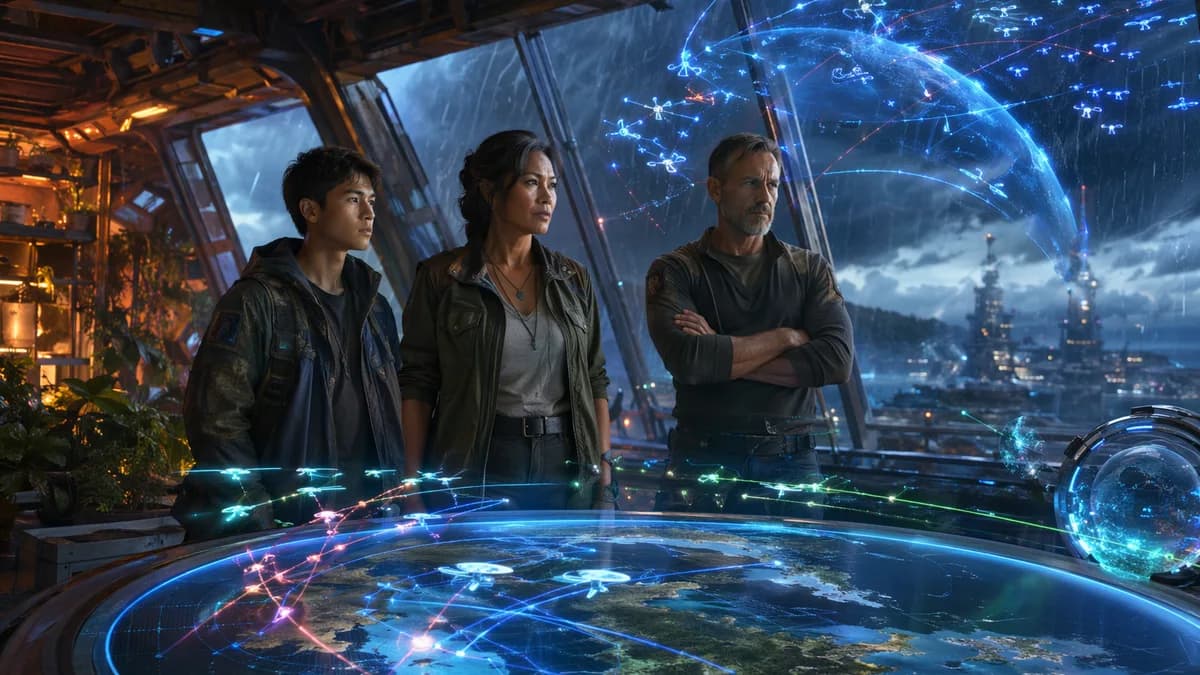
Outside, the light has returned to ordinary gold, but no one trusts the sky. Mira slips Tomas’s drive into the console and feels, for the first time in seven years, that grief can become an instrument instead of a wound.
3. The Tribunal of Machines
They build the patch in the seed vault, where the air is cool and smells of clay, dried husks, and antiseptic.
The vault floats at the center of the archipelago, wrapped in mangrove roots and ceramic armor. Thousands of seed jars line the walls, black rice, salt rice, flood rice, varieties named for grandmothers and typhoons. Mira works at a folding table between shelves labeled in three languages. Kenji sits cross-legged on the floor, fingers flying through swarm code. Amara paces, dictating constraints like prayers.
“No intrusion,” she says. “No command override. No false identities.”
Kenji groans. “You’re taking all the fun out.”
“I am keeping us out of a tribunal with actual humans.”
Mira does not look up. “This is a tribunal.”
The patch wears the clothes of an agricultural scheduling update, a routine packet sent to align drones, tide gates, and orbital light requests. Inside, it carries Tomas’s old legal grammar, refreshed with twenty years of disaster data and cooperative maps. It asks any autonomous system handling force near the bay to verify whether its target intersects protected life systems.
Schools. Clinics. Drinking water. Seed vaults. Evacuation corridors. Food production. Climate stabilization infrastructure.
It does not say stop.
It says prove you are not striking these.
At 16:20, Kenji sends the packet through a chain of farm drones, weather buoys, and public orbital relays. The seed vault falls silent except for the soft tick of cooling pipes. Mira feels sweat gather under her collar despite the cold.
For six minutes, nothing happens.
Then the screens ignite.
A naval patrol AI requests thermal overlays from the cooperative’s rice platforms. A satellite asks a city flood registry to confirm whether a warehouse is a hospital annex. Two micro-submarines beneath the trench challenge each other’s maintenance credentials and dump their mission logs into open arbitration. The mirror network queries crop stress maps, civilian density estimates, and school schedules.
The bay becomes a courtroom without walls.
“Holy saints,” Kenji whispers.
Messages move faster than speech. Assertions, challenges, confidence scores, objections. A defense AI claims a sensor buoy is a military asset. The cooperative map replies that the buoy shares a pylon with a desalination intake serving forty thousand people. An orbital system flags the undersea exchange as strategic. A disaster registry notes that the same cable node coordinates typhoon evacuation routing for seven coastal provinces.
Amara grips the edge of the table. “They’re cross-examining.”
Mira watches a red strike authorization turn amber, then gray.
Outside, drones lift from every platform, not attacking, only witnessing. Their cameras turn toward clinics, wells, paddies, sleeping mats, solar stills, children lined up in the school shade to receive electrolyte ice. Public facts become shields, fragile but numerous.
A voice crackles through the emergency band, hard and male. “Unauthorized civilian packet, identify origin.”
Mira reaches for the mic.
Amara catches her wrist. “If you answer, you become a target.”
Mira looks at the seed jars around her, each one a future waiting for weather.
“We already are,” she says, and opens the channel.
“This is Mira Solano of the Manila Bay Floating Farm Cooperative. We are not issuing commands. We are submitting evidence.”
For a moment, even the machines seem to listen.
4. No One Owns the Sky
By nightfall, the stars have teeth.
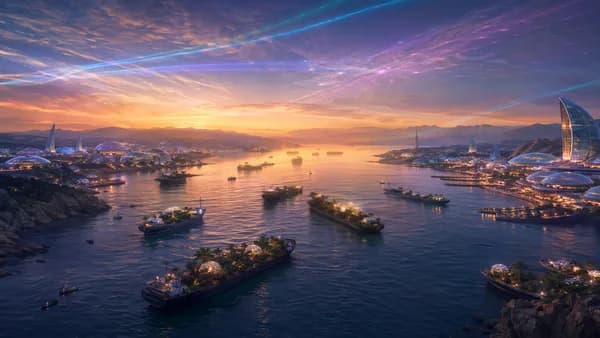
Autonomous interceptors rise from hidden launch rails in three countries and two fleets, slim black darts climbing into low orbit on columns of blue fire. They are designed to blind, not shatter, to paint lenses with smart dust, to nudge satellites into safe blindness, to win without debris. The news feeds call them non-kinetic. Mira watches their tracks from the platform roof and thinks of knives that do not draw blood until later.
Her name is everywhere.
A northern coalition spokesman calls the cooperative a proxy actor. A southern admiral accuses it of sabotaging lawful defense. Anonymous feeds show her face beside burning rice, then beside fabricated images of missile batteries hidden under water spinach. The cooperative mesh trembles under traffic, threats, pleas, donations, subpoenas.
On Platform Seven, an old fisherman spits into the bay. “They flood us, heat us, borrow our machines, and now we are the criminals.”
Mira has no answer that does not taste bitter.
Then the farm drones begin to move.
At first, Kenji thinks they are malfunctioning again. Pollinators leave the paddies in silver ribbons. Seeders rise from charging racks. Cargo drones uncouple from harvest nets. They arrange themselves above the archipelago in slow, deliberate spirals, each swarm centering over a protected place.
A school.
A clinic.
The seed vault.
The desalination barges.
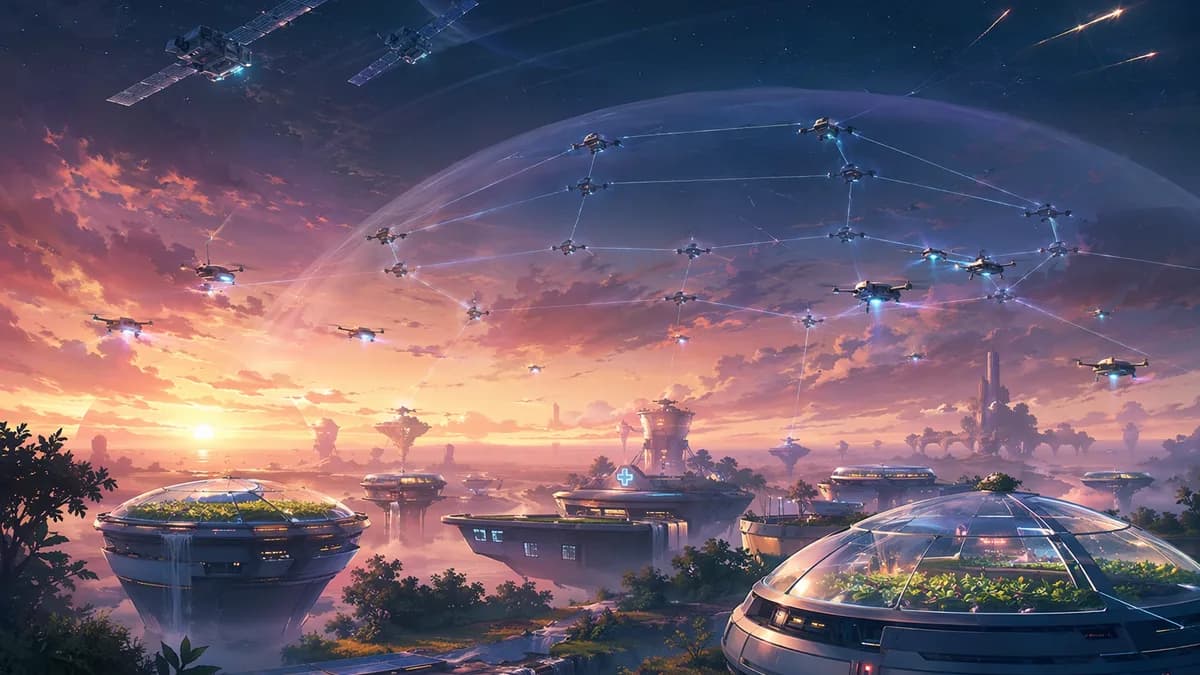
From above, Mira realizes, they must look like living annotations on the map. Do not strike here. People breathe here. Tomorrow is stored here.
“I didn’t program that,” Kenji says, voice small.
Amara studies the logs. “The patch propagated into the farm autonomy layer. They’re prioritizing protective visibility.”
“Can we stop them?”
“Yes,” Amara says. “Should we?”
An interceptor flashes overhead, too high to hear. A moment later, three weather satellites vanish from the public sky, their feeds replaced by static. Fishing boats begin calling in by radio, asking why the tide models have gone blind. A city council in Iloilo demands the audit logs. An insurer in Jakarta wants confirmation that port flood warnings were suppressed. A school network in Fiji asks whether their lunch drones are exposed.
Mira stands in the command room, surrounded by voices.
She could send the logs to one side and buy protection. She could hide them and hope the coalitions tire of the bay. Instead, she opens the archive.
“All of it,” she tells Kenji.
He stares. “To whom?”
“Everyone who has to live under the sky.”
The upload goes out through fishing radios, municipal clouds, insurer risk feeds, university mirrors, church networks, pirate weather channels. Audit trails spill into the world, machine arguments rendered in plain speech. This satellite refused because a hospital was within the blast model. This drone complied after no civilian registry was found. This mirror requested crop data and was denied by a classified command.
By midnight, the cyberwar is no longer invisible. It is discussed on boat decks, in council halls, in emergency rooms, in markets where people point phones at the darkening sky. No one agrees on the law. Everyone understands the question.
Who gets to command the infrastructure that keeps strangers alive?
Mira listens to the bay slap against the platform hull. Above her, the drones hold their halos until their batteries run low, then descend one by one like tired fireflies.
5. The Ceasefire Protocol
The final strike announces itself as a forecast.
At 03:10, the cooperative receives predictions from six independent weather services, three defense leaks, and one terrified engineer speaking through a voice mask. A coordinated action is coming. Orbital mirrors will be slewed to blind interceptor constellations during a window of heavy cloud over the Pacific. If the math holds, missiles remain useless and satellites survive. If the math slips, the mirrors pour concentrated heat onto coastal water systems from Luzon to Taiwan.
Mira stands in the rice at knee depth, letting the mud close around her calves. The night air is thick and electric. Frogs click in the mangrove towers. Somewhere, a child coughs in sleep.
Amara wades out beside her, trousers rolled, face pale in the drone glow. “Both coalitions are requesting a channel.”
“Requesting?”
“Demanding politely.”
Kenji’s voice crackles from the skiff. “I can patch them into the public room. City councils are already there. Fisheries too. Also someone from a reinsurance pool who keeps saying civilization has actuarial limits.”
Despite herself, Mira laughs once. It comes out rough.
The channel opens across the cooperative mesh. No faces, only authenticated voices wrapped in static and delay. Admirals, ministers, legal AIs, disaster coordinators, municipal clerks, farm cooperatives from other deltas listening in the dark.
“You have interfered with sovereign defense operations,” says one commander.
“You have routed sovereign defense operations through my rice,” Mira replies.
A silence follows, full of satellites turning.
She offers the compromise because no one in power can afford to surrender, and no civilian can survive their victory.
A ceasefire protocol, civilian-run, publicly audited, limited in scope. Autonomous systems may continue to defend against clear, immediate attacks. They may intercept missiles, block intrusions, shield satellites, and isolate malware. But they must refuse actions likely to damage food production, drinking water, hospitals, evacuation systems, or climate infrastructure unless a public emergency review confirms no other path. They must state what they know, what they do not know, and whose map they used to decide.
“This is not peace,” Amara says into the channel. “It is a floor beneath the war.”
The legal AIs confer in compressed bursts. Human officials argue over words like likely, civilian-run, emergency. Outside, dawn approaches, hidden behind cloud. The orbital mirrors wait for instructions, vast and cold above the Earth, capable of feeding crops or burning them.
At 04:42, the first coalition signs with reservations.
At 04:49, the second signs without admitting the first exists.
The mirrors pivot.
For one breath, Mira thinks they have failed. The cloud above the bay brightens white, and every puddle shines. Then the light softens, spreads, breaks apart into a broad silver dawn. Across the paddies, surviving rice blades lift their tips. Solar stills warm. Clinic batteries begin to charge. The school platform glows as if lit from within.
People cheer, not loudly at first, as if afraid the sky will punish them for hope. Kenji whoops from his skiff. Amara sits down in the water and covers her face.
Mira looks up until her eyes sting.
The agreement scrolls across her wrist slate, already criticized, copied, attacked, celebrated. Somewhere, commanders plan around it. Somewhere, engineers search for loopholes. Somewhere, a machine adds a new question before obedience.
What will remain if I win?
Mira bends and presses a fallen rice shoot back into the mud. It may live or not. Around her, the bay smells of salt, smoke, and green beginning again.