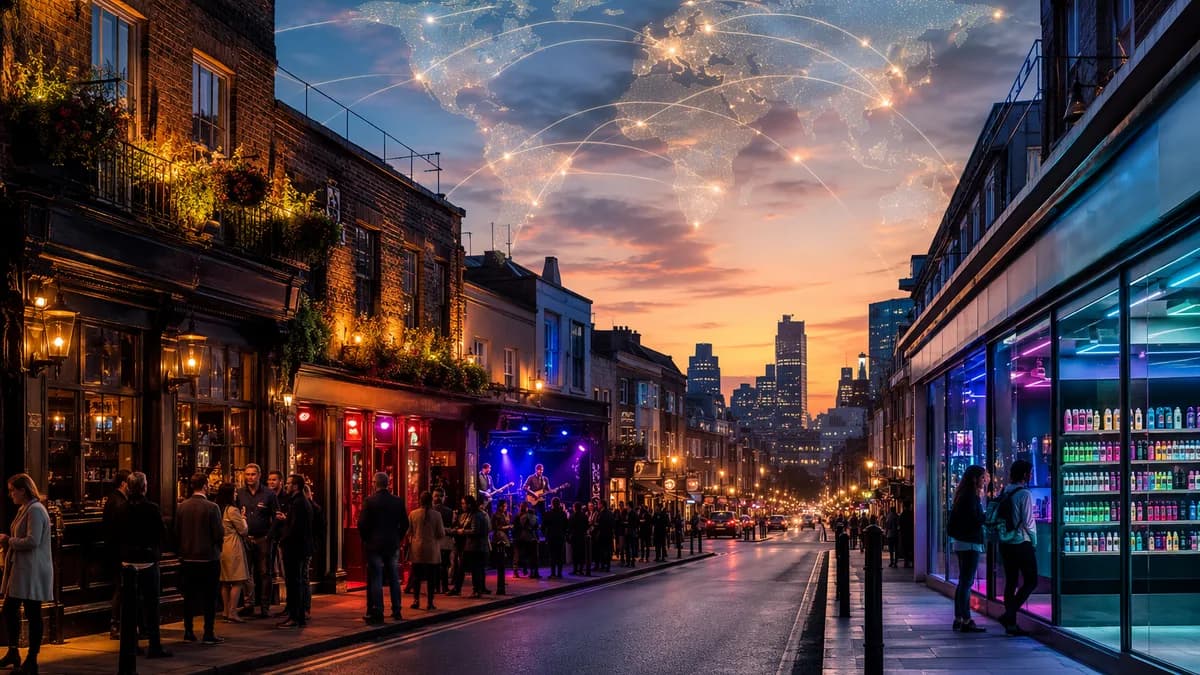
On Thursday, just days after entering Downing Street on Monday, Andy Burnham chose a politically loaded target for his first high street tax fight: cut business rates for pubs, clubs and live music venues, then look again at reliefs for vape shops and other businesses described as not helping local communities.
XOOMAR Intelligence
Analyst Take
That makes Andy Burnham business rates reform more than a hospitality measure. It is an early test of how far the new Prime Minister is willing to use tax policy to reward the high street businesses he wants to protect, while squeezing those his government views less favourably, according to Guardian World.
The policy lands after a rapid opening burst from Burnham’s government, following his Manchester power shift and earlier cost-of-living pledges. As we covered in Andy Burnham Seizes No 10 Without UK Election Test, his premiership began with an unusual mandate question. This business rates cut now gives that question a sharper fiscal edge.
Thursday's Andy Burnham business rates move picks winners on the high street
The core offer is clear. Pubs, clubs and live music venues in England are set to receive a 20% cut in business rates from April next year, with the discount expected to apply to nearly 32,000 hospitality businesses. The average pub is expected to save around £1,100 a year, according to the supplied reporting.
The funding side is more contentious. No 10 said the cut would be backed by a review of reliefs for businesses that “do not make a positive contribution to local communities”, with vape shops cited as an example. The government has also pointed to a crackdown on online marketplaces that do not comply with tax obligations.
Burnham framed the move in explicitly local terms.
“This government will back the businesses that people want to see in their communities. I said I would protect pubs and local high streets – the beating heart of our communities – and that’s what we will do. What we’re announcing today is just the start as we work to bring back hope across the country.”
XOOMAR analysis: the political risk is baked into that language. Once government ties tax relief to a judgment about which businesses people “want to see”, excluded sectors will ask where the line sits, who draws it, and why their rates bill should help fund someone else’s cut.
April next year is the first real test of who qualifies
The announced relief is narrow by design. It covers pubs, clubs and live music venues, and reporting says it will not be available to the very largest live music venues. It also comes on top of the 15% relief announced in January.
That matters because the tax reality may turn on classification. One pub operator cited in the supplied reporting, Iain Hoskins, owner of Ma Pub Group in Liverpool, said only one of his five venues qualified for a previous 15% cut because others did not have the word pub in their name.
His reaction captured the likely implementation pressure:
“I don’t want to sound ungrateful, but the increases were so huge last year that now we’re sort of chipping away at some of those increases.”
The unresolved questions are practical, not abstract:
- Eligibility: how the government defines pubs, clubs and live music venues.
- Mixed venues: how cafe bars, hybrid event spaces and venues with multiple uses are treated.
- Timing: how quickly the April change is translated into bills.
- Funding: how much comes from vape shop relief reviews, online marketplace compliance, or other changes.
- Budget link: how far the wider business rates system is revisited later.
XOOMAR analysis: this is why Andy Burnham business rates reform will be judged less by the headline percentage than by the rules beneath it. A 20% discount is meaningful only if the venues most exposed to the high street squeeze actually qualify.
The £6bn hospitality tax complaint explains why the sector wants more
UK Hospitality welcomed the move, but its response was deliberately restrained. Kate Nicholls, the group’s chief executive, called it a “positive down payment” on the Prime Minister’s commitment to hospitality, while warning that restaurants, cafes and hotels were left outside the relief.
“We welcome this as a positive down payment on the PM’s commitment to support hospitality and his pledge to return to look at this again at the budget. While support for pubs, bars and live music is welcome, [it misses out] the restaurants, cafes and hotels which are the heart of our communities and backbone of the high street.”
Nicholls put a number on the sector’s grievance: £6bn extra taxes across the sector in the last two years. That figure is the anchor for the wider hospitality argument. The industry is not saying pubs should get nothing. It is saying the pressure is sector-wide, while the relief is selective.
The day’s broader economic calendar also shows why the timing matters. At 11am BST, the UK Confederation of British Industries industrial trends orders reading for July was due, with a previous reading of -45 and consensus at -40. At 1:15pm BST, the European Central Bank interest rate decision was scheduled, with consensus for no change, followed by the 1:45pm BST press conference.
Those datapoints do not prove anything about pub demand on their own. But they do show the announcement landing on a day when markets were watching both UK business sentiment and the European rate path. Burnham is trying to create confidence before the Budget, not after it.
This follows the same early-premiership pattern we saw in Burnham's Electricity VAT Cut Hands Households Just £45: a targeted measure with a clear political message, but a limited direct saving when measured household by household or venue by venue.
Restaurants, hotels and vape retailers reveal the fault line before the Budget
Nicholls’ critique is the most important stakeholder response in the source material because it supports the policy while widening the demand.
“So if the PM truly wants to to deliver a high street renaissance and growth in every postcode then we need to look at a business rates cut for the whole of hospitality and tackle the broader cost of doing business. We’ve seen £6bn extra taxes across the sector in the last two years so we need more.”
Her second point was more positive. The inclusion of clubs alongside pubs and live music venues, she said, showed recognition of the “vital economic, cultural and social contribution made by the night-time economy.”
That split response tells investors and operators how to read the policy.
| Group | Direct position in the announcement | Immediate issue |
|---|---|---|
| Pubs | Included in 20% rates cut | Whether the average £1,100 saving offsets enough pressure |
| Clubs | Included | Recognition of the night-time economy |
| Live music venues | Included, excluding the very largest venues | Eligibility details and venue classification |
| Restaurants, cafes, hotels | Left out | Lobbying case for wider hospitality relief |
| Vape shops | Cited in review of reliefs for businesses seen as not contributing positively | Potential exposure to higher bills or lost reliefs |
No response from vape retailers is included in the supplied source material. That absence matters. The government has named a category before the affected businesses have had their say in this record.
XOOMAR analysis: the category “do not make a positive contribution to local communities” is politically potent and technically sensitive. If it remains loose, the Budget debate will shift from hospitality support to the fairness of using business rates as a behavioural filter.
Burnham's venue rescue changes the politics of business rates
Burnham’s language reaches beyond accountancy. He said:
“For too long, governments have stood by while cherished venues have disappeared from our local high streets. So today I am changing that.”
That is the emotional core of the measure. Pubs, clubs and live music venues are visible. Their closures are noticed. They carry cultural weight in a way many other rate-paying premises do not.
But the same visibility creates a policy trap. Restaurants, cafes and hotels can plausibly argue that they also anchor high streets. UK Hospitality already has. If the Budget does not expand the relief, Burnham risks turning a popular pub tax cut into a fight inside hospitality itself.
The Prime Minister has also said the government will set out further reform to the wider business rates system, including small business rates relief, at the Budget. That is the next serious checkpoint. Thursday’s announcement is the signal. The Budget is where the government has to show whether this is targeted triage or the first step toward wider reform.
The Budget will decide whether this is rescue policy or political signalling
For operators, the near-term upside is straightforward. A lower rates bill improves cash flow for qualifying venues. For the average pub, the cited saving is around £1,100 a year. For multi-site groups, eligibility will decide whether the policy is material or marginal.
For consumers, the source material does not support claims that prices for pints, tickets or meals will fall. The more grounded read is narrower: the policy may help some venues absorb pressure, especially if they qualify cleanly under the new rules.
The next fight is already visible. Restaurants, cafes and hotels will push to be included before the Budget. Vape shops and any other businesses caught by the “anti-social” review will want precise definitions. The government will try to keep the story focused on “local high streets” and “communities.”
The evidence that would strengthen Burnham’s case is clear: tight eligibility rules, a credible funding route, and a Budget package that answers UK Hospitality’s demand for wider support. The evidence that would weaken it is just as clear: venues missing out because of naming or classification quirks, a vague list of targeted businesses, and another round of sector complaints that the Andy Burnham business rates cut helps the right places, but not enough of them.
Impact Analysis
- Nearly 32,000 hospitality businesses in England are expected to benefit from the rates cut.
- The average pub could save about £1,100 a year under the plan.
- The policy signals Burnham’s willingness to use tax rules to favor some high street businesses over others.
High street business rates reform: winners and targets
| Business category | Policy treatment | Rationale stated |
|---|---|---|
| Pubs, clubs and live music venues | 20% business rates cut from April next year | Seen as local community assets to protect |
| Vape shops and similar businesses | Reliefs to be reviewed, with potential higher costs | Described as not making a positive contribution to local communities |
| Non-compliant online marketplaces | Targeted through a tax compliance crackdown | Used to help fund the high street rates cut |
Planned business rates cut for hospitality venues
Primary Sources & Disclosures

Written by
XOOMAR Insights Team
Research and Editorial Desk
The XOOMAR Insights Team pairs automated research with human editorial judgment. We track hundreds of sources across technology, fintech, trading, SaaS, and cybersecurity, cross-check the facts, and explain what happened, why it matters, and what to watch next. We do not just rewrite headlines. Every article is fact-checked and scored for reliability before it goes live, and we link back to the original sources so you can verify anything yourself.