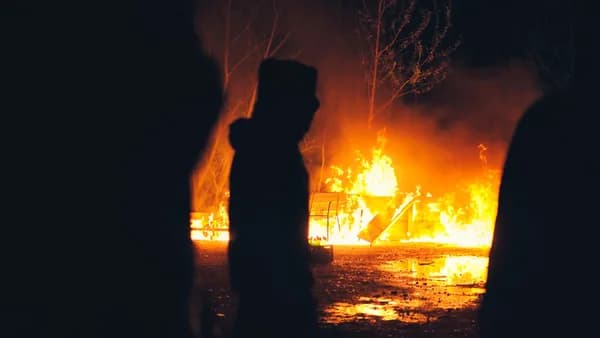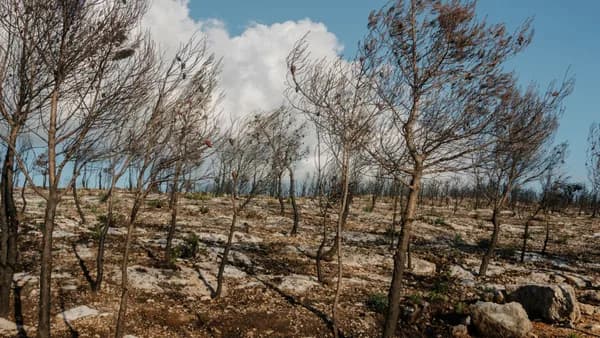
Nearly 940 square kilometers of Indonesian land burned in a single month this summer as a government, out of conventional options, organized a mass prayer for rain.
XOOMAR Intelligence
Analyst Take
The image is stark. On Tuesday, August 25, 2026, approximately 3,000 residents stood shoulder-to-shoulder in near-darkness at midday in Palembang, South Sumatra, to perform salat istisqa, a special Islamic prayer for rain. They gathered as thick smoke reduced visibility and forced motorists to drive with headlights on, according to AP and Al Jazeera reports. This spiritual plea followed an admission from Governor Herman Deru: “We have done everything we can.” The scene frames a crisis where technological and legal efforts are hitting their limit against a familiar, accelerating foe.
Prayers and Water Bombers: Indonesia's Dual Front War on Haze
The juxtaposition of a state-organized prayer and a fleet of water-bombing aircraft reveals the perceived magnitude of the threat. Authorities have deployed dozens of aircraft for cloud seeding and water bombing. They have also made 72 arrests over allegations of using fire to clear land, with four companies under investigation, according to the national disaster agency.
Yet, South Sumatra remains the nation's epicenter, with 1,429 wildfire hotspots detected by Environment Ministry satellites. This sprawl of fires, burning across vast peatlands and forests, is driven by an intensifying El Niño pattern and a prolonged dry season. The resulting haze is no longer contained, drifting into Malaysia and Brunei and becoming a regional flashpoint. The response, split between spiritual appeals and aerial countermeasures, signals a crisis surpassing the capacity of standard firefighting. It points to a deeper, systemic problem that recurs annually.
1,429 Hotspots: Why Sumatra's Fires Keep Recurring
South Sumatra's status as a persistent ignition zone is not accidental. The province, along with neighboring West Kalimantan (1,226 hotspots) and Central Kalimantan (811 hotspots), contains extensive peatland areas. When drained for agriculture, this carbon-rich soil becomes highly combustible and, once alight, can smolder underground for months, releasing massive amounts of smoke.
While the source material does not name specific industries, analysis of the region's economy points to a clear driver. The economic logic is crude and powerful: using fire to clear land is the fastest and cheapest method. For smallholders and larger actors alike, burning is a tool to quickly convert forest and peatland into arable soil for lucrative crops like palm oil and pulpwood. Enforcement actions, like the 72 arrests mentioned, target this symptom but struggle against the economic incentive. This creates a fundamental tension: rapid agricultural expansion, a pillar of development, is literally fuelling an annual public health and environmental disaster, as documented in our earlier report on the Indonesia Airpocalypse Triggers Mass Rain Prayer.
From Seeding Clouds to Seeding Doubt: The Scale of This Year's Inferno
The numbers quantifying this year's damage are substantial, even before the peak of the dry season.
- Land Burned: Nearly 940 square kilometers (360 square miles) of land burned in July 2026 alone. Within that, South Sumatra accounted for more than 20 square kilometers (8 square miles).
- National Scope: A related BBC report notes Indonesia is racing to contain fires that have burned more than 107,000 hectares nationwide (over 1,070 square kilometers), with efforts focused on six key provinces including South Sumatra and Central Kalimantan.
- Health Impact: The tangible effects are visceral. A resident in Central Kalimantan described the conditions to the BBC: "The smoke has become quite thick. When we step outside, our eyes start to sting. The smell of the smoke is also quite strong." In Malaysia, the air pollution index in Serian, Sarawak, hit an "unhealthy" level of 195.
The crisis has forced systemic disruptions: some schools in affected Indonesian provinces suspended classes for three consecutive days, and the mayor of Pontianak in West Kalimantan moved students to online lessons "for as long as the fires continued."
Hollow Promises and a History of Haze
This is not a new story. Southeast Asia has endured transboundary haze crises for decades, with major events in 1997, 2006, 2013, 2015, and 2019. Each crisis followed a similar pattern: a dry El Niño phase, widespread burning in Sumatra and Kalimantan, choking haze blanketing cities, regional diplomatic tensions, and subsequent Indonesian government pledges to crack down on burning.
The current event fits this cycle perfectly. The source material explicitly notes that "seasonal fires and cross-border haze have long been a regional flashpoint." Governor Deru's statement, "We have done everything we can", echoes countless official declarations from previous years. The recurrence suggests that the "everything" in the official toolkit, arrests, water-bombing, cloud-seeding, addresses the acute emergency but fails to reset the underlying economic and land-use incentives that make fire the tool of choice.
A Trilemma: Farmers, Corporations, and Choked Citizens
The haze crisis creates clear, clashing stakeholder viewpoints, even if the source material does not quote them all directly.
Smallholder Farmers: Often caught in the middle, they may use fire for small-scale clearing out of tradition and economic necessity, risking arrest to secure a livelihood. Large Agribusiness: While many global corporations operating in the region have publicized "no deforestation, no peat, no exploitation" pledges, fires persistently occur within and around concession areas, leading to investigations like the one into the four companies noted by authorities. Urban Citizens: Those in cities like Palembang, and across the Strait of Malacca in Singapore and Malaysia, bear the health and economic costs, respiratory issues, closed schools, disrupted travel, without direct benefit from the land-clearing. The Government: Faces a brutal balancing act. It must enforce environmental laws to protect public health and honor regional agreements, yet cannot afford to cripple a major export sector or impoverish rural voting blocs. This political calculation often results in aggressive rhetoric during crises that fades when the rains return. This mirrors the complex domestic and international pressures seen in trade disputes like when Canada Slams Trump With 50% Tariffs on $20 Billion in U.S. Imports, where policy must navigate competing economic and political imperatives.
Beyond the Water Bombers: What Real Solutions Demand
Fighting fires from the air is spectacular, expensive, and ultimately reactive. As this year's events prove, it cannot prevent the ignition. Real solutions must target the root causes.
XOOMAR Interpretation: Based on the persistent nature of the crisis, sustainable solutions would likely include:
- Land-Use Policy: Strict, transparent, and enforced moratoriums on converting peatlands and primary forests, coupled with accurate land mapping to assign accountability.
- Economic Alternatives: Providing affordable, mechanical land-clearing technology and subsidies to make sustainable methods economically viable for smallholders and large operators.
- Supply Chain Accountability: Leveraging global consumer market pressure to demand verifiably clean commodities, moving beyond corporate pledge documents to ground-level traceability.
- Community-Based Management: Empowering local communities with the authority and resources for fire prevention and peatland restoration, recognizing them as stakeholders, not just subjects of enforcement.
The current mix of arrests and prayer, while dramatic, does not constitute this kind of systemic program. Such fundamental governance challenges are not unique, as seen in the extreme case where China Backdates Crimes to Jail Mao Sculpture Artist, illustrating how legal and enforcement systems can be used to shape and control narratives and actions.
Perpetual Smoke or a Painful Pivot
The trajectory ahead forks into two plausible paths, both extrapolated from the current data.
Path One: Technocratic Firefighting. Climate change intensifies El Niño cycles, making dry seasons longer and hotter. Fire seasons grow more severe. Indonesia responds with increasingly sophisticated, expensive, and internationally funded firefighting technology, more planes, better satellite monitoring, AI-driven hotspot detection. This turns the annual haze into a managed, if worsening, disaster. The economic model of land conversion via fire remains intact, perpetuating the cycle.
Path Two: Systemic Shift. Mounting domestic health costs, sustained international pressure on commodity markets, and perhaps a political shift coalesce to force a painful transition. The government and industry invest not in fighting fires, but in eliminating the reasons they start: a large-scale pivot to sustainable, non-fire-based agriculture on already-degraded land, genuine peatland restoration, and alternative livelihoods for communities. This path is economically disruptive in the short term but aims for long-term stability.
The 1,429 hotspots in South Sumatra this August are more than a environmental statistic. They are a direct, tangible readout of Indonesia's economic choices and governance priorities. The prayer for rain seeks a temporary, natural reprieve. The lasting solution requires a man-made, and far more difficult, change of course, akin to the structural shifts required to address other climate-exacerbated crises like the Panama Canal Drastically Cuts Ship Traffic Amid Severe Drought.
Impact Analysis
- Wildfire smoke severely impacts health and safety for thousands of residents, reducing visibility and air quality. This public health emergency echoes the severe consequences of neglecting preventative health measures, as tragically seen with the recent Measles Deaths Strike Pennsylvania as US Cases Pass 2,700.
- Transboundary haze creates diplomatic tensions and environmental health risks for neighboring countries like Malaysia and Brunei.
- Recurring annual fires highlight systemic land management failures and climate vulnerabilities, threatening regional stability.
Fire Hotspots by Region
Primary Sources & Disclosures

Written by
XOOMAR Insights Team
Research and Editorial Desk
The XOOMAR Insights Team pairs automated research with human editorial judgment. We track hundreds of sources across technology, fintech, trading, SaaS, and cybersecurity, cross-check the facts, and explain what happened, why it matters, and what to watch next. We do not just rewrite headlines. Every article is fact-checked and scored for reliability before it goes live, and we link back to the original sources so you can verify anything yourself.