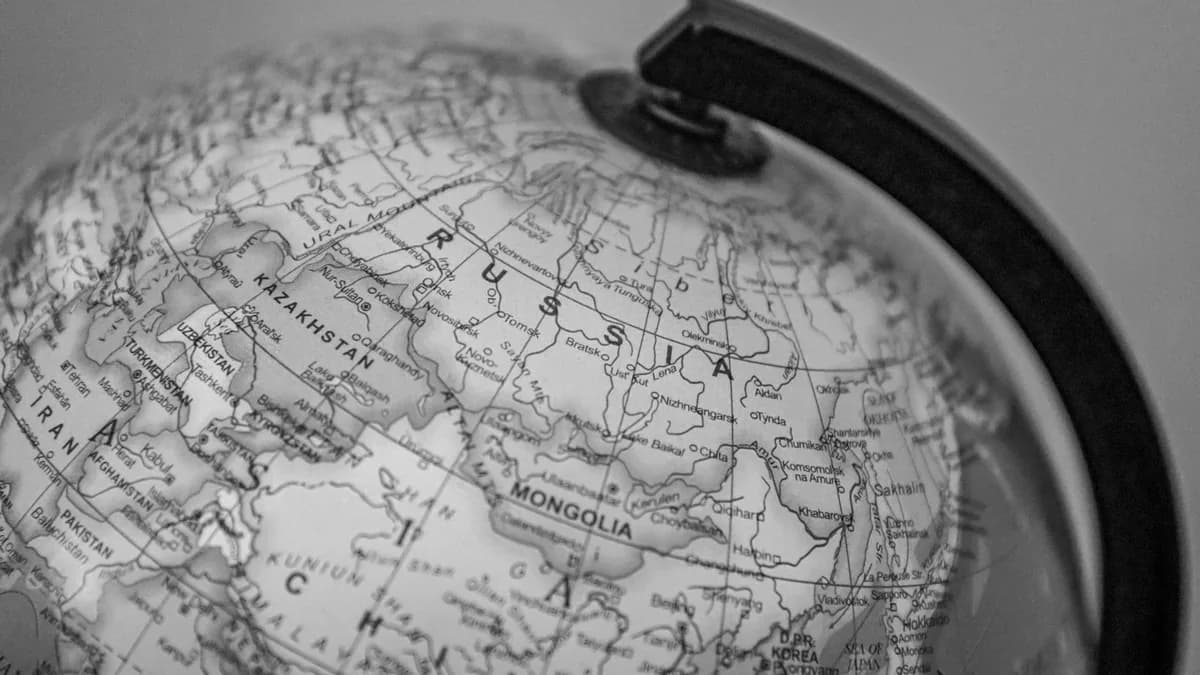
Polling stations in Kazakhstan opened on August 23, 2026, for a parliamentary election that will not bring change. More than 12 million of the country's 20 million people could vote, but only for seven state-approved parties, all loyal to President Kassym-Jomart Tokayev according to Al Jazeera. The result wasn't a surprise, because the election was the final step in a constitutional overhaul designed from the start to formalize Tokayev's control and reset his term limits.
XOOMAR Intelligence
Analyst Take
Every national vote is a bid for political legitimacy. This one was a bid for absolute stability.
How One Election Locked Down Kazakhstan's Future
This isn't a story of an election delivering an outcome. It's the story of an outcome delivering an election. The Kazakh snap parliamentary election was called after Tokayev engineered fundamental changes to how power works in the oil-rich Central Asian state.
Constitutional amendments, approved by referendum where 87% of voters allegedly supported them earlier in 2026, abolished the upper house of parliament and established a new, 145-member unicameral legislature called the Kurultai. Officials claimed this would empower parliament. A more cynical, and likely accurate, analysis is that it simplified and centralized control. Simultaneously, the Constitutional Court ruled the amendments reset term limits for the presidency. This allows the 73-year-old Tokayev, who has been in power since 2019, to run again in 2029. The election on August 23 was the administrative ritual to populate this new, streamlined system with reliably supportive deputies.
“Without a doubt, these elections will be remembered as perhaps the most interesting in our country’s history,” Tokayev said. “Amid unprecedented geopolitical tensions and mounting global challenges, we must firmly and consistently implement our strategy to transform Kazakhstan into a truly developed state.”
The keyword is "strategy," not "choice."
Why This Election Was Designed Without Competition
The Kurultai, for all its new branding, will function like the old parliament. Its primary role will be to legitimize, not legislate. This is ensured by the composition of its membership.
The only parties permitted to participate in the Kazakh parliamentary election were those vetted and approved by the state. This explicitly excluded any genuine opposition. The ruling pro-presidential Adilet party, a rebranded version of the old ruling party, was widely predicted to win an overwhelming majority. Smaller, state-sanctioned parties like Auyl and Respublica were expected to pick up minor seats, providing a veneer of pluralism without any real threat.
Independent journalist Lukpan Akhmedyarov, who faces up to seven years in prison on charges of "disseminating false information," described the pre-election atmosphere to the Associated Press: “In the run-up to these parliamentary elections, repression has intensified sharply, with attacks on independent media, cyberattacks, and criminal cases launched against independent journalists and popular bloggers. It feels like the authorities want to silence all media outlets they don’t control.” He also noted the streets were "flooded with advertisements and posters for the pro-presidential Adilet party."
The result was pre-ordained. Akhmedyarov said, “It is not very difficult to predict the outcome of these elections.” This follows a global trend where legislative bodies are formally maintained but functionally neutered, as seen recently in systems where Major Parties Cut Weak Gambling Deal Gutting Reforms.
The Quiet Strategy Behind Kazakhstan's Political Reshuffle
Tokayev presents himself as a reformer. His political agenda is called “Just Kazakhstan” and follows his break from his predecessor, Nursultan Nazarbayev, amidst the deadly 2022 unrest that left 238 people dead. He speaks of a "political reset." The new constitution is sold as the nation "casting off the super-presidential form of rule."
Yet the evidence points to consolidation, not liberation. Analysts cited in the source material connect these moves directly to economic strain. Inflation hit 10.2% earlier in the year, and tax hikes have fueled discontent. The government is "wary of a repeat of the unrest of January 2022," a scenario Tokayev guards against "by concentrating power in his own hands."
The strategy is twofold:
- Create a Narrative of Renewal: Brand constitutional changes and a new parliament as progressive reform.
- Excise Political Risk: Remove any channel for organized opposition that could mobilize economic frustration into political challenge.
It's a high-stakes gamble. By closing all safety valves for dissent, the regime bets it can manage public sentiment through control and patronage alone. This mirrors the tightrope walked by other resource-dependent nations facing economic hardship, where leaders often Cement Power Amid Austerity and Turmoil.
Kazakhstan's Tightening Grip in a Region of Strongmen
Kazakhstan presents a polished, outward-facing image as a stable investment hub balancing relations between Russia, China, and Europe. Its 2% of daily global oil supply flows through pipelines like the Caspian Pipeline Consortium. For foreign partners, predictability is paramount.
Inwardly, the political model is classic post-Soviet authoritarian consolidation. The playbook is familiar across Central Asia and Russia itself: use referendums with implausibly high approval ratings, control all media, bar opposition candidates, and harness compliant courts to reinterpret term limits. Tokayev's reset loophole is a carbon copy of maneuvers by Vladimir Putin in Russia and Recep Tayyip Erdogan in Turkey.
This election signals to neighbors and global powers that Kazakhstan's leadership will remain fixed, its geopolitical orientation steady. In a volatile region, Almaty and Astana offer a façade of continuous, technocratic management. But the underlying reality is that power is being concentrated, not dispersed. It's a system designed for elite stability, not public accountability.
Who Holds Real Power When Voting Doesn't Matter?
In a system like Kazakhstan's, elections are not moments of transfer. They are rituals of affirmation. Real power resides elsewhere.
Key Power Centers Beyond the Kurultai:
- The Presidential Administration: The executive branch, with its control over security services and economic levers, is the true seat of power.
- The Security Apparatus: Capable of quelling unrest, as seen in 2022, its loyalty is paramount.
- Elite Bargains: Power is maintained through intricate deals among economic and political elites, often centered on resource wealth.
The parliament's function in this ecosystem is to provide legal and institutional cover for decisions made elsewhere. It transforms presidential decrees into formal laws. It approves key appointments, like the newly re-established vice presidency, lending a patina of democratic process to top-down choices.
When voting doesn't alter who governs, it becomes a tool for regime measurement and propaganda. Officials can point to turnout figures, no matter how manufactured, and a multi-party ballot as proof of popular mandate. The act of voting is weaponized to demonstrate control, not to express preference.
Predictable Politics and Future Unrest
Eliminating political competition doesn't eliminate the reasons people protest. It simply removes a peaceful channel for those grievances. The 2022 unrest erupted over fuel prices but reflected deeper frustrations over inequality and corruption.
The constitutional overhaul and managed election are a direct response to that trauma. The regime's calculation is clear: centralized, predictable control is the best defense against future instability. But it's a strategy that stockpiles risk.
Underlying pressures remain:
- Persistent high inflation
- Public discontent over taxes
- A closed political system with no outlet for dissent
By turning elections into formalities, the system loses its primary early-warning signal. It can no longer gauge genuine public sentiment through electoral performance. Discontent, when it emerges, is therefore more likely to explode onto the streets, as it did before, rather than filter through parliamentary debate.
The durability of this model depends entirely on the state's ability to manage the economy and distribute enough wealth to maintain a quiet social contract. If that contract frays, a system with no political safety valves becomes a pressure cooker. The Kazakh parliamentary election of 2026 wasn't about who would win. It was about proving the regime could stage-manage its own political future without interference. The real test comes when the economy, not the opposition, casts the next vote.
Why It Matters
- This election formalizes a shift to a unicameral legislature, centralizing power and resetting presidential term limits for the incumbent.
- The outcome ensures continued stability under President Tokayev's rule, which is seen as crucial amid regional geopolitical tensions.
- It signals to international observers and investors that Kazakhstan's political landscape will remain predictable and state-controlled for the foreseeable future.
Constitutional Amendment Referendum Result
Primary Sources & Disclosures

Written by
XOOMAR Insights Team
Research and Editorial Desk
The XOOMAR Insights Team pairs automated research with human editorial judgment. We track hundreds of sources across technology, fintech, trading, SaaS, and cybersecurity, cross-check the facts, and explain what happened, why it matters, and what to watch next. We do not just rewrite headlines. Every article is fact-checked and scored for reliability before it goes live, and we link back to the original sources so you can verify anything yourself.