Can Einride make electric trucking work by owning the charging software, not just the trucks? That is the real question behind the Einride Flipturn acquisition, a $38 million all-stock deal that pushes the Swedish electric and autonomous trucking company deeper into the operational layer of freight electrification.
XOOMAR Intelligence
Analyst Take
Einride agreed to buy Flipturn, an EV charging software startup founded in 2022, in a transaction expected to close this month, according to TechCrunch. The deal is Einride’s first acquisition as a publicly traded company after its blank-check merger and Nasdaq debut in June.
Einride CEO Roozbeh Charli said the “acquisition is a decisive step in our U.S. scaling strategy.”
The headline number matters. The deeper signal matters more. Einride is betting that electric freight won’t scale through vehicles alone. It will scale through the systems that keep those vehicles charged, routed, monitored, and earning revenue.
Can the Einride Flipturn acquisition turn charging into freight control?
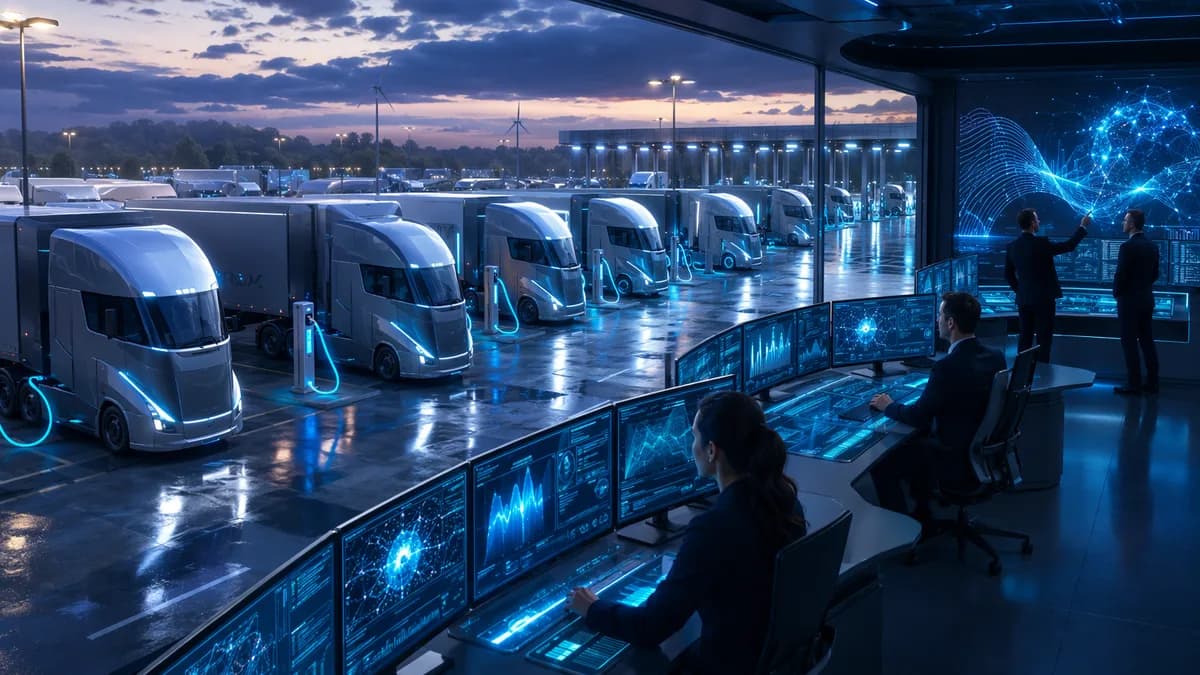
The Einride Flipturn acquisition gives Einride a missing piece in its managed electric freight pitch: charger software that sits between depot hardware, vehicles, routes, and operations teams.
Flipturn has 17 employees and will continue operating with the same team, a company spokesperson told TechCrunch. The startup raised $15.5 million in venture capital to build software that can communicate with any EV charger over the Open Charge Point Protocol, the industry standard for communication between EV chargers and management systems.
That hardware-agnostic angle is important. Einride does not just need chargers that work with one brand or one depot layout. It needs software that can help commercial customers run trucks across real routes, with real battery levels, real charging constraints, and real freight obligations.
Flipturn’s platform does three practical things, based on the source material:
- Charger health: It monitors charging infrastructure and flags problems.
- Fleet data: It pulls in vehicle battery levels, driving history, and route information.
- Site systems: It integrates with on-site solar and energy storage systems.
That turns charging from a static asset into an operating input. A charger that exists but fails, sits blocked, or can’t match truck schedules is not useful capacity. For electric trucking, software decides whether depot power becomes freight movement or dead time.
For adjacent EV hardware context outside Einride’s deal, XOOMAR has also covered how pricing pressure is reshaping truck electrification in Ford’s $30,000 Electric Truck Forces a Hard EV Reset.
Why does Flipturn matter more than another charger rollout?
Einride is best known for its cabless autonomous pod-like trucks, but TechCrunch reports that its biggest revenue driver is a fleet of 200 heavy-duty electric trucks. Those trucks operate for customers including Heineken, PepsiCo, and Carlsberg Sweden across Europe, North America, and the United Arab Emirates.
That matters because Einride is not simply selling hardware. In Amazon’s case, TechCrunch says Amazon is not buying Einride’s trucks. Einride owns and manages the trucks through its Saga AI software, and drivers in Amazon’s Relay freight network can use them. Relay launched in 2017 as an app that truck drivers use to book hauling gigs with Amazon.
So Flipturn fits the model. Einride wants to own and manage the operational stack around electric freight, not just place trucks in customer hands and hope depot charging works.
| Layer | Before Flipturn | After Flipturn closes |
|---|---|---|
| Vehicles | Einride operates heavy-duty electric trucks | Still core to the model |
| Fleet software | Saga AI manages trucks | Saga can be paired with charging data |
| Charging visibility | Less directly controlled from the source material | Flipturn adds charger health and fleet-aware charging software |
| Customer pitch | Electric freight service | Electric freight plus charging management software |
XOOMAR analysis: this makes Einride’s offer easier to understand for large shippers. A customer does not need to become an expert in every charger, route, battery state, and depot system on day one. Einride can pitch a managed service that includes more of the operational burden.
The risk is also clear. The more Einride bundles freight, software, and charging operations, the more customers must trust Einride as an operating partner, not just a vendor.
What do the deal numbers say, and what do they not say?
The transaction is all stock and valued at $38 million. TechCrunch does not report why Einride chose stock over cash, so the only grounded reading is this: Einride is using its public equity to acquire a small software company that it sees as strategically useful for U.S. growth.
Anything beyond that needs caution. The source does not provide Einride’s cash position, dilution math, profitability profile, or post-deal ownership impact. It also does not quantify expected savings from Flipturn’s software.
Still, the valuation sits against a useful set of verified facts:
- Flipturn age: Founded in 2022.
- Capital raised: $15.5 million in venture funding.
- Employees: 17.
- Deal value: $38 million in stock.
- Close timing: Expected this month.
- Einride fleet scale: 200 heavy-duty electric trucks.
The deeper economic question is not whether $38 million is large in isolation. It is whether charging software can make Einride’s managed freight model more reliable as the company scales.
XOOMAR analysis: for electric trucks, the expensive failure mode is not only a vehicle that cannot drive far enough. It is a truck that cannot charge when the freight plan requires it. Flipturn’s value will come from reducing that uncertainty, if its software performs as advertised across customer sites and charger types.
For readers following the software side of infrastructure strategy in other sectors, XOOMAR’s coverage of $400 Million Bet Pits Current AI Against Big Tech's Grip offers a separate look at how control over technical layers can shape market power.
How should shippers and fleet operators read Einride’s charging grab?
Shippers should read this as a reliability move. Einride already operates trucks for major customers. Adding Flipturn gives it a clearer answer when buyers ask how electric freight will be charged, monitored, and kept ready for routes.
Fleet operators will see both promise and dependency. The promise is better visibility into charger health, vehicle battery status, routes, and site energy systems. The dependency is that Einride’s managed model may pull more operating decisions into its own software stack.
Utilities and site planners are not directly discussed in TechCrunch’s report, so claims about grid coordination would go beyond the source. But the source does say Flipturn integrates with on-site solar and energy storage systems. That suggests Einride wants depot charging to interact with broader site energy assets, not remain a separate tool bolted onto the side.
Truck makers and logistics rivals face a sharper strategic question: if charging software becomes part of the freight product, selling or operating trucks without that layer may look incomplete.
What should electric trucking customers ask after the Einride Flipturn acquisition?
Customers evaluating Einride after the Einride Flipturn acquisition should focus less on the novelty of cabless autonomous pods and more on operational proof.
The practical questions are direct:
- Data control: Who owns charger, vehicle, route, and battery data?
- Failure responsibility: Who is accountable if charging problems delay loads?
- Hardware flexibility: Does the platform continue to work across charger brands through Open Charge Point Protocol?
- Fleet fit: Can the software handle mixed operations, or only Einride-managed trucks?
- Site integration: How will solar and energy storage data be used in daily freight operations?
TechCrunch reports that Flipturn will keep its same team. That lowers the immediate integration shock, but it does not answer the harder product question. Einride still has to show how Flipturn’s platform will connect with Saga AI and customer operations in practice.
The deal’s success will not be proven by closing this month. It will be proven when customers can see fewer charging surprises, better truck availability, and clearer operational data. The evidence that would strengthen Einride’s thesis: named customer deployments using the combined platform at scale. The evidence that would weaken it: Flipturn remaining a side product, useful but not central to Einride’s freight contracts.
The Bottom Line
- Einride is signaling that charging software is central to making electric freight commercially viable.
- The $38 million all-stock deal adds operational control over depot charging, routing, and vehicle uptime.
- Flipturn’s hardware-agnostic software could help Einride serve fleets with varied chargers and real-world freight constraints.
Einride and Flipturn at a glance
| Company | Role in the deal | Key detail |
|---|---|---|
| Einride | Acquirer | Swedish electric and autonomous trucking company scaling managed electric freight in the U.S. |
| Flipturn | Acquired company | EV charging software startup founded in 2022 with 17 employees. |
Einride-Flipturn deal versus Flipturn funding
Primary Sources & Disclosures

Written by
XOOMAR Insights Team
Research and Editorial Desk
The XOOMAR Insights Team pairs automated research with human editorial judgment. We track hundreds of sources across technology, fintech, trading, SaaS, and cybersecurity, cross-check the facts, and explain what happened, why it matters, and what to watch next. We do not just rewrite headlines. Every article is fact-checked and scored for reliability before it goes live, and we link back to the original sources so you can verify anything yourself.