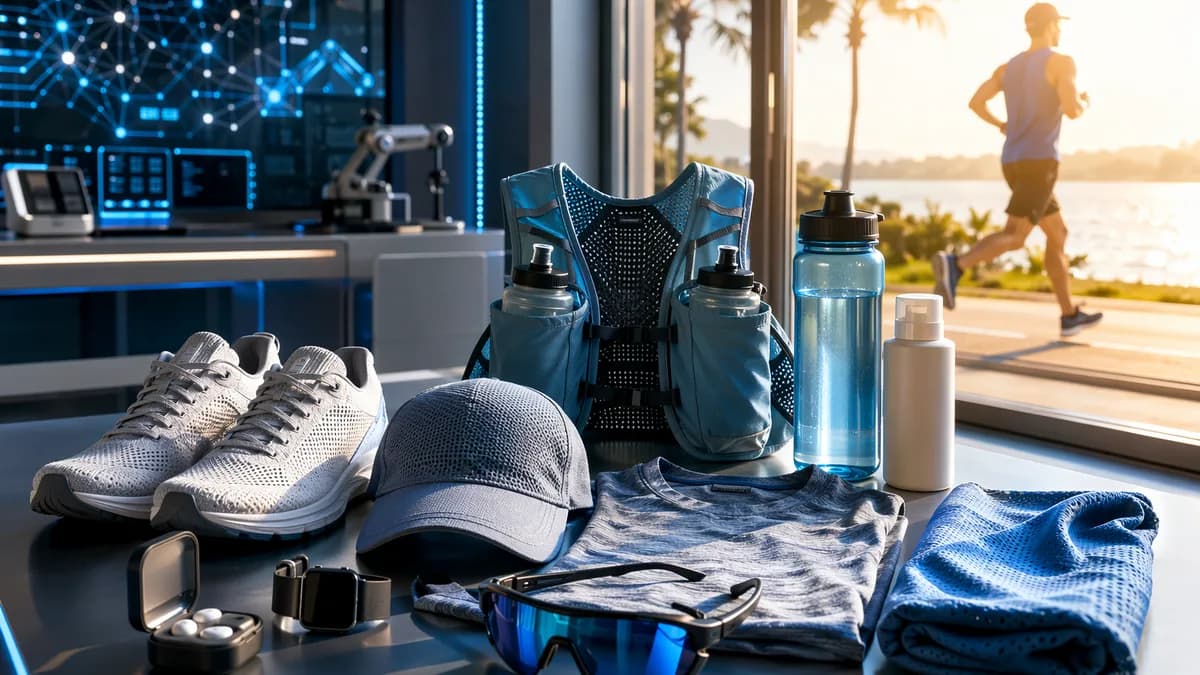
Pack the right hot-weather running gear so you finish cooler, safer, and less wiped out
You can build a 12-piece hot-weather running gear kit that keeps sweat soak, chafing, glare, sun exposure, and hydration friction from wrecking your summer miles. This is for runners who’d rather stay outside than retreat to the treadmill every time the temperature jumps.
XOOMAR Intelligence
Analyst Take
The idea comes from a practical summer running setup at Tom's Guide, where the author frames the problem cleanly: sunny runs are great until your normal kit starts working against you.
“After all, I'm trying to exercise, not get heatstroke.”
Gear won’t make dangerous heat harmless. It can, though, make ordinary hot-weather running less miserable. Use this as a grab-and-go checklist for summer runs, vacation mileage, and race training blocks.
If your spending has already spread into recovery tech, our look at the $799 Nike Hyperboot and serious recovery gear is a useful companion read. And if you track gear purchases through a coaching side business or fitness LLC, our guide to digital banks with accounting integrations may save you admin time later.
Before you start: choose cooler timing, shade, and water access
Start with the run setup, not the shopping cart. iRunFar says getting out before sunrise or after things have cooled down is “always a good choice” when the heat rises. That’s the simplest upgrade.
Pick routes with shade where possible. Know where you can refill, stop, or cut the run short. Ask yourself one blunt question before you leave: if this starts going badly, where do I get water or get home?
XOOMAR analysis: The best hot-weather running gear reduces friction. It doesn’t replace judgment.
Step 1: Wear a sweat-wicking running top instead of a cotton T-shirt
Your top is the first place heat punishes lazy choices. Go for a lightweight technical shirt that moves sweat and doesn’t cling like a soaked towel.
Source-backed examples include the rabbit EZ Tee Perf SS, named by iRunFar as its best shirt for hot weather, and the lululemon Mile Maker Mesh Short-Sleeve T-Shirt, which Runner’s World describes as lightweight, quick-drying, and mostly polyester.
Watch out for heavy cotton. It gets wet, stays wet, and turns every mile into a drag.
Step 2: Add a tank or sun shirt when airflow or coverage matters more
A tank top can feel better when you want maximum airflow. Runner’s World highlights the Tracksmith Meridian Tank, citing its VentAir fabric and UPF50+ protection.
If sun exposure is the bigger problem, consider a sun shirt instead. iRunFar lists the Outdoor Research Echo Hoodie as its best sun shirt for hot-weather running.
The trade-off is simple: less fabric can feel cooler, more coverage can reduce direct sun on skin.
Step 3: Choose shorts or tights that don’t trap heat or rub your skin raw
Swap thick leggings for lightweight running shorts or thin fitted bottoms that don’t bunch, sag, or grind into your skin.
iRunFar’s top shorts pick is the Patagonia Men’s Strider Pro Shorts 5-inch and Patagonia Women’s Strider Pro Shorts 3 1/2-inch. The guide says the men’s version weighs 3.7 ounces, while the women’s version weighs 2.8 ounces. It also calls out storage, liners, and sweat management.
Runner’s World also points to the Tracksmith Twilight Half Tights for runners who prefer fitted coverage and pocket space.
Step 4: Use a sports bra built for sweat, storage, and fewer rub points
For runners who wear one, a sports bra can make or break a summer run. Heat magnifies every seam and every overloaded pocket.
iRunFar names the Oiselle Hi Twenty Bra as its best sports bra. Runner’s World highlights the Bandit Stamina-V Square Neck Run Bra, noting its two underarm gel pockets and a phone pocket built into the racerback.
Watch out for removable cups if they shift or hold sweat. Convenience on a cool day can become irritation in humidity.
Step 5: Upgrade to technical running socks before the pavement heats up
Your socks need to manage sweat better than everyday pairs. iRunFar’s hot-weather pick is the Drymax Extra Protection Hot Weather 1/4 Crew Socks.
The goal is simple: reduce moisture, rubbing, and that swampy foot feel that shows up fast in summer.
Don’t treat socks as an afterthought. A great shirt won’t save a run if your feet are sliding around inside wet fabric.
Step 6: Add a visor or lightweight cap to shield your face
A running hat cuts direct sun and catches sweat before it runs into your eyes. iRunFar names the Patagonia Duckbill Trucker Hat as its best hat for hot weather. Runner’s World lists the Ciele FSTCap SC as its best running hat.
Choose something light, washable, and breathable. A cap should help you stay comfortable, not feel like a lid on a boiling pot.
Step 7: Use running sunglasses to cut glare and stop squinting through every mile
Bright roads, open trails, and water reflections can make a run feel harsher than the temperature alone suggests.
iRunFar lists Smith Motive Sunglasses as its best sunglasses for hot-weather running. Runner’s World’s summer guide also mentions protecting your eyes with polarized shades.
Look for a frame that stays put when you sweat. If your sunglasses bounce, slide, or fog constantly, they’ll end up in your hand instead of on your face.
Step 8: Apply sweat-resistant sunscreen before you leave the house
Sunscreen belongs in the hot-weather running gear kit, not in the “maybe” pile. iRunFar names Zealios Sun Barrier SPF 45 Sunscreen as its sunscreen pick, while Runner’s World points readers toward sweat-resistant sunscreens for summer running.
Cover exposed skin before you head out. That includes easy-to-miss areas like ears, neck, shoulders, and the backs of hands.
Watch out for formulas that run into your eyes once sweat starts. Test sunscreen on an easy run first.
Step 9: Carry water in the setup you’ll actually use while running
The best hydration tool is the one you don’t hate carrying.
| Run setup | Source-backed option | Best fit |
|---|---|---|
| Handheld bottle | Runner’s World lists the Amphipod Hydraform Ergo-Lite Handheld Water Bottle | Shorter runs where you want simple access |
| Hydration pack | iRunFar lists the Salomon Adv Skin 12 | Longer outings or routes with fewer refill options |
Don’t save your first test for a hard workout. If a bottle grip annoys you or a pack rubs, you’ll find out quickly.
Step 10: Bring electrolyte powder when plain water isn’t enough for the session
Both iRunFar and Runner’s World include electrolyte powder in their summer gear recommendations. iRunFar names Skratch Labs Hydration Sport Drink Mix. Runner’s World names Liquid I.V. Hydration Multiplier.
Use the format your stomach tolerates and your routine can handle: powder, tablet, or ready-mixed bottle.
Watch out for race-day experiments. New drink mix plus high heat is a bad time to learn what your gut dislikes.
Step 11: Use a neck gaiter for sun coverage and quick cooling comfort
A neck gaiter can add coverage and comfort without requiring a full extra layer. iRunFar lists Buff CoolNet UV Half Neckwear as its best neck gaiter for hot-weather running.
This is especially useful on exposed routes where your neck takes direct sun for long stretches.
Keep the expectation realistic. A gaiter can help comfort and coverage. It doesn’t cancel out brutal conditions.
Step 12: Keep the kit tight, then adjust by distance, route, and sweat rate
Here’s the full hot-weather running gear checklist:
- Top: Sweat-wicking shirt
- Coverage: Tank or sun shirt
- Bottoms: Lightweight shorts or half tights
- Support: Sports bra if needed
- Socks: Technical running socks
- Headwear: Cap or visor
- Eyes: Running sunglasses
- Skin: Sweat-resistant sunscreen
- Hydration: Handheld bottle
- Long-run carry: Hydration pack
- Fuel support: Electrolyte powder
- Neck coverage: Lightweight gaiter
Adjust from there. A shaded 30-minute run doesn’t need the same kit as a long exposed route. The next practical move is simple: pack your summer running gear before the run, not when you’re already hot, rushed, and bargaining with yourself at the door.
Key Takeaways
- Hot-weather running gear can reduce sweat, chafing, glare, sun exposure, and hydration problems during summer miles.
- Timing runs before sunrise or after temperatures cool can be more important than buying more gear.
- Runners should plan shaded routes, water access, and exit options before heading out in the heat.
Primary Sources & Disclosures

Written by
XOOMAR Insights Team
Research and Editorial Desk
The XOOMAR Insights Team pairs automated research with human editorial judgment. We track hundreds of sources across technology, fintech, trading, SaaS, and cybersecurity, cross-check the facts, and explain what happened, why it matters, and what to watch next. We do not just rewrite headlines. Every article is fact-checked and scored for reliability before it goes live, and we link back to the original sources so you can verify anything yourself.