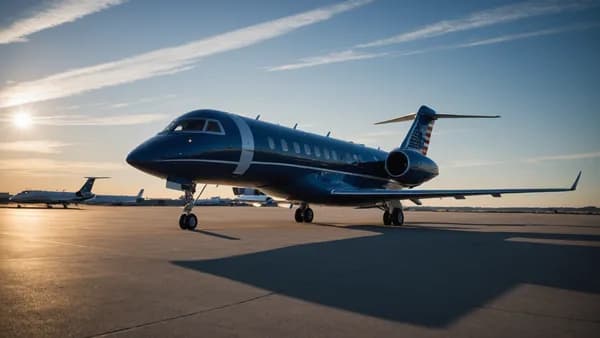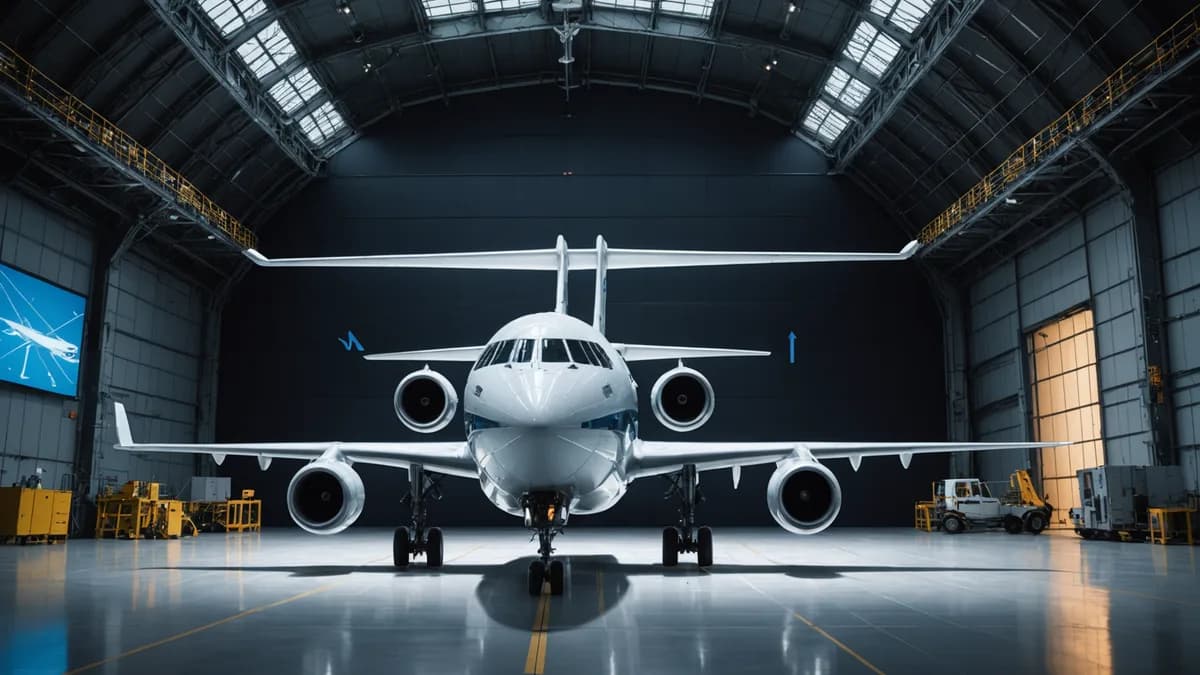
Poseidon Aerospace just landed a $60 million Series A to fly cargo planes with no one inside, a direct and expensive bet that the path to fixing broken supply chains runs through empty cockpits. According to TechCrunch, the startup will use the capital to push its uncrewed cargo aircraft, Egret, toward a first test flight by the end of this year. For logistics giants, shippers, and aerospace investors, this is more than another moonshot. It’s a high-stakes attempt to reconfigure the most rigid and expensive link in the global transport chain: the pilot.
XOOMAR Intelligence
Analyst Take
The funding round was led by TQ Ventures and includes new investments from Hanwha Asset Management, G Squared, and JAWS. This follows an $11 million seed round the company raised last year.
The $60 Million Wager Is on Economics, Not Technology
The core thesis from Poseidon’s leadership is starkly unromantic. Co-founder and CEO David Zagaynov, who previously worked on logistics at Amazon, told TechCrunch his company was founded with a specific allergy to flashy, unproven tech.
“Not to be a hater, but I think a lot of people who start aerospace companies get nerd-sniped by very cool technology and then want to implement it into market. For us, we want to improve cargo.”
This philosophy dictates every technical choice. There’s no electric or hydrogen powertrain. No vertical takeoff and landing. The Egret and a seaplane variant called Heron are fixed-wing aircraft powered by combustion engines.
“It’s really hard to beat the energy density of fuels of anything carbon-related,” Zagaynov said. “Can I make a really good box with wings to move things for super cheap?”
The $60 million investment is a bet that this ruthless focus on unit economics, enabled by removing the human, is finally a viable business model.
For Logistics Operators, It’s a Play for Control and Cost
Poseidon’s pitch to the cargo industry isn’t about selling planes. Zagaynov said Poseidon intends to operate its own regional air cargo business, competing directly with incumbent carriers for business from giants like UPS and FedEx.
The value proposition is built on three cost and flexibility advantages that stem directly from a pilotless design:
Utilization: “The plane is like a very expensive asset that spends most of its life just waiting,” Zagaynov noted. Without pilot flight-hour limits and mandatory rest periods, an aircraft could theoretically fly multiple long-haul legs in succession, dramatically increasing its revenue-generating hours.
Routing Agility: Demand spikes could be met by redirecting aircraft without the constraint of where a pilot’s home base is. This could enable more point-to-point routes, breaking the traditional hub-and-spoke model that dominates regional cargo.
Design Efficiency: Removing the cockpit and all associated life-support systems strips out significant structured weight. “Your engines can be much lighter, much more efficient, and so it’s like a virtuous cycle in the positive direction of just lighter, cheaper,” Zagaynov explained.
For a logistics CEO, this translates to a potential for predictable, lower-cost capacity and a more resilient network, especially for what Poseidon calls “degraded or nonexistent infrastructure.”
For Regulators and Skeptics, Safety Is the Unanswered Question
While the TechCrunch profile focuses on the business logic, the most formidable hurdle is unspoken in the funding announcement: certification. The Federal Aviation Administration (FAA) has no existing framework to certify a large, autonomous aircraft to routinely share airspace with crewed traffic.
Poseidon may benefit from a more permissive regulatory mood. Zagaynov pointed to recent FAA pilot programs for other advanced air mobility concepts, stating there’s a “path to commercialization that I don’t think existed like five to ten years ago.”
XOOMAR Analysis: The regulatory path will be a marathon. It will require proving that an autonomous system’s reliability and decision-making exceed that of a human pilot in all conceivable failure modes, from severe weather to onboard fires to complete communication loss. Every dollar of that $60 million will be scrutinized not just by investors, but by safety engineers demanding exhaustive validation data.
The human cost is another looming question. The startup’s model inherently displaces a highly skilled profession. While the article doesn't quote pilot unions, their opposition will be fierce, centering on safety and job security. Poseidon’s success hinges on convincing regulators that its systems render those concerns obsolete.
The First Test Flight Is a Data Harvest, Not a Demo
The upcoming test of the Egret before year’s end is critical, but not for the obvious reason. Simply taking off and landing autonomously is a low bar. Modern military drones have done that for decades.
The real value of this flight is as a litmus test for investor and regulator confidence. It must generate data that proves two things:
- The aircraft’s fundamental aerodynamics and control systems work as designed at full scale.
- The company’s methodology for testing and validating an autonomous flight stack is robust and credible.
Failure here isn’t just a crashed prototype. It’s a signal that the company’s “ruthless” practicality may have overlooked a fundamental engineering challenge, which would freeze future funding. Success means the company earns the right to spend the next several years and hundreds of millions more tackling the harder problem: proving it’s safe enough for the FAA.
A Niche Beachhead: Defense and Remote Routes
Poseidon isn’t aiming for the crowded skies over Chicago O’Hare on day one. Its initial targets reveal a pragmatic go-to-market strategy.
Defense Logistics: The startup is explicitly designing for “remote communities and underserved routes where air cargo service is constrained.” Capabilities that operate without runways make a nation’s logistics “harder to disrupt and more resilient to adversary denial.” Zagaynov noted that China is already testing its own cargo drones, framing the effort as a strategic necessity.
Regional Commercial Cargo: The first commercial routes will likely be over water or to remote areas with minimal traffic, where the regulatory and risk profile is simpler. This is a classic tech startup tactic: find a niche, dominate it, and use that credibility to attack the core market.
This approach mirrors scaling challenges seen in other frontier transport sectors, where companies often target controlled or less complex environments first, as we saw in the early days of the flying car sector covered in our analysis of Larry Page's Flying Car Startup CEO Quits Amid Scaling War.
The Five-Year Horizon: Autonomous Corridors, Not Free Flight
Looking past the test flight, the realistic timeline for impact is measured in half-decades, not quarters.
Prediction 1: The regulatory marathon. Even with flawless test data, securing full FAA certification for commercial routes in dense airspace is a 5 to 7 year endeavor. The process will be iterative, with restrictions gradually lifted as millions of autonomous flight miles are logged in approved corridors.
Prediction 2: “Bus lanes” in the sky. The first viable, profitable applications will be on predefined, repeatable routes | think automated freight corridors between specific hubs or along coastlines. Complex, weather-dependent urban deliveries will come last, if ever.
Prediction 3: The talent war intensifies. As Poseidon moves from prototype to certification, it will need to raid talent from aerospace primes, autonomous vehicle companies, and aviation software firms. They’ll be competing in the same brutal market for specialized engineers that has reshuffled top AI talent, a dynamic we examined in Barret Zoph's Chaotic Odyssey Lands Him Back at Google.
Poseidon’s $60 million round is a significant marker. It signals that a cohort of serious venture investors believes the economic pressure of inefficient logistics has finally surpassed the industry’s deep-seated risk aversion. The race to fill the skies with unmanned freighters is no longer theoretical. It’s underway, well-funded, and betting everything on the idea that the most reliable way to move a box is to remove the person.
The Bottom Line
- A $60M Series A investment signals strong confidence in pilotless cargo flight as a solution to high logistics costs.
- Removing pilots could dramatically lower operational expenses for global supply chains.
- Poseidon's focus on proven, economical technology contrasts with flashy, unproven aerospace innovations, aiming for faster market impact.
Poseidon Aerospace Funding Rounds
Primary Sources & Disclosures

Written by
XOOMAR Insights Team
Research and Editorial Desk
The XOOMAR Insights Team pairs automated research with human editorial judgment. We track hundreds of sources across technology, fintech, trading, SaaS, and cybersecurity, cross-check the facts, and explain what happened, why it matters, and what to watch next. We do not just rewrite headlines. Every article is fact-checked and scored for reliability before it goes live, and we link back to the original sources so you can verify anything yourself.