
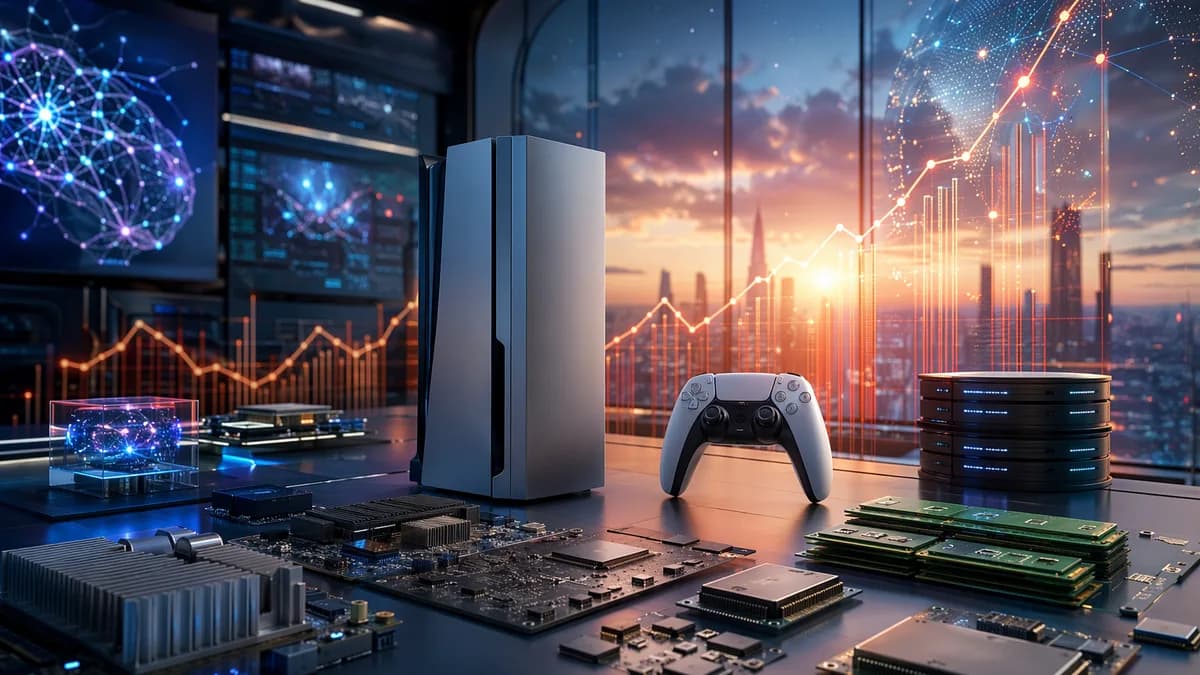
Console buyers are used to waiting for cheaper hardware, but the Xbox price increase sends the Xbox Series S 512GB from $399 to $499 on August 1.
TechnologyJune 26, 2026· 7 min read· By XOOMAR Insights Team
Xbox Price Increase Shoves Series S Into $499 Shock
Updated on June 28, 2026
XOOMAR Intelligence
Analyst Take
59/ 100
4 sources analyzedLow confidenceTrend10Freshness94Source Trust90Factual Grounding91Signal Cluster40
Xbox price hikes show the cheap console bargain is starting to crack
Microsoft is no longer absorbing the hardware squeeze quietly. A few hours after Apple raised prices across parts of its hardware lineup, Microsoft said Xbox console prices will increase worldwide, according to TechCrunch. The company is also discontinuing its 2TB Xbox model.
That timing matters. This doesn’t read like a normal console-cycle adjustment. It looks like a broader premium hardware reset, with Apple and Microsoft both telling customers the same thing: memory and storage costs have moved too far, too fast, for device makers to keep eating the hit.
The Xbox move lands especially hard because consoles have a different price psychology than laptops or tablets. Buyers expect stability, bundles, or mid-cycle discounts. A price rise late in the generation feels sharper than ordinary inflation because the hardware is older, not newer.
Microsoft’s stated reason is narrow and concrete: rising memory and console storage prices. The broader signal is bigger. The AI infrastructure buildout, including debates over orbital data centers, is now competing with consumer electronics for critical components, and everyday devices are losing some of that fight. We covered the Apple side of that pressure in Apple Price Hikes Dump AI Data Center Costs on Buyers, and Xbox now gives the same story a gaming price tag.
Memory and storage costs are doing the damage Microsoft is willing to name
Microsoft says storage and memory costs are now more than 2.5x higher than previous levels, and warned those prices could double by fall 2027. Apple cited similar industry pressure after raising prices on products including Macs and iPads.
The new Xbox pricing is blunt, with the Xbox Series X price increase sitting alongside the Series S jump:
| Xbox model | Previous price | New price from August 1 |
|---|---|---|
| Xbox Series S 512GB | $399 | $499 |
| Xbox Series S 1TB | $449 | $599 |
| Xbox Series X 1TB Digital | $599 | $750 |
| Xbox Series X 1TB Disc | $649 | $800 |
| Xbox Series X 2TB | Discontinued | Discontinued |
Microsoft frames the increases as $100 more for 512GB models and $150 more for 1TB versions. The important point is not just the sticker shock. It’s that the company is pointing to component inflation rather than adding new hardware capability as the reason customers must pay more.
The source material does not identify logistics, energy, currency swings, or other manufacturing costs as Microsoft’s rationale here. The named pressure is memory and storage. That makes this price action unusually revealing: the cost center inside the box has become too large to hide.
Apple’s move strengthens the read-through. The BBC reported that Apple raised prices on some laptops and tablets by almost 20%, citing an “extraordinary surge” in demand for chips to power AI data centers. Apple also said:
“We have never seen a component price increase this much, this quickly.”
That is the cleanest link between the two announcements. Microsoft and Apple are not saying the same products have the same economics. They are saying the same component market is forcing consumer hardware higher.
Microsoft can soften the Xbox price increase, but it can’t erase it
Microsoft tried to reduce the blow with financing and cheaper hardware access. Customers buying eligible Xbox hardware through Microsoft Stores will have more access to buy now, pay later options, while Amazon shoppers can qualify for up to 12 months of 0% APR financing on eligible purchases.
The company also said it is:
“working on new programs to provide previously played consoles at lower prices.”
That phrase is doing real work. It suggests Microsoft knows the new entry point is too high for some buyers and needs a second lane below full-price new hardware.
A practical before-and-after view:
- Before: Xbox hardware could be sold as a relatively fixed-price gateway into Microsoft’s gaming platform.
- After: Hardware itself becomes a financing problem for more households.
- Before: Discounts and seasonal bundles could carry much of the affordability message.
- After: Used consoles and payment plans may become part of the core offer, not a side option.
- Before: Storage tiers looked like simple product segmentation.
- After: Storage capacity is directly tied to the cost shock Microsoft is passing through.
XOOMAR analysis: this complicates any strategy that depends on expanding the Xbox hardware base. The supplied reporting does not give Microsoft’s Game Pass math, and Microsoft did not frame the increase around subscriptions. Still, a higher console entry price can make every downstream attachment harder, including games, accessories, and services.
Recent Apple discount coverage, such as Prime Day Apple Deals Slash iPads to $299 in 4-Day Rush, shows why list prices and promotions now matter more together. If official prices rise, deal windows become more important for buyers who were already price sensitive.
Gamers, retailers, and platform holders will read the same number differently
Gamers will see the Xbox price increase first as a household-budget issue. A $499 entry price for the 512GB Series S changes the feel of Xbox’s cheapest current console. A $800 Series X 1TB Disc pushes the top standard model into a range where buyers will expect a much stronger justification.
Retailers may see larger transaction values, but that benefit can come with slower turnover if customers wait for financing, bundles, or seasonal promotions. That is XOOMAR interpretation, not a reported retailer reaction.
Developers and publishers will care about the active hardware base, not Microsoft’s component problem. The source material does not provide install-base figures or developer comments, so the risk should be framed carefully: if higher hardware prices slow new console adoption, software planning gets more complicated. If players keep buying through financing or used-console programs, that risk weakens.
Investors are likely to focus on discipline. Microsoft is showing it won’t chase unit sales at any cost when storage and memory prices move against it. That may protect hardware economics, but it also makes the console less of an automatic purchase.
Sony and Nintendo make this look less like an Xbox-only problem
Microsoft is not alone. TechCrunch notes that Sony has also asked gamers to pay more, with the PS5 Digital now costing significantly more than at launch, rising from $499 to $599. Nintendo’s Switch 2 increase has been comparatively modest, though the source material says the company may face pressure to raise prices further in the future.
That competitor context matters because it reduces the chance that Xbox can simply be punished as an outlier. If memory and storage costs remain elevated, the whole console category faces a choice: raise prices, cut hardware options, lean harder on older models, or use financing to make higher prices feel less immediate.
The discontinued 2TB Xbox is a quiet but important clue. When storage is the problem, high-capacity models become harder to defend. The cleanest product line may no longer be the most attractive one. It may be the one with the least exposure to the most expensive components.
The next break point is fall 2027, not August 1
The August 1 price change is the first visible hit. The bigger watch item is Microsoft’s warning that memory and storage costs could double again by fall 2027.
If those costs keep rising, expect more pressure around regional pricing, refurbished hardware, financing, and bundles rather than simple headline discounts. If component prices ease, Microsoft and rivals will have room to use promotions without admitting a full reversal.
The evidence that would confirm this thesis is straightforward: more consumer hardware price increases tied directly to memory and storage, more discontinued high-capacity models, and more financing around devices that used to sell mainly on sticker price. The evidence that would weaken it would be equally clear: component costs stabilizing, console makers restoring discounts, and Apple or Microsoft stopping the pass-through.
For now, the Xbox price increase marks the next phase of the AI cost spillover. The companies building the biggest AI systems are also selling the devices now getting more expensive because of that same demand.
The Bottom Line
- The Xbox price hike signals that cheaper console hardware is becoming harder to sustain.
- Rising memory and storage costs are spilling from AI infrastructure into consumer devices.
- Late-generation console price increases could reset buyer expectations for gaming hardware.
Hardware Price Hikes: Microsoft vs. Apple
| Company | Affected products | Reason cited | Key detail |
|---|---|---|---|
| Microsoft | Xbox consoles, including Xbox Series S 512GB | Rising memory and console storage costs | Xbox Series S 512GB rises from $399 to $499 on August 1 |
| Apple | Macs and iPads | Industry pressure from memory and storage costs | Raised prices across parts of its hardware lineup |
Xbox Series S 512GB Price Increase
Before August 1
$399
From August 1
$499
Sources

Written by
XOOMAR Insights Team
Research and Editorial Desk
The XOOMAR Insights Team pairs automated research with human editorial judgment. We track hundreds of sources across technology, fintech, trading, SaaS, and cybersecurity, cross-check the facts, and explain what happened, why it matters, and what to watch next. We do not just rewrite headlines. Every article is fact-checked and scored for reliability before it goes live, and we link back to the original sources so you can verify anything yourself.
Explore More Topics
Related Articles
 Technology
Microsoft's PC Tax Hike Ignites Sticker Shock on New Windows
Microsoft is implementing a 7-10% price hike for Windows 11 licenses to PC makers, a significant increase that will add further cost pressure to new computers a
Aug 10, 20267 min
 Technology
Microsoft Slaps Windows 11 with a Forced OneDrive Beta
Microsoft sabotages its own push to fix Windows 11 by automatically installing an unwanted, non-removable OneDrive Photos app, even on business PCs.
Aug 8, 20267 min
 Technology
Apple Splits iPhone 18 Launch, Delays Base Model Until 2027
Apple is fracturing its iconic September launch, planning to debut only iPhone 18 Pro models this fall and holding the standard iPhone 18 until 2027.
Aug 12, 20267 min
 Technology
Sonos Fires Direct Shot at Apple AirPods With Ace Ultra Headphones
Sonos is preparing a flagship 'Ace Ultra' headphone, revealed in FCC filings, to attack giants like Apple and Sony just two years after its first headphone laun
Aug 11, 20266 min
 Technology
Samsung's Galaxy Watch Ultra 2 Beats Apple Watch in Run Test
In a real-world 10K test, the Samsung Galaxy Watch Ultra 2 outperformed the Apple Watch Ultra 2 for a dedicated runner in three key areas, challenging Apple's p
Aug 10, 20267 min
 Future Fiction
Trump Ditches Air Force One to Deploy Decoy Jet Theater
President Donald Trump secretly diverted from Air Force One in Turkey, using over a hundred people as decoy passengers. He publicly revealed the ruse long after
Aug 12, 20267 min
 Technology
Fermi Stock Soars 23% After Insider CEO Shakeup
Fermi skipped a high-profile search and promoted board insider Lee McIntire to CEO, a move that sent its stock soaring nearly 23% as the company enters a critic
Aug 12, 20264 min
 Fintech
Securitize Plunges 20% as Tokenization Profits Vanish
Securitize shares cratered 20% as its first public earnings revealed booming tokenized asset volume failed to turn into profits, delivering a $21.7 million loss
Aug 12, 20266 min
 Technology
Anthropic's Claude Watermark Catches Work Cheaters Red-Handed
Anthropic started embedding invisible watermarks in all Claude chatbot text, making AI-generated content traceable to comply with the EU AI Act and enraging use
Aug 12, 20267 min
 Future Fiction
Travis Kelce Calls Taylor Swift 'My Wife' at Chiefs Camp
Travis Kelce publicly called Taylor Swift his wife for the first time, confirming their secret Madison Square Garden wedding and describing the ceremony as the
Aug 12, 20264 min
Don't miss the signal
Get our weekly roundup of the stories that matter across tech, fintech, and trading. No noise, just signal.
Free forever. No spam. Unsubscribe anytime.