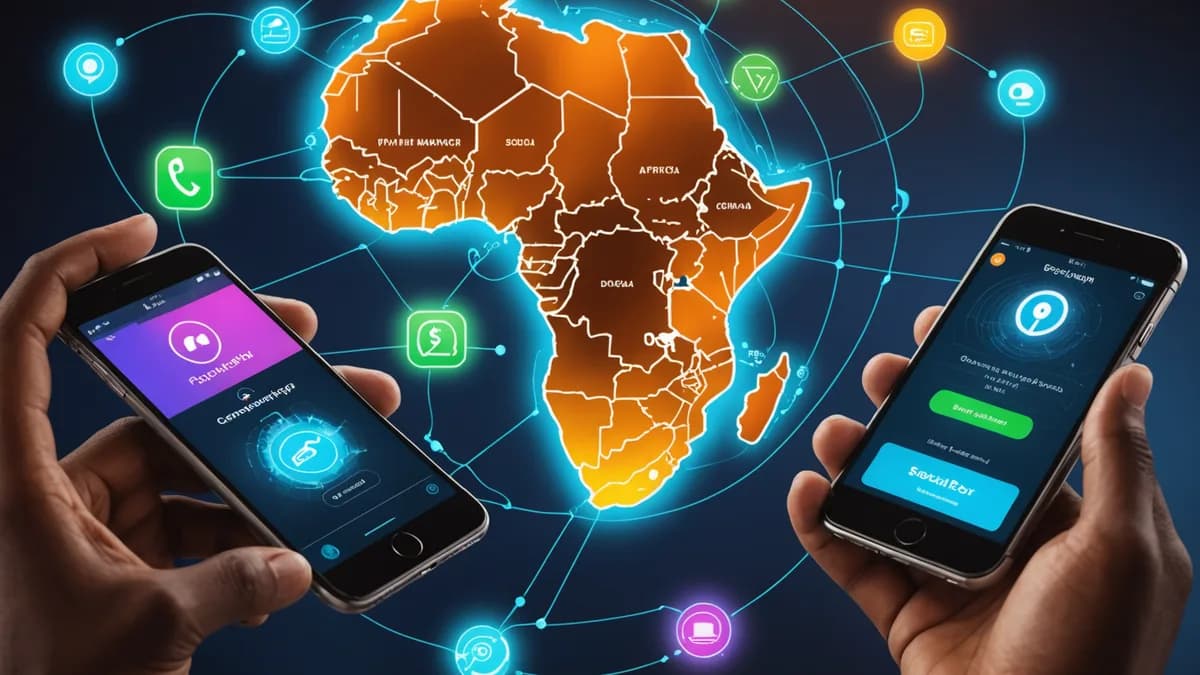
Mastercard is betting that Africa’s next major retail channel won't be an e-commerce website. It will be your WhatsApp chat. The payments giant has partnered with Kenya-based Flowcart, a social commerce orchestration platform, to embed card payments directly inside social and messaging apps where informal buying and selling already thrive according to PYMNTS.
XOOMAR Intelligence
Analyst Take
The collaboration, announced on Sept. 7, is a direct institutional pivot toward Africa's dominant commercial reality: discovery and intent happen in DMs, comment threads, and stories, not on search bars or product grids. By linking Mastercard's network with Flowcart's AI platform, the duo aims to capture a commerce loop that has largely existed outside formal payment rails.
Core Stakeholder: Merchants and the Creator Economy
The immediate target is Kenya’s swelling demographic of social sellers and creators. The official release states the solution is “designed to support Kenya’s rapidly growing creator economy, empowering social sellers to monetize their audience directly within the platforms where they engage them.”
The problem for these sellers is brutal conversion friction. A user sees a dress on a creator's Instagram story, asks for details via WhatsApp, receives a price and a payment link, then must switch apps, navigate a payment gateway, and trust an unfamiliar process. Many abandon the purchase. The partnership promises a “complete ‘chat-to-pay’ loop,” keeping the user in their preferred messaging environment from discovery to payment.
For the numerous small-to-medium businesses (SMBs) that operate this way, the partnership offers a bridge to digital legitimacy. A PYMNTS Intelligence report noted in July that digital channels drove 57% of SMB sales on average in the U.S., far outpacing physical channels. This partnership suggests Mastercard sees the same digital-led SMB growth trajectory in Africa, but with social platforms as the primary storefront.
Underlying Driver: The Platform Reality
This move isn't speculative. It's a response to a market fact already baked into user behavior.
WhatsApp, for example, now handles over 20% of Kenya’s eCommerce orders.
That single data point, noted in the release, validates the entire venture. A fifth of the country's online commerce is already flowing through a single messaging app. The payment experience, however, has been a clumsy patchwork. Mastercard and Flowcart are attempting to formalize and streamline the financial layer of an activity that's already mainstream.
The rollout plan is strategic: start in Kenya, then expand into East Africa and high-growth markets like South Africa, Nigeria, and Côte d’Ivoire. This sequence acknowledges Kenya's role as Africa's fintech crucible, while positioning the model for continental scale.
For Mastercard, this represents a fundamental shift in strategy.
| Traditional Model | New Model (via Flowcart Partnership) |
|---|---|
| Be the payment rail for formal e-commerce sites. | Embed the payment rail inside social and conversational commerce. |
| Focus on the final checkout moment. | Own the entire "social journey," from discovery to repeat purchase. |
| Compete for merchant accounts. | Enable micro-sellers and creators who may not have a formal merchant account. |
They are moving from infrastructure provider to embedded experience designer. As Shehryar Ali, SVP for East Africa at Mastercard, stated, the goal is to “embed secure, seamless payments directly into these experiences, unlocking new growth opportunities for merchants and expanding digital payment acceptance.”
Four Formidable Tests for the Partnership
This collaboration is ambitious because it must solve problems unique to Africa's digital landscape. While the source material outlines the goal, the path to success faces real-world hurdles that will define the partnership's impact.
1. Trust as a Technical Problem: Converting social trust, built through an influencer's persona or a seller's consistent feed, into transactional trust is the core challenge. The technical "seamlessness" must be flawless to avoid breaking that fragile social bond.
2. Bridging the Mobile Money Gulf: Africa runs on mobile money. The partnership mentions expanding acceptance into “underserved and informal” segments. The unstated technical task is likely building interoperable bridges so that payments funded by M-Pesa or other wallets can be processed via Mastercard's network, making social commerce globally actionable for sellers. This is a complex feat of financial plumbing.
3. Scaling with Social Virality: Social commerce is driven by viral, meme-fueled trends. A product can go from unknown to sold-out in hours. Can the combined platform handle the volatility and scale of a sudden demand surge without downtime or payment failures? This tests a different kind of resilience than standard e-commerce.
4. The Regulatory Gaze: As transaction volumes grow through these informal channels, regulators will inevitably take a closer look. Questions about consumer protection, data privacy within messaging apps, and anti-money laundering controls for micro-transactions could slow expansion or force costly compliance adaptations.
Ripple Effects for the African Tech Ecosystem
Success here would send a clear signal. First, it validates social commerce infrastructure as a major venture category. We should expect a surge of startups aiming to solve adjacent pieces of the "chat-to-pay" puzzle across the continent, much like the wave of fintechs that followed mobile money's success. For context on the current investor appetite, see our coverage on Ventures Platform Raises $83M as Africa VCs Double Down.
Second, it pressures incumbent e-commerce platforms whose web-or-app-centric models may now look out of step with how a vast segment of consumers actually shop. They will need to rapidly integrate similar conversational payment tools or risk being sidelined.
Finally, this partnership is a masterclass in market positioning. Mastercard isn't just selling payment processing; it's aligning itself with the cultural and technological trajectory of African commerce. If the model proves out in Kenya and expands as planned, it creates a blueprint Mastercard can deploy in other emerging markets where social platforms dominate daily life but formal payment penetration remains low.
What to watch next: Monitor the pilot's adoption metrics among Kenyan creators and micro-merchants. The real success indicator won't be the press releases, but whether the tool sees organic, viral uptake within tight-knit social selling communities. Also, watch for a response from other payment networks and whether major social platforms like Meta (owner of WhatsApp and Instagram) formalize their own strategies around embedded payments in these markets. The race to own the "last inch" of the social commerce transaction is now officially on.
Disclaimer: This XOOMAR analysis is for informational and educational purposes only. It is not financial, investment, legal, tax, or professional advice. It does not provide buy, sell, hold, price-target, portfolio, or personalized recommendations. Verify information independently and consult qualified professionals before making decisions.
The Bottom Line
- It directly targets the dominant, informal commerce loop in Africa where discovery and sales already happen in messaging apps like WhatsApp and Instagram.
- It reduces brutal conversion friction for social sellers by enabling seamless 'chat-to-pay' within existing messaging platforms, potentially boosting sales.
- It represents a strategic institutional pivot by Mastercard to capture a massive market currently operating outside formal payment rails, starting with Kenya's creator economy.
Traditional E-commerce vs. Social Commerce Flow
| Channel | Discovery Location | Payment Journey | Key Friction |
|---|---|---|---|
| Traditional E-commerce | Website/product grid | On-site checkout | Platform trust & UI complexity |
| Social Commerce (Pre-partnership) | DMs, comments, stories | Switch apps → payment link → gateway | App switching & process abandonment |
| Social Commerce (Post-partnership) | DMs, comments, stories | In-chat 'chat-to-pay' loop | Minimal (seamless in-app) |
Primary Sources & Disclosures
Disclaimer: Content on XOOMAR is produced using AI-assisted research, drafting, and verification workflows and is intended for informational and educational purposes only. It does not constitute financial, investment, legal, tax, medical, or professional advice of any kind. All analysis reflects available information at the time of publication and may not be current. Verify information independently and consult qualified professionals before making decisions. Editorial policy

Written by
XOOMAR Insights Team
Research and Editorial Desk
The XOOMAR Insights Team pairs automated research with human editorial judgment. We track hundreds of sources across technology, fintech, trading, SaaS, and cybersecurity, cross-check the facts, and explain what happened, why it matters, and what to watch next. We do not just rewrite headlines. Every article is fact-checked and scored for reliability before it goes live, and we link back to the original sources so you can verify anything yourself.