More than 99,000 people are isolated after Chile floods and mudslides pushed officials to declare a state of catastrophe in Coquimbo and Huasco, with deaths, missing people and widespread damage reported across affected areas.
XOOMAR Intelligence
Analyst Take
Officials in Chile declared the emergency measure after heavy rain triggered flooding and mudslides, according to BBC World. Chile’s disaster response service, Senapred, said the extreme weather has left thousands affected nationwide.
Chile floods leave 99,000 isolated as Coquimbo and Huasco enter catastrophe status
The emergency declaration covers the Coquimbo region and the province of Huasco. President José Antonio Kast said the government decided to activate the constitutional state of catastrophe after evaluating the emergency, the BBC reported.
AFP, cited by France 24, reported that Kast declared a state of emergency in the affected areas on Monday. That measure allows the government to deploy the military, restrict freedom of movement and move aid faster.
The death toll remains uneven across reports. The BBC said at least five people were reported dead, citing local mayors. France 24, citing Alicia Cebrian, director of Chile’s SENAPRED national emergency service, reported at least 10 deaths, 17 injuries and four people missing as of Monday.
| Reported figure | Source attribution |
|---|---|
| 99,000+ people isolated | Senapred, via BBC |
| At least five deaths | Local mayors, via BBC |
| At least 10 deaths, 17 injuries, four missing | SENAPRED director Alicia Cebrian, via France 24 |
| 1,100+ homes destroyed or severely damaged | Official figures cited by France 24 |
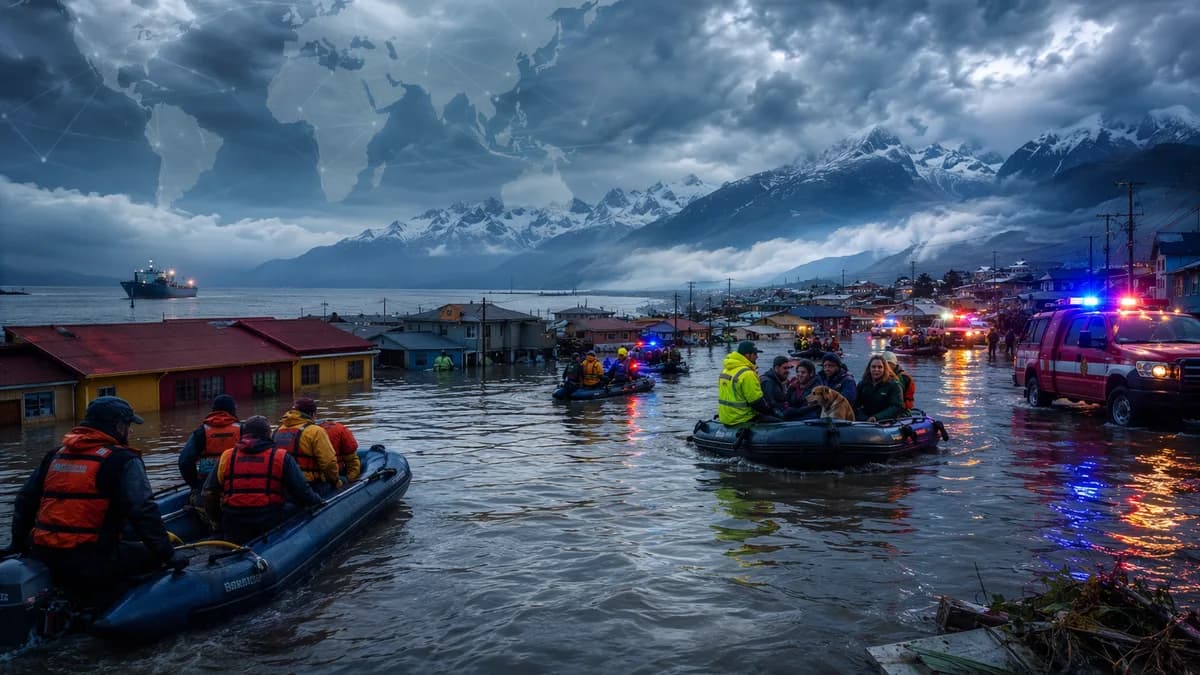
The BBC video report is described as showing flooded towns and evacuations. The supplied source material does not provide further verified visual detail about specific streets, vehicles or rescue teams, so XOOMAR is not adding those details here.
The rainfall was extreme by the standards of the affected areas. Chile’s meteorological authorities said parts of Coquimbo recorded historic rainfall, including more than 200mm at Cerro Tololo.
“What normally rains in a month fell in an hour” on Sunday, deputy interior minister Maximo Pavez told reporters, according to AFP, calling the rainfall “abnormal and extreme.”
That single line explains why the emergency escalated so quickly. XOOMAR analysis: when rainfall intensity compresses from monthly totals into an hour, the issue is not just total precipitation. It is speed. Roads, channels, drainage and emergency access can fail before local systems have time to adjust.
Blocked roads, power cuts and damaged homes widen the emergency
The damage is not limited to flooded streets. France 24 reported that rising rivers have blocked roads and isolated communities, while mud and power cuts have disrupted drinking water supplies in Coquimbo.
More than 1,100 homes have been destroyed or severely damaged due to the extreme weather, according to official figures cited by France 24. That shifts the disaster from a short-term evacuation problem into a housing, access and services crisis.
The hardest-hit areas include typically arid northern regions, including Coquimbo and Atacama, where intense rainfall is unusual, according to AFP. Huasco is in Atacama, which helps explain why an emergency in the province sits inside a broader northern Chile weather shock.
Arnaldo Zuniga of the national meteorological service told AFP that Chile has not seen this much rainfall in two decades.
“We haven't had a situation like this in quite a few years,” he said.
XOOMAR analysis: the most important operational number is still 99,000 isolated, because isolation changes the response math. Damage assessments, medical access, drinking water restoration and evacuation support all become harder when roads and communities are cut off.
The emergency also fits a wider pattern of public-risk events where official counts can move quickly as agencies update data. XOOMAR covered that dynamic in NYC Legionnaires' Outbreak Kills One as Cases Hit 67, where the public risk picture depended heavily on official reporting cadence. Infrastructure stress has also been a recurring theme in our global coverage, including Power Plants in Crosshairs as Trump Iran Threats Hit Hormuz, though that case involved geopolitical risk rather than severe weather.
No clear 72-hour forecast yet as Chile’s catastrophe powers expand the response
The supplied reports do not include a detailed 24 to 72 hour forecast, updated rainfall warning or river-level projection. That is a key gap. For now, the verified picture is a live emergency with flooding, mudslides, isolated communities, missing people and major housing damage.
The state of catastrophe gives authorities wider tools if conditions persist. Based on the France 24 report, those tools can include military deployment, restrictions on movement and faster aid mobilization.
The practical risk now is sequencing. If rain continues or access remains blocked, the next pressure points are likely to be evacuations, road reopening, drinking water supply and confirmation of missing-person reports. Those are not predictions. They follow directly from the reported problems: blocked roads, isolated communities, damaged homes, power cuts and disrupted water supplies.
No official public instruction was included in the supplied BBC or AFP material beyond the emergency declarations and agency reporting. The safest information path for residents and relatives is therefore the official channel named in the reports: Senapred/SENAPRED, along with Chile’s meteorological authorities.
The next verified updates to watch are simple but consequential: whether the Chile floods death toll is reconciled across agencies, whether the number of isolated people falls, and whether the catastrophe declaration expands, tightens or begins to scale back as access improves.
Impact Analysis
- The catastrophe declaration gives Chile’s government broader powers to deploy the military and speed aid.
- Tens of thousands remain isolated, raising urgent risks around shelter, supplies and medical access.
- Conflicting casualty figures show the situation is still developing as officials assess the damage.
Reported impact figures by source
| Reported figure | Source attribution |
|---|---|
| 99,000+ people isolated | Senapred, via BBC |
| At least five deaths | Local mayors, via BBC |
| At least 10 deaths, 17 injuries, four missing | SENAPRED director Alicia Cebrian, via France 24 |
| 1,100+ homes destroyed or severely damaged | Official figures cited by France 24 |
Reported Chile flood impacts
Primary Sources & Disclosures

Written by
XOOMAR Insights Team
Research and Editorial Desk
The XOOMAR Insights Team pairs automated research with human editorial judgment. We track hundreds of sources across technology, fintech, trading, SaaS, and cybersecurity, cross-check the facts, and explain what happened, why it matters, and what to watch next. We do not just rewrite headlines. Every article is fact-checked and scored for reliability before it goes live, and we link back to the original sources so you can verify anything yourself.