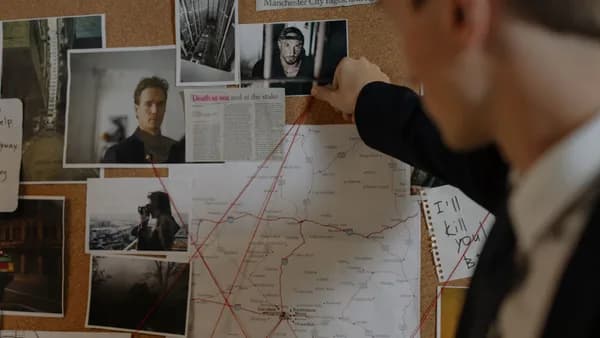
A registered nurse with no prior record has been charged with aggravated juror intimidation for allegedly photographing the jury in one of America's most-watched murder trials. The arrest of Dawn Light, 56, during the Lindsay Clancy jury deliberations reveals how the pressure cooker of a media-circus case can boil over into an alleged attack on the justice system itself according to BBC World.
XOOMAR Intelligence
Analyst Take
The arrest flips the script. For weeks, the trial has focused on Clancy's mental state. Now, the integrity of the process itself is under the microscope because of a single photo taken on a smartphone.
The Core Violation: A Photo Gets a Felony Charge
The violation seems simple. On Tuesday, authorities found Dawn Light parked in a restricted area outside Plymouth Superior Court. She told them she was waiting to see Lindsay Clancy. Prosecutors then reviewed her phone and, according to their account, found photos of jurors exiting the courthouse in her recently deleted folder.
This is the precise action Judge William Sullivan’s explicit order prohibits. The charge, intimidation of a witness, juror, or person furnishing information in connection with criminal proceedings, elevates it from a simple breach of court decorum to a potential felony.
Her lawyer called it a misunderstanding. "My client was trying to get a picture of Ms Clancy," Light's attorney Jennifer White said in court.
Yet prosecutors framed it as an assault on the "sanctity of the judicial system." Why? A photograph is not a shouted threat. But in a case with more than 200 reporters covering it and roiling social media debates, identifying a juror is the first, critical step toward influencing or harassing them.
Immediate Fallout: The Trial Under a Microscope
The instant effect was on the trial's delicate machinery. On Wednesday morning, before jurors resumed deliberations, Judge Sullivan issued a public warning and was seen questioning each juror individually.
XOOMAR Analysis: Legal experts, quoted in source material, suggest this was a voir dire, an interview under oath, to determine if the jurors felt compromised. The judge’s message was clear: the court was aware of the incident and was actively ensuring the jury could proceed impartially.
The court imposed strict conditions on Light’s release:
- She must stay away from the Plymouth courthouse grounds.
- She must stay away from anyone associated with the Clancy trial.
- She is ordered not to produce or disseminate any photos preserved on iCloud.
Prosecutors sought a $50,000 cash bail. The judge denied it, releasing Light on personal recognizance, a decision that itself speaks to how courts balance the seriousness of the accusation against a defendant's clean record.
Stakeholder Reactions: From "Why Not?" to Damage Control
Every party in the drama was forced into a reactive stance, revealing their vested interests.
The Accused Intimidator: Light’s motive remains opaque. Her lone public comment to reporters was a cryptic "Why not?" when asked why she wanted to see Clancy. This fuels speculation but provides no clarity. Was she a curious onlooker, as her lawyer claims? A misguided supporter? Her actions, however, speak louder: she was in a restricted area, and authorities allege she photographed jurors and deleted the evidence.
The Prosecution: They must treat this as an existential threat to their case. Any suggestion that a juror felt intimidated could become grounds for a mistrial or an appeal. Their aggressive push for high bail and serious charges is as much about safeguarding the current verdict as punishing Light.
The Defense: For Lindsay Clancy’s legal team, this is a potential poison pill. Any perceived benefit from juror intimidation could taint a potential not-guilty verdict or lead to sanctions. They must loudly and clearly condemn any interference, which they did through expert commentary distancing the defense from the act. A similar tension between public pressure and legal process was evident in recent rulings on election procedures, as we saw in our coverage of the Supreme Court Lifts Mail-in Voting Ban Injunction.
The Court: Judge Sullivan’s authority is on the line. His order was violated. His immediate, public response, questioning jurors and reinforcing the rules, was a necessary show of control to maintain the trial's legitimacy.
The Public and Media: The incident underscores the chilling effect of modern scrutiny. Over 200 journalists are already there. A "group of women supporters" ebbs and flows outside the courthouse. Light’s arrest is a stark reminder that in the true-crime and social media era, jurors aren't just deciding a case; they are potentially stepping into a spotlight they never sought and are legally barred from acknowledging.
The Digital Threat to an Analog System
This case highlights a fundamental friction: court procedures are built for a physical world, but threats are now digital and instantly distributable.
| Traditional Jury Threat | Modern Digital Equivalent |
|---|---|
| Threatening letter or phone call to a juror's home | A juror's photo, shared on social media, inviting mass contact |
| Coercion by an interested party | Anonymous online harassment from thousands of "supporters" |
| Protecting juror identities in court documents | Scrubbing a juror's digital footprint from data brokers and search engines |
The photo on Light’s phone is the atom of this new threat. It is deniable ("I was just taking pictures of the building"), easily duplicated, and could be weaponized across the internet in seconds. As our analysis of other high-profile legal cases shows, the intersection of public passion and judicial process is increasingly volatile, a dynamic seen in the aftermath of the Killer Cop Dies in Prison After Murdering Woman Who Called 911.
What the source material confirms: The court had "extensive measures" in place, and Judge Sullivan had a specific order against photographing jurors. Light’s alleged act tested and breached those digital-age defenses.
What Comes Next: Shielding the Jury Box
The Lindsay Clancy trial will likely proceed. Judge Sullivan’s quick intervention with the jury was designed to ensure that. But the long-term consequences are just beginning.
For the Clancy Trial:
- The jury will now deliberate under an even denser cloud of scrutiny.
- Light’s prosecution will be pursued vigorously to set a deterrent.
- Any verdict will face immediate appeals scrutiny on grounds of jury contamination, adding years to the legal saga.
For Future High-Profile Trials: Expect a procedural tightening. Courts will cite the "Plymouth incident" to justify:
- More expansive exclusion zones around courthouses.
- Stricter enforcement of bans on recording devices in courthouse vicinities.
- Increased use of sequestered or heavily shielded juror movements,
- More aggressive voir dire of potential jurors about their fear of public exposure.
The core tension will only grow: how to protect jurors from digital-age intimidation without turning the jury box into an isolated fortress that ordinary citizens fear to enter. The sanctity of the system depends on public trust and participation. Dawn Light’s alleged single click of a smartphone shutter has shown just how vulnerable that sanctity has become.
The Stakes
- The case highlights the vulnerabilities in high-profile trials where intense media coverage can lead to attempts to influence the judicial process.
- A felony charge for photographing jurors underscores the serious legal protections in place to ensure fair trials and juror safety.
- The incident shifts public attention from the defendant's mental state to the integrity of the trial proceedings itself.
Primary Sources & Disclosures

Written by
XOOMAR Insights Team
Research and Editorial Desk
The XOOMAR Insights Team pairs automated research with human editorial judgment. We track hundreds of sources across technology, fintech, trading, SaaS, and cybersecurity, cross-check the facts, and explain what happened, why it matters, and what to watch next. We do not just rewrite headlines. Every article is fact-checked and scored for reliability before it goes live, and we link back to the original sources so you can verify anything yourself.