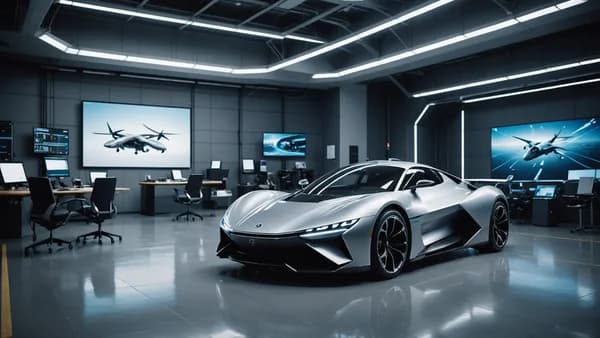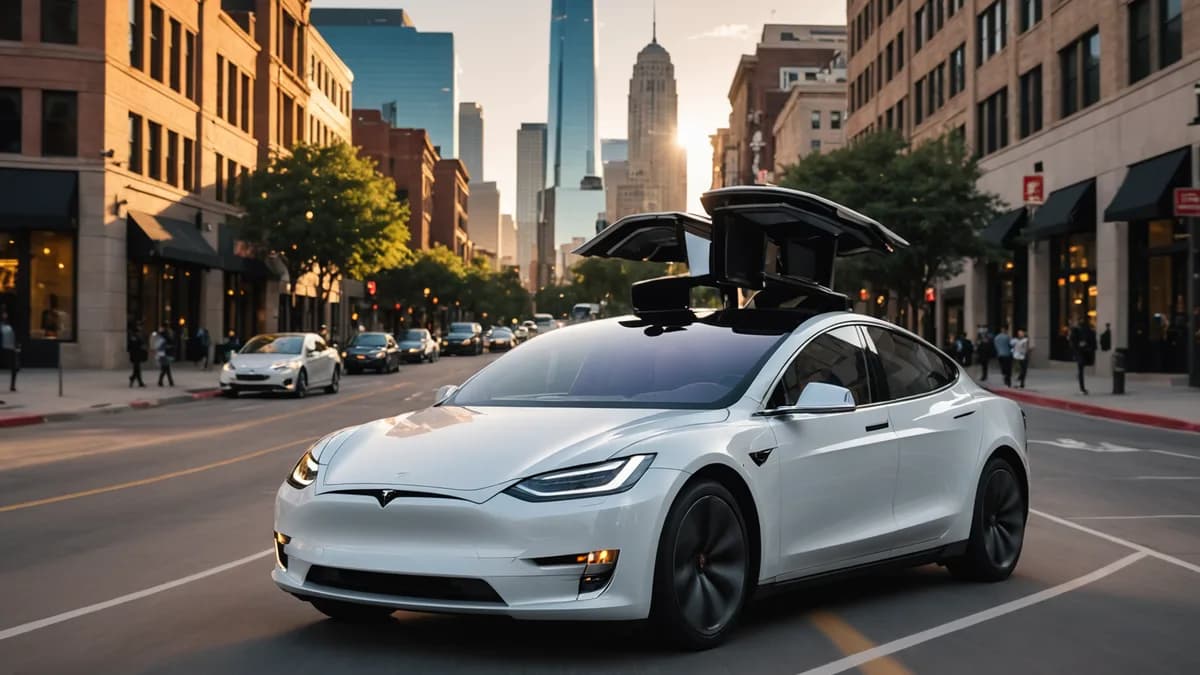
The intelligent, affordable robotaxi future Elon Musk promised for a decade is arriving this week as a gold-tinted two-seater with no steering wheel, launching in Austin's traffic. If the Tesla Cybercab succeeds, it will validate a radical, camera-only approach and dismantle the most expensive sensor stacks in the self-driving industry. If it fails, it will expose a trillion-dollar bet built on stubborn philosophical defiance rather than proven safety. according to The Verge, the launch is not just a product rollout. It is a live, public stress test of heterodox engineering choices that depart from every other serious autonomous vehicle effort on the planet.
XOOMAR Intelligence
Analyst Take
Tesla Doubles Down On Cameras-Only While Rivals Bet On Sensor Fusion
At the core of the Cybercab's gamble is Musk's unwavering belief that cameras plus AI, and nothing else, are enough to achieve full autonomy. The argument, laid out at a 2019 investor event, is that since humans drive with vision, a digital version of the same system should suffice. This led to a relentless stripping of sensors: radar was removed from Tesla's production cars in 2022 over his engineers' objections, and the company has publicly mocked rivals for using lidar, calling the light beam sensor a "fool's errand."
> “anyone relying on lidar is doomed. Doomed. Expensive sensors that are unnecessary. It’s like having a whole bunch of expensive appendices... you’ll see.”
This is where the philosophical split with the rest of the industry is most acute. Players like Waymo rely on a fusion of cameras, radar, and lidar. Lidar provides precise, three-dimensional depth data that is immune to the lighting conditions that can blind cameras. Waymo co-CEO Dmitri Dolgov has argued that while cameras are good, aiming for "superhuman performance" requires more robust sensing.
“you find that weak sensing just leads to a safety curve that flattens out way too early.”
From a financial perspective, Tesla's bet is clear. A camera-only system is undeniably cheaper to manufacture at scale than a sensor suite including lidar. Musk hopes this cost advantage will allow for a mass-produced, affordable robotaxi that can outpace rivals. The engineering gamble, however, is whether their AI and neural networks can adequately estimate depth and handle edge-case scenarios like heavy rain or glare solely from 2D images. It is a decision to trade hardware redundancy for software complexity and data scale. For a deeper look at how a technology giant manages immense market expectations, see our analysis of Nvidia's $92 Billion Stress Test Crushes AI Investors.
A Taxi Without Pedals Is More Than A Feature Delete
The Cybercab is a physical manifestation of Tesla's confidence in its autonomous system. By designing a purpose-built vehicle with no steering wheel, pedals, or mirrors, Tesla commits to the idea that its Full Self-Driving (FSD) software, now monitored by remote operators, will be reliable enough that no human fallback is needed inside the vehicle. This is a distinct departure from other robotaxi services, many of which use modified consumer vehicles that retain manual controls for safety drivers during testing.
This design choice imposes real operational constraints. It dictates vehicle missions: the steering wheel-free two-seater is optimized for point-to-point urban trips for one or two passengers, not for freight, families, or multi-stop errands. Most crucially, it changes the fail-safe protocol. If a Waymo vehicle's autonomous system fails, a roadside assistance crew can physically drive it away. If a Cybercab breaks down or is disabled in an intersection, Tesla must rely on remote teleoperation to guide it out of traffic, a system it is bolstering with Starlink internet connections in every cab.
The decision is a marketing masterstroke that visually screams "the future," but it also creates a regulatory hurdle. To sell this vehicle to consumers as Musk has suggested, Tesla would need a federal exemption from safety rules mandating traditional controls. It locks the company into proving full autonomy is ready, because rolling back to a more conventional design would be a very public admission of a flawed philosophy.
The Austin Launch Numbers Tell A Story Of Cautious Expansion
The initial deployment in Austin provides hard metrics to assess the gap between Musk's grand promises and Tesla's practical execution. According to the report, Tesla has been running a robotaxi service in Austin since June 2025 with approximately 110 Model Y vehicles.
Scaling Reality: Early Austin Operations
| Metric | Tesla Robotaxi Service (Pre-Cybercab) | Context |
|---|---|---|
| Fleet Size | ~110 Model Ys (Austin) | Per data from Robotaxi Tracker. |
| Service Status | Mix of supervised & unsupervised trips | "Wild" vacillation reported. |
| Trip Volume | Often "less than a handful" of paid trips | Fleet size ≠ active passenger trips. |
These numbers reveal a service still in a highly controlled, limited-capacity phase, especially when contrasted with Waymo's reported fleet of 4,000 fully driverless vehicles across 14 U.S. cities. Adding the Cybercabs will increase the fleet count, but the critical indicator will be how many are consistently in revenue service and how quickly they expand beyond Austin. The launch appears strategically cautious, focused on proving the vehicle in a single, permissive market before confronting more complex regulatory environments.
This measured rollout acts as a reality check on the growth trajectory tied to Musk's compensation. A trillion-dollar valuation for the robotaxi business requires exponential, global scale, not a few dozen cabs in one Texas city. The deployment pace over the next six months will signal whether this is a genuine scaling inflection point or another controlled experiment.
Regulators And Public Trust Form A Steeper Hill Than Engineering
Passing an engineering test in Austin is one challenge. Passing the test of public acceptance and regulatory scrutiny is another, and Tesla starts with a trust deficit.
Safety Record: Tesla's own data claims vehicles using supervised FSD have 40 to 90 percent fewer crashes than manual driving. However, federal data tells a different story. Under a National Highway Traffic Safety Administration (NHTSA) order, Tesla reports crashes involving its driver-assist systems. The company accounts for roughly 85 percent of the entire industry's reports, nearly 4,000 crashes. Independent trackers cite about 65 fatalities involving Autopilot or FSD from 2013 to 2025. This dichotomy, promoting one set of stats while being the subject of the majority of federal crash reports, erodes credibility.
Regulatory Gauntlet: Texas provides a friendly launchpad, but expansion means navigating state and city governments individually, a "time consuming" and expensive process. Crucially, to operate in a major market like California, Tesla would need a permit from the state DMV, requiring a demonstrated safety record it has not yet provided for a fully driverless system. The company is already under investigation by NHTSA for how it reports crashes.
Public Sentiment: Surveys indicate most people believe Tesla is misleading customers with names like "Full Self-Driving" and do not want the company deploying fully driverless taxis. The Cybercab, by its very alien design, may scramble perceptions, but winning over cautious riders will require a flawless safety performance from day one.
History Advises A Heavy Dose Of Skepticism
This is not Tesla's first robotaxi promise; it's the latest in a cycle of ambitious announcements and delayed timelines. For years, Musk has forecast the imminent arrival of a robotaxi network powered by FSD, which remains a Level 2 driver-assist feature requiring human supervision in consumer cars.
The contrast with the industry's most mature player is instructive. Waymo's approach has been incremental: millions of miles of testing, slowly expanding geographic zones, and a focus on validating safety before removing safety drivers. Tesla's strategy has been the opposite: deploy a beta system to a massive fleet of consumer cars to gather data, promise a "big bang" flip to full autonomy, and now, launch a purpose-built vehicle to make good on that promise.
The launch of the Cybercab represents a tangible step beyond vaporware, but history demands the question: does it mark a genuine inflection point where promises finally align with reality, or is it merely a new chapter in a long-running saga of overpromise? The burden of proof now shifts from words to operational results.
The AV Industry's Decade Of Work Hangs In The Balance
The success or failure of Tesla's camera-only robotaxi experiment sends shockwaves far beyond Austin. For a decade, the mainstream autonomous vehicle industry has built increasingly sophisticated and expensive sensor stacks. Tesla's bet is a direct challenge to that orthodoxy.
Pressure on Competitors: If Tesla can achieve comparable or better safety metrics at a radically lower hardware cost, it threatens to commoditize the sensor-fusion approach. Capital flowing to lidar-heavy startups and projects would face existential questions.
Implications for Suppliers: The entire ecosystem of lidar and advanced radar companies has geared up for an AV revolution. A Tesla victory validates vision-based AI and neural nets, potentially sidelensing these hardware suppliers unless they can drastically cut costs.
Investor Calculus: The investor narrative has long been that autonomy is hard and requires expensive tech. Tesla is arguing that the real breakthrough is in software scalability and data, not hardware. If their Austin data begins to support that, it could upend the investment thesis for countless other players in the space.
The Next Twelve Months Will Separate Theater From Reality
The theater of gleaming Cybercabs on Austin streets is over. The next phase is about collecting cold, hard data that will either validate or dismantle Musk's philosophy. Key performance indicators to watch are not the number of vehicles deployed, but:
- Safety Incidents per Mile: Any crash, especially a notable one, in a camera-only, steering-wheel-free vehicle will trigger a legal and media firestorm far greater than incidents in supervised Teslas.
- Geographic Expansion Pace: Movement beyond Austin's geofenced areas and into a more challenging regulatory state like California will signal true confidence.
- Rider Uptime & Retention: Are the cabs consistently available and reliable enough for daily commuting, or do they remain a sporadic novelty?
The 2025 landscape will take one of three shapes:
- A Thriving Network: Incident-free expansion and growing ridership prove the camera-only path works, forcing the entire industry to pivot.
- A Stalled Experiment: Persistent safety issues, regulatory blocks, or low utilization confine the Cybercab to a limited pilot, revealing the limitations of the minimalist approach.
- A Scaled-Back Hybrid: Tesla is forced to backtrack, perhaps adding more sensors or reintroducing limited controls, blending its philosophy with industry conventions.
For now, with public rides beginning, the most consequential autonomous vehicle experiment of the decade is live. The data from Austin's streets will start delivering the verdict.
Why This Changes Everything
- If Tesla's camera-only Cybercab succeeds, it could upend the entire self-driving industry by proving costly sensor arrays like lidar are unnecessary.
- A failure would cast serious doubt on Elon Musk's decade-long promise of a radically cheaper, vision-based robotaxi future, challenging Tesla's autonomous driving strategy.
- The public launch in Austin traffic serves as a live, real-world stress test that determines whether Tesla's philosophy or the industry's standard approach is the path to viable autonomy.
Tesla's Cameras-Only vs. Waymo's Sensor Fusion
| Company | Primary Sensor Strategy | Key Rationale | Major Products |
|---|---|---|---|
| Tesla / Cybercab | Cameras-Only vision | Humans drive with vision, digital version should suffice | Tesla Cybercab |
| Waymo | Sensor Fusion (cameras + radar + lidar) | Aiming for 'superhuman performance' requires robust sensing | Robotaxi Fleet |
Primary Sources & Disclosures

Written by
XOOMAR Insights Team
Research and Editorial Desk
The XOOMAR Insights Team pairs automated research with human editorial judgment. We track hundreds of sources across technology, fintech, trading, SaaS, and cybersecurity, cross-check the facts, and explain what happened, why it matters, and what to watch next. We do not just rewrite headlines. Every article is fact-checked and scored for reliability before it goes live, and we link back to the original sources so you can verify anything yourself.