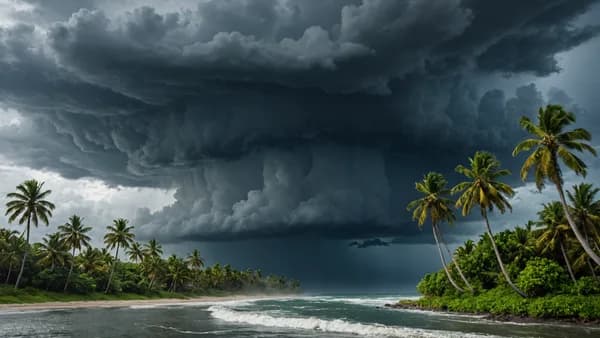
Hurricane Lowell passed just west of Hawaii, but its fierce winds managed to knock out power to nearly every home and business on the island of Kauai, crippling the island of 73,000. According to Guardian World, the storm caused significant damage across the state's western islands on Tuesday, ripping up roads, downing trees, and flooding structures with mud.
XOOMAR Intelligence
Analyst Take
The Kauai Island Utility Cooperative reported that nearly all of its roughly 35,000 members were without power, as detailed in our report on the Hurricane Lowell power outage grid. While Hurricane Lowell did not make a direct landfall, its immense size and intensity proved devastating. The eastern side of Kauai saw wind gusts over 80 mph, with a top recorded gust of 92 mph in Puu Lua, according to FOX Weather data.
"There was extensive damage across Kauai, and crews were using heavy equipment to push trees and debris off the roads," said Derek Kawakami, mayor of Kauai county.
The Storm That Didn't "Hit" Still Delivered a Knockout Blow
Officials had tracked Lowell's path west of the islands, which often leads to less severe impacts. This storm defied that expectation. Its tropical-storm-force winds extended 160 miles from its center, lashing Kauai and the tiny island of Ni'ihau for hours.
The result was systemic failure. Early assessments by the Kauai Emergency Management Agency listed 198 active hazard reports. Key highways on the North Shore and Westside were rendered impassable by flooding and debris.
The damage wasn't just terrestrial:
- Port Allen harbor: Several vessels sank and piers were destroyed.
- Coastal areas: Massive waves pushed sand and lava rocks inland, with storm surge flooding Hanapēpē Stadium.
- Infrastructure: A coastal road in Kōloa was destroyed by storm surge and high tide, and debris was pushed into the first floor of a beachside hotel.
This follows a pattern of severe weather testing the islands' resilience, much like the corporate stress tests we track in our coverage of major financial institutions, such as Huntington Crowns Its Next CEO After Two-Year Reign.
A Recovery Hamstrung by Isolation and Scale
Restoration efforts face a compounding set of challenges unique to an island community. The immediate task is clearing roads, but the scale is immense.
The core problem is a vicious cycle:
- Downed trees and mudslides block roads.
- Blocked roads prevent utility crews from reaching downed power lines.
- Without power, critical communications and coordination are hampered, slowing the clearance of roads.
With 92% of Kauai County in the dark, the timeline for restoration is measured in days, not hours. The county's emergency chief advised residents to shelter in place and only evacuate for life-threatening emergencies. About 300 people took refuge in shelters.
A Climate Context That Points to More Turbulence Ahead
Lowell is not an isolated event. It follows Tropical Storm Lala, which in August washed away about 100 homes and caused widespread outages. Both storms are fueled by a historic El Niño event in the Pacific, which Noaa predicts will exceed the strength of any since 1950.
XOOMAR Analysis: The scientific link is clear. A warmer ocean and atmosphere from human-caused climate change increase the energy available for storms. This amplifies El Niño's tendency to promote hurricane activity in the Central Pacific. For Hawaii, the takeaway is that close passes or near-misses from large storms like Lowell can now produce damage once reserved for direct hits.
The focus for Hawaii now shifts from response to a protracted recovery, a process as resource-intensive and complex as rebuilding a major technological platform, akin to Amazon Axes Mechanical Turk After Training AI Generation. The key watch item is how quickly crews can break the logjam of blocked roads to begin the monumental task of repairing the power grid. For Kauai's residents, the test of endurance has only just begun.
Impact Analysis
- The near-total power outage on Kauai demonstrates the severe vulnerability of isolated island infrastructure to hurricane-force winds, even from storms not making direct landfall.
- The extensive terrestrial and marine damage, including destroyed roads, flooded stadiums, and sunken vessels, highlights the compound risks from wind, surge, and flooding that cripple recovery efforts.
- This event underscores the growing pattern of severe weather testing Hawaii's resilience, indicating that community preparedness and infrastructure hardening are critical for future storms.
Primary Sources & Disclosures

Written by
XOOMAR Insights Team
Research and Editorial Desk
The XOOMAR Insights Team pairs automated research with human editorial judgment. We track hundreds of sources across technology, fintech, trading, SaaS, and cybersecurity, cross-check the facts, and explain what happened, why it matters, and what to watch next. We do not just rewrite headlines. Every article is fact-checked and scored for reliability before it goes live, and we link back to the original sources so you can verify anything yourself.