18 people were injured in central Damascus after two explosive devices went off near the hotel where French President Emmanuel Macron had been staying, while Macron was elsewhere in the Syrian capital and was reported safe. The Macron Damascus explosions happened during a high-risk visit by the first EU leader to Syria since the end of Bashar al-Assad's 24-year rule, according to BBC World.
XOOMAR Intelligence
Analyst Take
Syrian media said the injured included four police officers. A security source told the BBC the blasts were caused by two devices. Macron's officials said he did not hear the explosions and that his Syria visit "continues as planned."
Macron Damascus explosions hit near Four Seasons as palace meeting proceeds
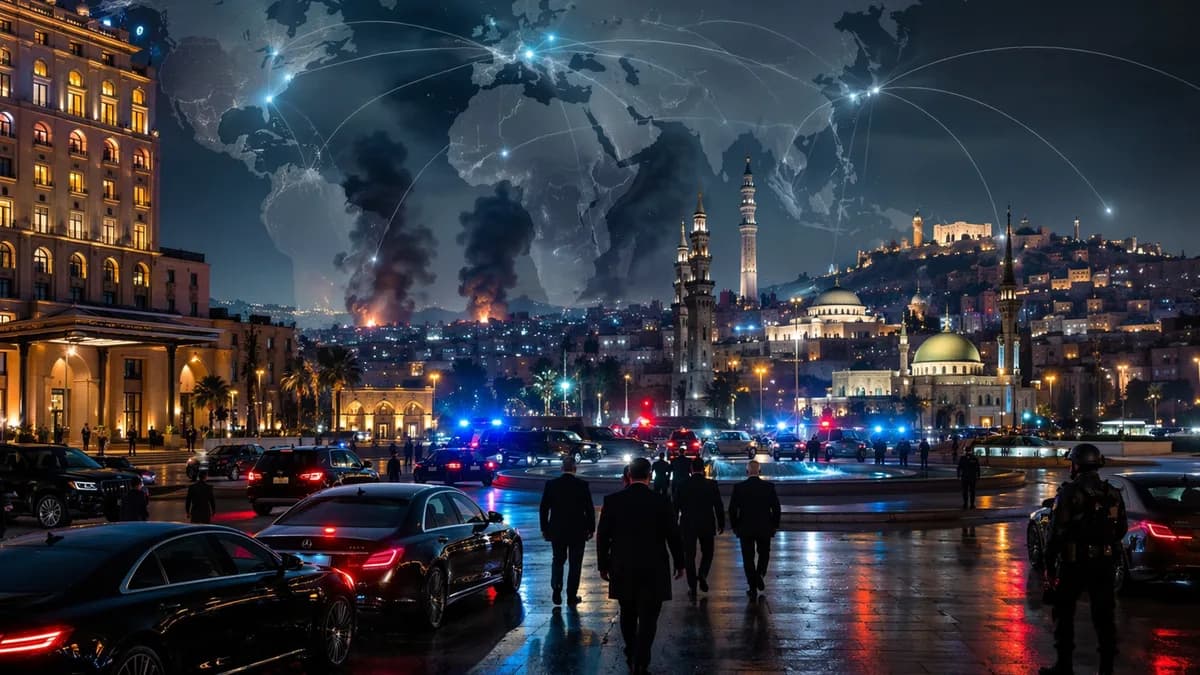
The explosions were reported in central Damascus near the Four Seasons hotel, where Macron had been staying. BBC Verify, after analysing video footage, said the blasts happened approximately 125m from the Four Seasons hotel, on the pavement of Shoukry al-Quowatly, a major road through the capital.
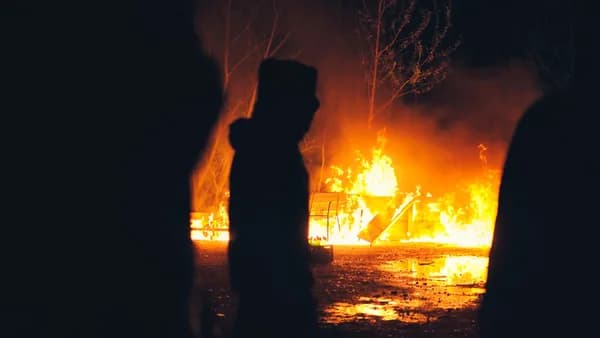
Videos and images on social media showed smoke, flames and emergency services working around damage from the apparent explosions. Syrian state television said Ahmed al-Sharaa had welcomed Macron at the presidential palace as reports of the blasts came in.
That timing matters. The first confirmed picture is not of an injured foreign leader or an aborted meeting, but of a security incident unfolding close to his hotel while the French president was already at the palace for talks with Syria's president.
CBS News, citing the French presidency and Syrian state media, reported that Macron had left the hotel before the explosions and was at the Syrian presidential palace with al-Sharaa and their delegations. It also reported that one source told AFP one bomb had been placed in a dumpster and another in a vehicle near the hotel, though official confirmation of those details had not been provided.
"My visit continues."
That was Macron's brief message on X, as reported by CBS, after the blasts. In the same post, he said nothing could "smother the aspiration of Syrian women and men to live in a fully sovereign, safe, pluralistic, and united Syria."
The French line is clear for now: Macron is safe, the trip is not being publicly cut short, and the diplomatic choreography continues.
Macron's Syria trip becomes a security test for Damascus
Macron arrived in Syria on Monday evening, making him the first EU leader to visit since the end of Assad's rule. That alone made the trip politically loaded before the explosions.
The Macron Damascus explosions now turn the visit into a live test of two security systems at once: Syrian protection around a newly high-profile diplomatic route, and French presidential security operating in a capital where attacks have already rattled public spaces this month.
At the start of July, a bomb blast at a crowded cafe in central Damascus killed at least nine people and injured 22 others, according to Syrian state media cited by the BBC. The new explosions, coming days later and close to Macron's hotel, will sharpen questions about whether central Damascus can secure foreign delegations during symbolic visits.
The diplomatic stakes are not abstract. Macron was in Damascus for talks with al-Sharaa, and after Syria he is due to travel to Turkey for the Nato summit. XOOMAR has been tracking separate pressure around alliance security debates in Zelensky Forces Nato Air Defence Fight After Kyiv Strikes, which gives useful context for how leaders' travel schedules can collide with urgent security demands.
Still, there is no confirmed claim of responsibility for the Damascus blasts in the supplied reports. There is also no confirmed official statement identifying Macron, his delegation, or the hotel itself as the target.
That distinction matters. A blast near a leader's hotel is automatically serious, but the known facts do not yet prove intent.
| Confirmed by supplied reporting | Still not confirmed |
|---|---|
| Macron was safe | Who planted the devices |
| Syrian media said 18 were injured | Whether Macron or his delegation were targeted |
| A security source told the BBC two devices caused the blasts | Whether Macron's route changed because of the explosions |
| BBC Verify placed the blasts about 125m from the Four Seasons | Full damage assessment |
| Elysee said the visit "continues as planned" | Any claim of responsibility |
French and Syrian officials now face a narrow window to control the story
The immediate questions are practical and political. How many devices were involved, exactly where were they placed, who was injured, what was damaged, and did the attack intersect with Macron's travel route or schedule?
French officials have already supplied the most important answer for Paris: Macron is safe. Syrian state media supplied the first casualty figure. Emergency services and security agencies in Damascus will now be under pressure to clarify the rest.
The visit continuing as planned sends one signal: France does not want the explosions to define the trip. But continuing also puts more weight on the security perimeter around Macron's remaining movements.
For Damascus, the risk is reputational and operational. If foreign leaders are going to engage with Syria's post-Assad leadership, they will read this incident as a measure of how much control authorities have over the capital's most visible corridors.
There is a second audience too: governments watching from Europe, the region, and the Nato summit circuit. XOOMAR's separate coverage of Interpol Hunts Suspect After Monaco Bombing Hits Tycoon underlines how cross-border political and security incidents can quickly become diplomatic management problems, even before investigators finish reconstructing the facts.
The next signals to watch are specific: whether the Elysee gives a fuller account of Macron's movements, whether Syrian authorities name suspects or a motive, whether the injury count changes, and whether Macron keeps every planned engagement before leaving for Turkey.
For now, the Macron Damascus explosions have produced a tense but contained outcome: 18 reported injuries, no harm to the French president, and a visit that both governments are publicly keeping on track. The unanswered question is whether that remains a contained security incident, or becomes the event foreign capitals remember when weighing their next trip to Damascus.
The Stakes
- The blasts highlight the security risks surrounding Macron's high-profile visit to Syria.
- Macron is the first EU leader to visit Syria since the end of Bashar al-Assad's 24-year rule.
- The incident tests Syria's ability to protect foreign leaders during a sensitive political transition.
Reported Injuries Near Macron's Damascus Hotel
Primary Sources & Disclosures

Written by
XOOMAR Insights Team
Research and Editorial Desk
The XOOMAR Insights Team pairs automated research with human editorial judgment. We track hundreds of sources across technology, fintech, trading, SaaS, and cybersecurity, cross-check the facts, and explain what happened, why it matters, and what to watch next. We do not just rewrite headlines. Every article is fact-checked and scored for reliability before it goes live, and we link back to the original sources so you can verify anything yourself.