Rocket Lab's Iridium acquisition signals a sharper strategy than simply launching more rockets: buy the network, the spectrum, and the paying customer base that would take years to build from scratch. The $8 billion deal would move Rocket Lab beyond launch services and spacecraft manufacturing into satellite communications, putting it closer to the integrated model that has made SpaceX so hard to challenge.
XOOMAR Intelligence
Analyst Take
Rocket Lab plans to acquire Iridium Communications, the operator of a 66-satellite low-Earth orbit constellation serving more than 2.5 million subscribers, according to The Verge. The primary prize in the Rocket Lab Iridium acquisition is not just hardware in orbit. It is L-band spectrum, trusted service relationships, and a communications business already tied to ships, aircraft, government users, and remote operations.
Rocket Lab's $8 billion Iridium bet turns a launcher into a space telecom challenger
Rocket Lab is best known for Electron, its small satellite launcher, but this deal shows the company wants to own more than the ride to orbit. If completed, the Iridium purchase would combine Rocket Lab's launch services and spacecraft manufacturing with Iridium's satellite communications network.
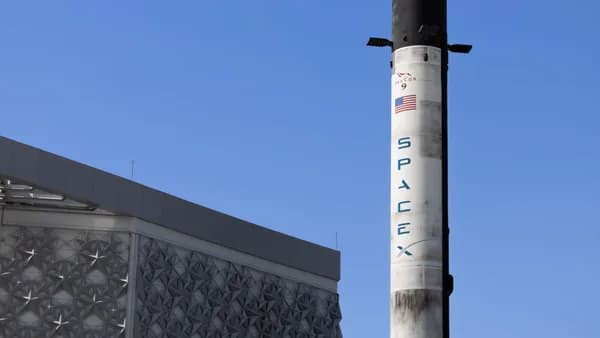
That matters because SpaceX's advantage is not only launch capability. SpaceX also operates Starlink's satellite internet business, which The Verge describes as the company's only profitable business. Rocket Lab is now reaching for a similar full-stack structure, but by acquisition rather than by building an entire communications network internally.
Rocket Lab CEO Sir Peter Beck described the deal as a shortcut.
“They have highly valuable spectrum, which is very difficult to come by,” Beck says. “They have millions of customers, and, of course, they’re a trusted government provider.”
That quote gets to the core of the transaction. Rocket Lab is buying scarcity. Spectrum rights, global coverage, and customers in mission-critical markets are not assets a launch company can manufacture on demand.
The numbers behind Rocket Lab's Iridium acquisition: $8 billion, 66 satellites, 2.5 million users
The transaction values Iridium at about $8 billion. TechCrunch reported that Rocket Lab will acquire Iridium's stock for $54 per share, and Rocket Lab's own announcement described the deal as a cash and stock transaction with an enterprise value of approximately $8.0 billion.
Iridium brings a real operating base. Its network includes 66 low-Earth orbit satellites and supports more than 2.55 million active subscribers worldwide, according to Rocket Lab's announcement. Those customers use Iridium for global voice, data, positioning, navigation, timing, and safety-of-life services across government, defense, aviation, maritime, and commercial markets.
The contrast is clean:
| Business line | Rocket Lab before the deal | Iridium's contribution |
|---|---|---|
| Launch | Electron launches and launch services | Demand for constellation deployment and replenishment |
| Space systems | Spacecraft manufacturing and space systems | Network refresh opportunities |
| Satellite services | Limited compared with launch and manufacturing | Recurring communications revenue |
| Strategic asset | Launch access and spacecraft capability | L-band spectrum, subscribers, operating network |
The L-band spectrum is central. Rocket Lab says Iridium's globally harmonized L-band spectrum supports reliable satellite communications and positioning services where GPS and other GNSS systems are degraded or unavailable. For users at sea, in the air, or in remote locations, that reliability is the business.
The counterpoint is cost. Satellite networks need refresh cycles, technical upkeep, and steady execution. The deal doesn't free Rocket Lab from capital intensity. It gives Rocket Lab a bigger machine to operate.
Why Iridium gives Rocket Lab a weapon SpaceX can't instantly replicate
The Rocket Lab Iridium acquisition gives Rocket Lab something SpaceX cannot instantly copy: a long-running communications network with licensed spectrum and millions of existing users. SpaceX has Starlink scale, but Iridium has a different niche. It serves users who need resilient global communications in places terrestrial networks do not reach.
Rocket Lab says it plans to build upon Iridium's network and help deploy the next generation of satellites. That next system will include direct-to-device services, which Rocket Lab says “will grow into an important new capability for U.S. national security and emergency response.”
This is where the overlap with Starlink becomes more serious. SpaceX, Amazon, and AST SpaceMobile are all referenced in the supplied material as companies developing direct-to-device services. XOOMAR has also tracked how Starlink keeps pushing closer to consumer hardware in SpaceX AI Device Pulls Starlink Toward Your Pocket.
Still, this deal does not create parity with SpaceX. The supplied sources do not show Rocket Lab matching SpaceX in scale. What they do show is a more complete Rocket Lab: one that can build satellites, launch them, operate a network, and sell communications services.
From Electron launches to owned constellations, Rocket Lab follows the integration playbook
Rocket Lab's move fits a clear industrial logic: suppliers want to become platform owners. Launch revenue and spacecraft manufacturing can be valuable, but satellite services offer a different kind of relationship with customers. They can turn a company from a mission vendor into an infrastructure provider.
SpaceX did this by building Starlink on top of its launch business. Rocket Lab is taking the acquisition route. TechCrunch notes that Iridium is one of several Rocket Lab purchases, following Motiv in May, Mynaric in April, a precision component manufacturer in February, and Geost last year.
That buying spree points to a company assembling capabilities fast. The Iridium deal would be the largest and most defining step because it adds the customer-facing layer Rocket Lab previously lacked.
The strongest counterpoint is integration risk. Buying companies is easier than combining their technology, cultures, and customer commitments. What would weaken the thesis is simple: delays in closing, financing strain, or any sign that Iridium's service roadmap slows after the acquisition.
Investors, regulators, customers, and rivals will read the deal differently
Investors will see the appeal of recurring satellite communications revenue, but they will also focus on financing. Morningstar reported that Rocket Lab plans to fund the cash portion, half of the buyout bid, through cash on its balance sheet plus other debt and equity financing. It also reported commitments for a $3.6 billion, 364-day senior secured bridge term loan facility.
Customers will care less about the SpaceX rivalry and more about continuity. Iridium supports users in aviation, maritime, government, defense, and remote commercial markets. For those buyers, service reliability and upgrade timing matter more than headlines about consolidation.
Regulators and government customers will likely scrutinize the transaction because Rocket Lab and Iridium both serve sensitive markets. Rocket Lab's announcement emphasizes national security, emergency response, PNT, and safety-of-life services. For related defense-space context, see XOOMAR's coverage of Space Force Lets Private Satellites Stalk Targets in Orbit.
Rivals will read the signal. A Rocket Lab that owns launch, spacecraft manufacturing, spectrum, and communications services can bid differently from a company selling only parts of the stack.
Rocket Lab's next test is proving Iridium can become a growth engine
The first phase is not glamorous. Rocket Lab has to close the deal, reassure Iridium subscribers, preserve service quality, and lay out the next-generation constellation plan. The company also has to prove that bringing launch and satellite manufacturing in-house can improve Iridium's future network economics without disrupting the business it just paid $8 billion to acquire.
Beck's framing is blunt: Rocket Lab is “not investing in hopes and dreams.” That line matters because the deal will be judged on execution, not ambition.
If Rocket Lab can use Iridium's spectrum, subscribers, and government credibility to expand into direct-to-device, PNT, emergency response, and defense communications, the acquisition could make it the most serious non-SpaceX space infrastructure contender. If integration drags or the next-generation network plan disappoints, the same deal will look like a costly shortcut that wasn't short enough.
The Bottom Line
- Rocket Lab’s $8 billion bid would transform it from a launcher into a satellite communications competitor.
- Iridium gives Rocket Lab spectrum, customers, and government relationships that would take years to build organically.
- The deal signals a direct attempt to challenge SpaceX’s vertically integrated space business model.
Rocket Lab’s Iridium Deal vs. SpaceX’s Integrated Model
| Company/Strategy | Current Strength | Communications Asset | Strategic Goal |
|---|---|---|---|
| Rocket Lab | Electron launch services and spacecraft manufacturing | Would gain Iridium’s 66-satellite LEO network, L-band spectrum, and 2.5M+ subscribers | Move beyond launch into satellite communications |
| SpaceX | Launch dominance with Falcon rockets | Operates Starlink, described as its only profitable business | Maintain a full-stack space and broadband model |
| Iridium | Established satellite communications provider | 66-satellite LEO constellation serving ships, aircraft, government users, and remote operations | Become part of Rocket Lab’s broader space infrastructure platform |
Primary Sources & Disclosures

Written by
XOOMAR Insights Team
Research and Editorial Desk
The XOOMAR Insights Team pairs automated research with human editorial judgment. We track hundreds of sources across technology, fintech, trading, SaaS, and cybersecurity, cross-check the facts, and explain what happened, why it matters, and what to watch next. We do not just rewrite headlines. Every article is fact-checked and scored for reliability before it goes live, and we link back to the original sources so you can verify anything yourself.