Can the Starlink Memphis discount buy enough trust for xAI’s Colossus data centers before the fight shifts back to turbines, permits, and water?
XOOMAR Intelligence
Analyst Take
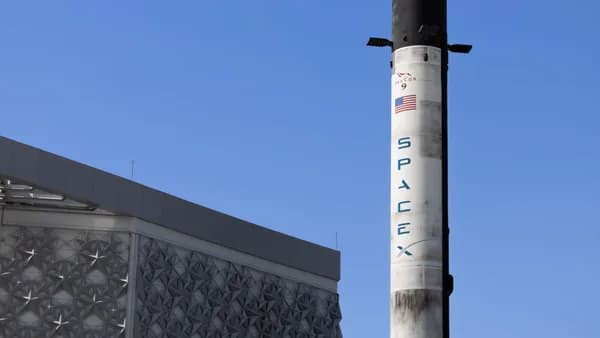
SpaceX is offering some Memphis-area residents half-price Starlink service, with no upfront hardware costs for new customers, according to TechRadar Pro. The offer applies to eligible addresses around Memphis, Tennessee, and nearby areas including Southaven, where the company is tied to existing Colossus data centers and says it “continues to invest in the Memphis area.”
That wording matters. SpaceX is not publicly saying this is a peace offering. But the timing, geography, and eligibility rules make the strategy hard to miss. Residents living near infrastructure built for AI compute are being offered a consumer broadband discount while the deeper dispute centers on power, pollution, water, noise, and public consent.
The primary question is not whether cheaper satellite internet is useful. For some households, it may be. The harder question is whether a household discount can offset the burden of hosting industrial-scale AI infrastructure.
Is the Starlink Memphis discount a broadband offer, or a pressure-release valve for Colossus?
The Starlink Memphis discount looks less like a normal customer-acquisition campaign and more like tactical damage control inside Elon Musk’s corporate network.
The known terms are straightforward:
- Discount: Half-price Starlink subscriptions for eligible Memphis-area addresses.
- Hardware: No upfront hardware costs for new customers, according to the source material.
- Eligibility: Address-based, with users able to check whether they qualify online.
- Referral: Eligible customers can share the discount with “nearby” friends and family.
- Portability limit: If a customer moves out of the eligible area, the discount ends.
Local outlet WMC Action News 5 reported that the discount applies to Starlink residential service options “for as low as $27.50 a month” and covers Memphis and surrounding areas, including parts of North Mississippi and Eastern Arkansas.
That is real money for a household. It is especially relevant in places where fixed broadband is weak, expensive, or unreliable. A satellite internet plan with free upfront hardware can lower the switching cost quickly.
But the offer sits next to a much larger bill. AI data centers require land, servers, chips, cooling systems, power arrangements, backup generation, and local infrastructure coordination. The source material does not disclose the capital cost of Colossus, so XOOMAR won’t assign a number. The directional point is still clear: a household internet subsidy is tiny compared with the industrial footprint of an AI compute site.
That gap is the story.
A broadband perk gives residents something immediate and visible. The complaints around Colossus involve things that are harder to price: emissions, noise, water use, and trust in the process. Those don’t disappear because a monthly bill falls.
Why does the offer land in the middle of a pollution fight?
Because xAI is facing legal and community pressure over how Colossus is powered.
TechRadar Pro cites a lawsuit alleging Clean Air Act violations tied to methane gas turbines powering the data centers. The claim is that the turbines do not have the required permissions. The Southern Environmental Law Center’s release quotes Abre’ Conner, a director at the National Association for the Advancement of Colored People (NAACP):
“As we shared since xAI started operating in Memphis, our homes, churches, and playgrounds will not be sacrifice zones for Big Tech’s convenience,” says Abre’ Conner.
That quote cuts through the corporate language. The issue is not whether Memphis gets a discount on internet access. It is whether residents believe the costs of AI buildout are being pushed onto neighborhoods that did not meaningfully approve the trade.
TechRadar Pro also notes that xAI has said it will resume work on a waste water recycling plant from next year, which would provide clean water for the data centers and local authorities. The source says it is not clear why that work was halted.
That unanswered detail weakens the trust pitch. If the public is being asked to accept large compute facilities, it will want clarity on the basics: what is being built, what paused, why it paused, what permits apply, and who verifies compliance.
The Starlink offer may soften the edges. It does not answer those questions.
What does Memphis reveal about the new bargain between AI companies and host communities?
Memphis is becoming a test case for a sharper version of an old economic-development bargain.
Large industrial projects have long arrived with promises of investment, jobs, grants, infrastructure upgrades, and political prestige. The AI version adds a new twist: the facility can be massive, power-hungry, and politically sensitive, while the public-facing benefit may be packaged as a consumer service.
That is why SpaceX stepping in with Starlink is so revealing. The discount comes from a satellite internet business. The backlash centers on data centers tied to xAI. The companies sit within the same Musk orbit, and the source material describes xAI as a SpaceX subsidiary. Whether residents parse corporate boundaries that way is another matter. To them, the offer may look like one Musk company trying to cool anger created by another Musk-linked project.
This follows a broader pressure point XOOMAR has been tracking: AI compute growth is no longer an abstract software story. It is a land, power, and permitting story. As we wrote in Power Crunch Pulls AI Data Center Antitrust Into Fight, the constraints around AI infrastructure increasingly sit outside the model itself.
The Memphis case shows what happens when compute ambition meets local friction. AI builders want capacity fast. Communities often want detail, oversight, and guarantees before the facility scales. Those timelines do not naturally align.
The result is a new playbook: pair industrial expansion with visible local perks. Broadband discounts. Community grants. Training promises. Utility projects. The perk may be useful, but it also signals that opposition has become expensive enough to manage.
How does a consumer discount compare with the actual Colossus burden?
The mismatch is best seen side by side.
| Issue | What SpaceX is offering | What residents and regulators still need answered |
|---|---|---|
| Broadband cost | Half-price Starlink for eligible addresses | How long the discount lasts and who remains eligible |
| Hardware cost | No upfront hardware costs for new customers | Whether terms change after adoption rises |
| Air emissions | No direct fix in the offer | Status of turbine permissions and Clean Air Act claims |
| Water | xAI says wastewater recycling work will resume from next year | Why work stopped and what oversight applies |
| Noise | No direct fix in the offer | Whether turbine and site operations meet community expectations |
| Trust | A visible household benefit | Whether benefits are negotiated publicly before backlash grows |
The table makes the political problem obvious. The Starlink Memphis discount is concrete, but narrow. The Colossus concerns are broader, and many sit in legal, environmental, and infrastructure channels.
XOOMAR analysis: this is why the offer risks looking like a payoff if it is not paired with harder disclosures. A discount can generate goodwill. It can also sharpen anger if residents see it as an attempt to reframe pollution claims as a customer-service issue.
There is a strategic upside for SpaceX and xAI. A Starlink subscription creates a direct relationship with households near the data centers. It puts the Musk brand on the kitchen table through a monthly service, not only through headlines about turbines and lawsuits. That is valuable.
But it cuts both ways. If the legal fight worsens, the same households receiving the discount may become more skeptical of why they were targeted in the first place.
Who is each side really trying to satisfy?
Different stakeholders are measuring success in different units.
Residents are likely to judge the project by lived conditions. The source material supports concerns around emissions, noise, water, and proximity to homes, churches, and playgrounds. It does not document claims about property values or traffic, so those remain outside the verified record here. The verified point is enough: people near the site are objecting to the local burden.
City and regional leaders may view Colossus as a signal that Memphis can attract high-profile advanced-computing investment. The available source material does not provide official economic-development terms, tax details, job numbers, or city statements, so the public value proposition remains incomplete from the documents provided.
Utilities and infrastructure planners face the least glamorous problem: power has to come from somewhere. TechRadar Pro specifically points to methane gas turbines. The lawsuit claim is about permissions. That moves the debate from “AI investment” to operational compliance.
SpaceX and xAI want room to build and operate. The discount can reduce political heat, especially if enough households value the service. It also lets the companies say they are investing locally in a way residents can touch immediately.
This is similar to how SpaceX’s consumer-facing ambitions can reshape perception around its infrastructure bets. Our coverage of SpaceX AI Device Pulls Starlink Toward Your Pocket looked at how Starlink can become more than a connectivity product when tied to broader AI hardware and service ambitions. In Memphis, that same brand power is being aimed at local acceptance.
The danger is that brand goodwill cannot substitute for permits.
Can half-price internet set a standard for AI data center community benefits?
It can, but only if the standard gets tougher than “offer a discount after residents complain.”
For households with poor fixed broadband options, cheaper Starlink could be meaningful. The offer may reduce monthly costs, remove hardware friction, and give some residents a better connection than they had before. Dismissing that benefit would be lazy.
But for communities hosting AI data centers, the stronger standard should be measurable, durable, and public. If a company receives local support, strains infrastructure, or builds near homes and public spaces, benefits should not depend on opaque eligibility maps or temporary promotional terms.
A better framework would make the following visible before the project becomes controversial:
- Energy: Where power comes from, what backup generation is used, and what permits apply.
- Emissions: Which equipment emits what, under which approvals, and with what monitoring.
- Water: How much is needed, what recycling systems exist, and who audits performance.
- Local benefits: Which households, schools, or public agencies receive support, for how long.
- Accountability: What happens if commitments are missed.
The available source material does not show whether Memphis has such a framework around Colossus. That absence is part of the problem. If the public mainly learns details through lawsuits, support pages, and social posts, trust will be thin.
For policymakers, the Memphis fight points to a practical lesson: AI infrastructure needs rules that match its physical footprint. A model may be digital. The data center is not.
Will the next Colossus fight be about broadband, or about permits and power?
The next phase will almost certainly move back to the harder questions: turbines, emissions controls, water systems, eligibility boundaries, and long-term oversight.
The Starlink Memphis discount may buy time. It may win some customers. It may help SpaceX and xAI argue that local residents are receiving tangible value while the companies “continue to invest in the Memphis area.”
The evidence that would strengthen that argument is specific: clear permit status, progress on the wastewater recycling plant, public reporting on emissions and noise concerns, and stable discount terms that do not vanish once attention fades.
The evidence that would weaken it is just as specific: unresolved Clean Air Act claims, unclear turbine permissions, delayed water commitments, narrow eligibility rules, or residents saying the offer does not match the burden.
Other AI infrastructure developers will be watching. If Memphis shows that broadband discounts, grants, or service perks can soften resistance, the playbook will spread. If the lawsuit and local opposition dominate the story anyway, the lesson will be harsher: consumer sweeteners cannot cover for weak transparency.
Memphis could become the model for how AI companies earn a local license to operate. It could also become the cautionary case for what happens when industrial-scale AI arrives faster than public consent.
Impact Analysis
- The offer links a consumer broadband discount to communities affected by large-scale AI infrastructure.
- Residents’ concerns go beyond internet access to issues such as power use, pollution, water, noise, and permits.
- The move could shape how tech companies try to build local trust around data center expansion.
Starlink Discount vs. Colossus Data Center Concerns
| Issue | Starlink Memphis Offer | Community Concern |
|---|---|---|
| Consumer benefit | Half-price Starlink subscriptions for eligible Memphis-area addresses | Residents question whether a broadband discount offsets industrial impacts |
| Upfront cost | No upfront hardware costs for new customers | Broader concerns remain around power, pollution, water, and noise |
| Eligibility | Address-based access in Memphis-area locations including nearby Southaven | Communities near AI infrastructure are central to the dispute |
Primary Sources & Disclosures
- [1]TechRadar Pro
- [2]SpaceX offers half-price Starlink internet plans in Memphis to quell backlash to its Colossus data centers — as it promises to 'continue to invest in the area'
- [3]Starlink now offering satellite internet service at half price for Memphis metro
- [4]SpaceX offers Memphis residents half-price Starlink

Written by
XOOMAR Insights Team
Research and Editorial Desk
The XOOMAR Insights Team pairs automated research with human editorial judgment. We track hundreds of sources across technology, fintech, trading, SaaS, and cybersecurity, cross-check the facts, and explain what happened, why it matters, and what to watch next. We do not just rewrite headlines. Every article is fact-checked and scored for reliability before it goes live, and we link back to the original sources so you can verify anything yourself.