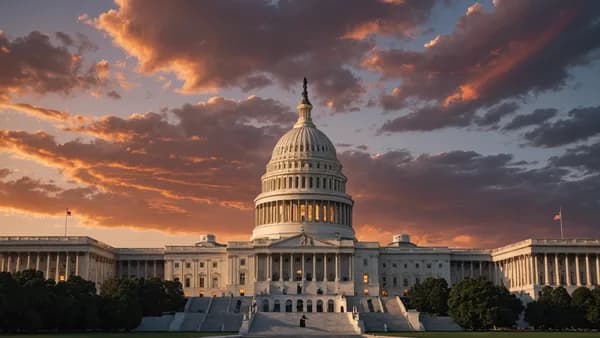
Senate Democrats who are most likely to help pass the Clarity Act are now warning that the Republican draft still fails on ethics, consumer protection, illicit finance, conflicts of interest, and market integrity. That hits crypto firms hardest because the bill needs bipartisan votes to become more than a partisan marker.
XOOMAR Intelligence
Analyst Take
The latest warning came from Senators Angela Alsobrooks, Cory Booker, Catherine Cortez Masto, Ruben Gallego, John Hickenlooper, Mark Warner, and Raphael Warnock, a group described as central to advancing the bill, according to CoinDesk. Their message was blunt: they’re still negotiating, but the Digital Asset Market Clarity Act, better known as the Clarity Act, is not ready.
"The Republican-proposed text of the CLARITY Act as it currently stands falls short," the statement said. "Key provisions including those addressing ethics for elected officials, consumer protection, illicit finance, conflicts of interest and market integrity must be strengthened."
Democratic negotiators see the Clarity Act as an ethics test, not just a crypto bill
The political risk is concentrated in a small group of Democrats who have already shown they’re willing to engage. Alsobrooks and Gallego were the only Democrats to vote for the Clarity Act in committee, while several others in the joint statement have previously expressed support for the bill.
That makes their objection more damaging than a routine partisan complaint. These are not the senators most eager to kill the bill. They are the senators Republicans likely need to move it.
The Clarity Act ethics fight also has a specific catalyst. Senate Republicans published a new draft earlier Wednesday that included an ethics provision agreed to by the White House and President Donald Trump, CoinDesk reported. But Democrats still said the text falls short.
Can Republicans pass a crypto market structure bill if the Democrats most open to it say the ethics language is too weak?
XOOMAR analysis: that is the central problem. The Clarity Act is being sold as a path to regulatory certainty, but the Democrats’ statement reframes it as a credibility test. If a market structure bill appears to give crypto firms clearer rules while leaving elected officials’ conflicts unresolved, it risks becoming a political liability for every Democrat who votes yes.
This is the same pressure point we flagged in prior XOOMAR coverage of the Clarity fight, including Ethics Ban Rescues Clarity Act From Senate Collapse and Polymarket Bets Yank CLARITY Act Odds Into Trump Fog. The bill’s fate is now tied less to broad crypto enthusiasm and more to whether lawmakers can defend the ethics language in public, as the Clarity Act Senate delay raises the stakes for crypto’s rule push.
Builders want a regulator map, but the draft details remain the missing piece
The Clarity Act is a crypto market structure bill, which means its broad purpose is to create a federal framework for digital asset oversight. The supplied materials describe it as legislation that would regulate the crypto industry and reconcile work from Senate committees, including the Senate Banking and Agriculture tracks referenced in related reporting.
The exact operative text on the SEC and CFTC boundary is not included in the supplied source material. That matters. Without the text, it’s not possible to verify how the draft treats registration pathways for trading platforms, issuer disclosures, secondary-market trading, or decentralization tests.
What can be said from the sources is narrower but still important:
| Issue in the Clarity Act fight | Source-supported status |
|---|---|
| Ethics for elected officials | Democrats say provisions must be strengthened |
| Consumer protection | Democrats identify it as an unresolved issue |
| Illicit finance | Democrats say the draft needs more work |
| Conflicts of interest | Democrats name it directly as a concern |
| Market integrity | Democrats say protections must be strengthened |
| Yield | Forbes reports prior compromise talks involved yield |
| Developer protections | Forbes reports law enforcement groups raised concerns |
For builders, that leaves an uncomfortable gap. They want clear lines before launching products, listing tokens, or investing in compliance systems. But if the next draft changes ethics, disclosure, illicit finance, or market integrity provisions, firms still don’t know what compliance target they’re aiming at.
XOOMAR analysis: the bill’s promise is certainty. The current negotiation is producing the opposite, at least in the short term. Compliance teams should prepare for multiple versions rather than assuming one clean regulatory handoff.
The vote math gives a few Democrats unusual power
The Clarity Act needs 60 votes to advance in the Senate, CoinDesk reported. That means as many as 10 Democrats may need to vote for it.
The committee history shows why the latest statement matters. Related reporting from CoinCentral said the Senate Banking Committee advanced the bill 15-9, with only two Democrats, Ruben Gallego and Angela Alsobrooks, joining Republicans. It also said the House previously passed its version 294 to 134, with 78 Democrats voting in favor.
Those numbers point in opposite directions. The House margin suggests there is bipartisan appetite for crypto legislation. The Senate committee split shows how thin the bipartisan coalition becomes when ethics and investor protection details are on the table.
Relevant numbers from the supplied materials:
- 60 votes: Senate threshold to advance the bill.
- As many as 10 Democrats: Potential number needed, according to CoinDesk.
- 15-9: Senate Banking Committee vote cited by CoinCentral.
- 2 Democrats: Alsobrooks and Gallego backed the bill in committee.
- 294 to 134: House passage margin cited by CoinCentral.
- 78 Democrats: House Democrats who voted for the House version, per CoinCentral.
- August 7: Date after which the Senate leaves town for summer recess, per CoinDesk.
- Over $1.4 billion: Amount Trump made from his crypto ventures in 2025, according to his latest financial disclosure as reported by CoinDesk.
Does the House vote prove the Senate will follow?
No. XOOMAR analysis: the Senate bottleneck is not general crypto legislation. It is the cost of providing Democratic votes for a bill tied to unresolved ethics language while Trump’s crypto income sits in the center of the debate.
Consumers and investors are being used as the political shield
The Democratic statement did not focus only on Trump. It paired ethics with consumer protection, illicit finance, conflicts of interest, and market integrity.
That combination is deliberate. A lawmaker can support digital asset regulation in theory while opposing a draft that looks too soft on conflicts or too vague on enforcement. The Democrats’ framing says the Clarity Act must protect the public from bad actors and protect Congress from appearing to bless self-dealing.
For end users, the risk is not only whether crypto rules exist. It’s whether those rules create confidence before the safeguards are strong enough.
Could a market structure bill make risky products look safer than they are?
XOOMAR analysis: that is the investor protection worry beneath the Democratic statement. If Congress creates a federal framework without tight ethics and market integrity rules, retail investors may read that framework as a broader endorsement than lawmakers intend. The source does not provide token-level or market-cap data, so the risk cannot be quantified here. But the political logic is clear: Democrats want to avoid voting for a bill that later gets blamed for preventable harm.
The Trump crypto disclosure turned ethics into the floor-vote problem
CoinDesk reports that the ethics issue has been outstanding for more than a year, stretching back to Senate work on the stablecoin-focused Guiding and Establishing National Innovation for U.S. Stablecoins Act, known as the GENIUS Act.
The issue gained renewed focus after Trump shared his latest financial disclosure showing he made over $1.4 billion from his crypto ventures in 2025. That figure changes the politics of the Clarity Act. Ethics is no longer an abstract governance concern. It is tied to a sitting president, his crypto interests, and a bill his administration wants to move.
The Democratic negotiators left the door open.
"We have been working in good faith with our Republican colleagues for the past year and will continue doing so to get this over the finish line," the Democratic lawmakers said.
That sentence matters as much as the criticism. They did not walk away. They warned Republicans what must change.
XOOMAR analysis: negotiable issues may include drafting around consumer protection, illicit finance, and market integrity. The harder red line is elected-official ethics. Democrats can compromise on technical architecture more easily than they can defend a vote that appears to normalize political enrichment through crypto ventures.
The next draft decides whether crypto gets law or another campaign prop
Republican Majority Leader John Thune’s office told CoinDesk he is still planning to move forward in the coming days. But timing is tight. The Senate leaves town after August 7 for summer recess, and CoinDesk notes the chamber has other issues to take up.
That puts the Clarity Act in a narrow lane. Republicans can make targeted concessions and try to convert crypto-curious Democrats into floor votes. Or they can treat the Democratic statement as posturing and risk losing the votes needed to advance the bill.
For crypto firms, the practical takeaway is simple: don’t plan around a finished rulebook yet. Exchanges, token issuers, and compliance teams should prepare for delay, further draft changes, and possible new ethics language that could affect politically connected crypto projects.
For investors, the signal is also clear. The market structure debate is not only about agency jurisdiction or industry certainty. It is now about whether Congress can write crypto rules without appearing to protect insiders first.
The Clarity Act can still become the crypto rulebook Washington has avoided for years. The evidence that would confirm that path is a revised draft that wins public support from Alsobrooks, Gallego, Warner, Warnock, and the rest of the Democratic group. The evidence that would weaken it is just as clear: a floor push before those senators say the ethics language is strong enough to defend.
Disclaimer: This XOOMAR analysis is for informational and educational purposes only. It is not financial, investment, legal, tax, or professional advice. It does not provide buy, sell, hold, price-target, portfolio, or personalized recommendations. Verify information independently and consult qualified professionals before making decisions.
Impact Analysis
- The Clarity Act likely needs bipartisan Senate support to advance beyond a partisan proposal.
- Key Democratic negotiators are signaling that crypto market rules must include stronger ethics and consumer protections.
- Crypto firms face renewed uncertainty as lawmakers continue negotiating the bill’s core safeguards.
Clarity Act: Republican Draft vs. Democratic Concerns
| Issue | Republican Draft Status | Democratic Concern |
|---|---|---|
| Ethics | Includes an ethics provision agreed to by the White House and President Donald Trump | Democrats say ethics rules for elected officials must be strengthened |
| Consumer protection | Part of the current Republican-proposed text | Democrats say protections remain insufficient |
| Illicit finance | Addressed in the draft | Democrats say safeguards need to be stronger |
| Conflicts of interest | Included among issues in the bill | Democrats say the text still falls short |
| Market integrity | Covered in the draft framework | Democrats say provisions must be strengthened |
Primary Sources & Disclosures
Disclaimer: Content on XOOMAR is produced using AI-assisted research, drafting, and verification workflows and is intended for informational and educational purposes only. It does not constitute financial, investment, legal, tax, medical, or professional advice of any kind. All analysis reflects available information at the time of publication and may not be current. Verify information independently and consult qualified professionals before making decisions. Editorial policy

Written by
XOOMAR Insights Team
Research and Editorial Desk
The XOOMAR Insights Team pairs automated research with human editorial judgment. We track hundreds of sources across technology, fintech, trading, SaaS, and cybersecurity, cross-check the facts, and explain what happened, why it matters, and what to watch next. We do not just rewrite headlines. Every article is fact-checked and scored for reliability before it goes live, and we link back to the original sources so you can verify anything yourself.