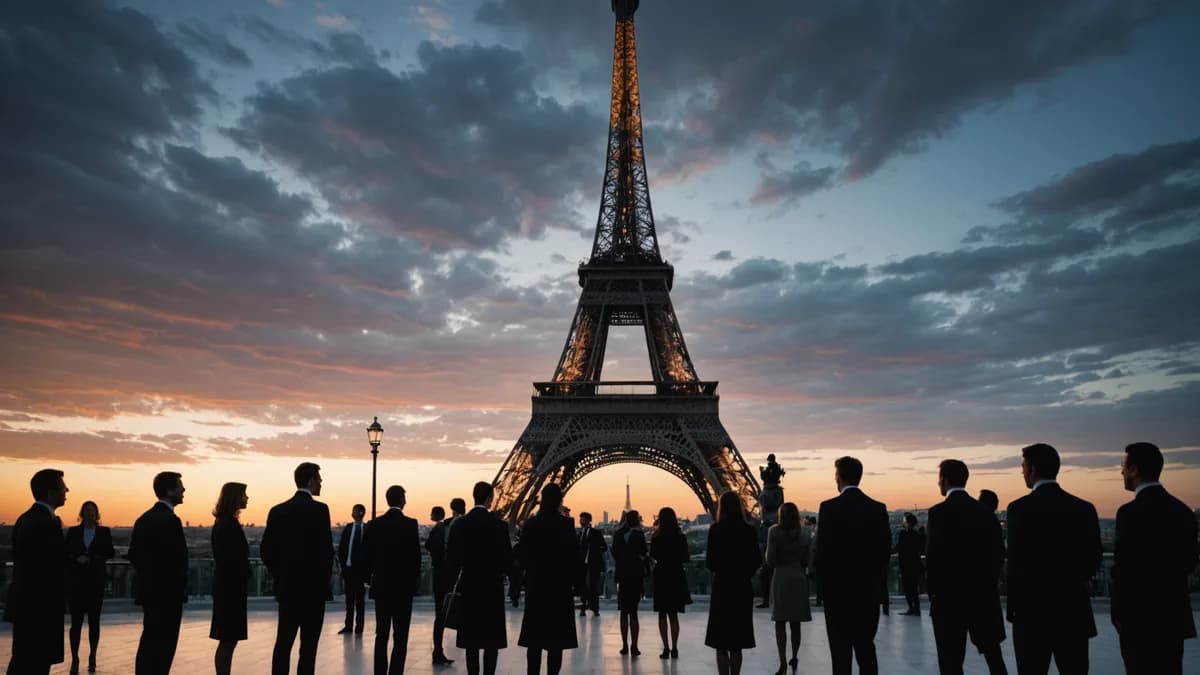
Employees at the Eiffel Tower shut down the iconic site on Monday after learning that female staff had allegedly been sidelined during a private visit by a Hindu religious group. The closure of a monument that receives nearly seven million visitors a year was a stark protest against what unions called instructions that made women "invisible" based on their gender, according to Independent World.
XOOMAR Intelligence
Analyst Take
The incident began on Saturday when a delegation of 100 people linked to the Hindu group Bochasanwasi Akshar Purushottam Swaminarayan Sanstha (BAPS) toured the tower. Sete, the company that operates the site, said the delegation requested limited "interactions with women." In response, management allegedly instructed female employees to leave their posts, avoid certain areas, and be replaced by men. The fallout was immediate and severe, forcing a full-day closure and sparking a formal investigation by Paris city authorities.
Why a BAPS Visit Sparked a Landmark Closure
The visit wasn't random. BAPS is a global Hindu organization with significant cultural and political ties. It consecrated its first major temple in France on Sunday, an event lauded by Indian Prime Minister Narendra Modi in a video message. The private visit to the Eiffel Tower was scheduled for early morning to avoid public disruption due to the group's size.
While BAPS stated it was unaware of anyone being denied access and offered a general apology for "any pain or inconvenience," the staff reaction tells a different story. According to the General Confederation of Labour (CGT) union, the management's compliance with the request created a clear pattern of discrimination.
"Some were asked to leave their posts and withdraw to other areas. In some posts they were replaced by men," the union's statement read. "And all female employees were instructed not to go through or cross certain areas while the delegation was present."
This operational directive, not the group's presence itself, became the catalyst for the historic work stoppage. The closure is a powerful example of how staff actions can escalate a workplace dispute onto the global stage, similar to how geopolitical tensions can reshape global norms, as seen when China Guarantees Confrontation Over US Iran Oil Sanctions.
The Legal Firestorm Over 'Laïcité' and Equality
In France, this isn't just a human resources issue. It cuts to the core of two fiercely protected principles: gender equality and laïcité (secularism). The latter demands that public spaces remain neutral, and the former is enshrined in law. Sete, as the operator of a monument owned by the City of Paris, has a legal duty to uphold these principles for both visitors and staff.
By acknowledging the request "should not have been accepted," Sete admitted a failure that goes beyond bad customer service. It breached a fundamental social contract. The swift, angry reactions from politicians across the spectrum confirm the severity.
French Equality Minister Aurore Bergé was unequivocal on social media: "In France, we do not ask women to erase themselves. No dogma, no religion is above the laws of the Republic."
This legal and cultural environment made the staff's protest not just possible but potent. Closing the tower was a drastic but legally sound precautionary measure, preventing further operational activity under a cloud of alleged discrimination while investigations began. The company stated it was ready to accept the "consequences."
The High-Stakes Pitfalls of a 'Private Visit'
Most major landmarks offer private visit packages for a premium, allowing exclusive access outside normal hours. For the Eiffel Tower, this typically means a group pays for controlled entry before public opening or after closing, often including guided tours and special access to areas like the summit.
The friction occurs when a site's commercial desire to accommodate a paying client conflicts with its legal and ethical obligations to staff. Did Sete's sales or events team, eager to secure a high-profile client, fail to properly vet a request against company policy? Or did management, facing the group on the day, make a reactive, poor judgment call?
This incident serves as a stark case study. A private visit, intended to be a seamless, privileged experience, instead exposed a critical vulnerability in operational protocols. It transformed a symbol of French culture into a battleground for workers' rights, demonstrating that no amount of revenue justifies sidelining employees' legal protections.
Investigating a Breakdown at the Iron Lady
The investigation, demanded by Paris Deputy Mayor Emmanuel Grégoire, will focus on one central question: who authorized the instructions given to female staff, and why?
The key parties involved are:
- Sete Management: Must provide internal communications and justify decision-making.
- CGT Union: Representing aggrieved staff and pushing for policy guarantees.
- Paris City Authorities: As the owner, they have ultimate oversight and accountability.
The process will likely involve interviewing managers on duty, reviewing written or digital instructions, and taking statements from affected employees. The goal is to establish a clear timeline and chain of command.
Potential outcomes range from internal to legal:
- Internal: Revised protocols for private visits, mandatory training on discrimination law, and potential disciplinary action for managers involved.
- Legal: If labor inspectors find violations, Sete could face significant fines. Individual employees could also pursue separate legal action for discrimination.
The company's statement of regret is a first step, but it won't be the last. The union's meeting on Monday was explicitly to "demand open dialogue with management and ensure that women are not treated in this manner by the company again." This suggests sustained pressure for systemic change.
A Global Test for Iconic Tourism
The Eiffel Tower shutdown is not an isolated clerical error. It's a flare in a persistent, global tension: how do iconic public sites balance cultural accommodation with absolute adherence to local labor laws and values?
We've seen variations before: disputes over religious dress for staff, debates about hosting events for regimes with poor human rights records, or conflicts over visitor behavior that violates site rules. This case is distinct because the alleged discrimination was enacted by the site's own management against its staff at a client's request.
The tower's response, closing entirely in protest, sets a dramatic precedent. It signals that staff and public sentiment in some Western democracies may now favor a zero-tolerance stance over commercial flexibility. The site's status as a national symbol amplified the message, turning a workplace grievance into an international news story.
Moving forward, operators of global landmarks will be watching. Will they tighten contracts for private visits with explicit non-discrimination clauses? Will they empower frontline managers to refuse requests that violate staff rights, even at the risk of losing business?
The investigation's findings and Sete's subsequent policy changes will provide a blueprint. In an era where cultural clashes are amplified by social media and political polarization, the business of hosting the world just got more complicated. The imperative for clear, uncompromising operational protocols has never been higher, lest other symbols find themselves unexpectedly closed, their silence speaking volumes.
Why This Changes Everything
- The shutdown of a global icon visited by nearly 7 million people annually demonstrates how workplace discrimination can disrupt major tourism infrastructure.
- It highlights how cultural or religious requests to sideline female employees can violate labor rights and trigger organized labor action at historic sites.
- The incident sets a precedent where employee protests can immediately close world landmarks to challenge discriminatory practices by management.
Eiffel Tower Visitor Impact
Primary Sources & Disclosures

Written by
XOOMAR Insights Team
Research and Editorial Desk
The XOOMAR Insights Team pairs automated research with human editorial judgment. We track hundreds of sources across technology, fintech, trading, SaaS, and cybersecurity, cross-check the facts, and explain what happened, why it matters, and what to watch next. We do not just rewrite headlines. Every article is fact-checked and scored for reliability before it goes live, and we link back to the original sources so you can verify anything yourself.