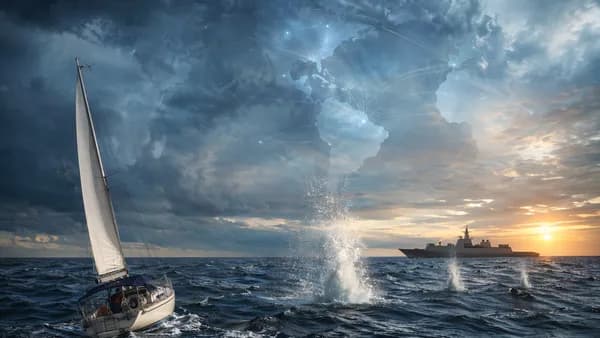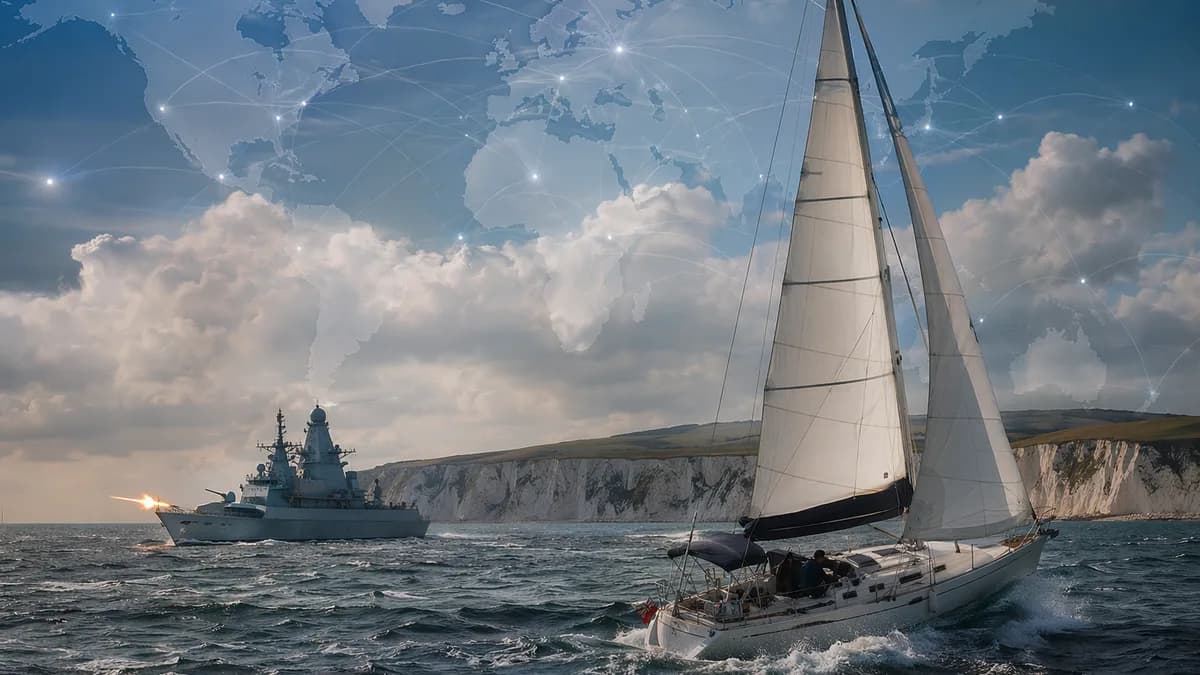
A routine Russian naval transit through the English Channel has turned into a UK investigation after a Russian warship fired warning shots near a UK-registered yacht off the Isle of Wight.
XOOMAR Intelligence
Analyst Take
The vessel was the Admiral Grigorovich, a Russian frigate, and the yacht was the Bright Future, carrying British retired couple Jane and Alan Kelvey, according to BBC World. The encounter happened on Tuesday morning, about 23 miles off the coast of the Isle of Wight, outside UK territorial waters.
UK probes Russian warship warning shots near yacht off Isle of Wight
The UK Ministry of Defence has described the English Channel encounter as an "isolated incident" and said it was not linked to the seizure of a Russian shadow fleet tanker in the Channel on Sunday.
That distinction matters. The same stretch of water is already under close watch after Royal Marine Commandos intercepted a Russian shadow fleet tanker carrying sanctioned oil, in what the BBC described as the first operation of its kind by the British military. XOOMAR previously tracked that pressure point in the Russian shadow fleet tanker seizure.
The Kelveys told BBC Newsnight they were sailing when the frigate sounded its horn.
"[The warship] gave out five blasts on their horn, which means 'have you seen us?'"
Jane Kelvey said the yacht then changed course.
"We immediately turned two degrees to port so they could see we had made a deliberate change of course, which meant we had seen them."
She said the warship sounded another five blasts about a minute later, followed by "four to five small arms fire." She told the BBC: "That wasn't aimed at us - it was warning fire that went up in the air, we believe."
The Russian Defence Ministry gave a different account. It said the yacht had made a "dangerous approach" toward the warship and that Russian sailors fired into its path with rifles after radio contact attempts and warning flares. Russia said its sailors acted in "strict accordance with international shipping regulations."
The MoD said it is investigating.
"Following attempts to contact a British vessel in the channel, the Grigorovich fired warning shots. These were not aimed at the vessel and were an attempt to prevent a possible collision."
The first hard fact for investigators is location. British authorities received reports that the Russian vessel fired from around 500 yards (457 meters) away, a near distance by sea travel standards. The incident happened around 20 nautical miles, or about 23 standard miles, south of the Isle of Wight.
Channel gunfire report collides with Russia's escort role near UK waters
The English Channel is routinely used by Russian warships moving through international waters, and those transits are monitored by Royal Navy vessels. That is the expected pattern.
The reality on Tuesday was sharper: a civilian yacht, a Russian frigate, foggy conditions, and reported gunfire close enough to trigger a UK investigation.
The Admiral Grigorovich was being shadowed by HMS Mersey, after being spotted off the coast of Brest in France. The Royal Navy described that monitoring as a "routine operation." After the warning shots report, a boat from HMS Tyne, a British patrol vessel, was sent to the yacht to gather details and check on the crew.
BBC reporting adds another layer. The outlet said it understands the small, motor-less yacht had drifted toward the warship in foggy conditions after leaving the UK. British officials believe the Russian frigate may have been trying to signal that it was drifting rather than moving under engine power, making it less manoeuvrable and possibly more vulnerable to collision.
That possible explanation does not erase the dispute. Jane Kelvey said the Bright Future was "definitely not on a collision course" and added: "As far as we were concerned, it wasn't an incident until the gunfire started." Alan Kelvey called the gunfire "unnecessary."
The competing accounts now look like this:
| Issue | Yacht crew account | Russian account | UK position |
|---|---|---|---|
| Course risk | Yacht was "definitely not on a collision course" | Yacht made a "dangerous approach" | Investigating the incident |
| Warning signals | Five horn blasts, course change, then more horn blasts | Radio attempts, warning flares, sound signals | Says warning shots followed contact attempts |
| Gunfire | Four to five small arms fire, believed fired into the air | Shots fired into the yacht's path with rifles | Not aimed at the yacht, intended to prevent collision |
| Wider link | Crew described a sudden escalation | Russia says regulations were followed | MoD says incident was isolated, not linked to Sunday seizure |
The Russian warship warning shots report lands amid heightened attention on the frigate’s role in Channel traffic. Last week, a Nato source told BBC Verify that the Admiral Grigorovich had been ordered by Moscow to escort shadow fleet vessels through the Channel.
Satellite images reviewed by BBC Verify showed the repair vessel PM-82 operating between the Channel and the North Sea in recent months. Nato officials believe the PM-82 delivered food, water and other supplies to the Admiral Grigorovich, helping it stay at sea for extended periods and lead Russian convoys through the Channel.
In April, the frigate was reported to have escorted six shadow fleet vessels through the waterway while being monitored by the Royal Navy. The Royal Navy has previously said the Grigorovich escorted Russian-flagged vessels heading to and from the Atlantic, Mediterranean and Baltic, including "one submarine and around six merchant and support vessels."
For readers following enforcement pressure beyond maritime sanctions, XOOMAR has also covered the Binance MiCA application fight. This case is different. The evidence trail here is not filings or regulators' notices. It is radar, radio logs, vessel positions, and crew testimony.
Radar tracks and radio logs now become the test
The next phase is evidentiary. Investigators will need to reconcile the yacht crew’s account, the Russian Defence Ministry’s statement, and the MoD’s initial description.
Likely evidence includes vessel tracking data, radio communications, Royal Navy monitoring records, and statements from the Bright Future crew. The position of the Admiral Grigorovich, the yacht’s drift, visibility conditions, and any recorded warnings will matter more than rhetoric from either side.
James Parkin, a former Royal Navy rear admiral, told the BBC that armed force at sea is normally a last resort.
"I would not be surprised if it was a miscalculation, rather than a deliberate act to try and fire on a British yacht very close to British waters"
That is the narrowest reading of the incident. The wider one is harder to contain. A Russian frigate already under Royal Navy watch, reportedly escorting shadow fleet vessels through the Channel, fired warning shots near a UK-registered civilian yacht just days after British forces seized a Russian-linked tanker carrying sanctioned oil.
The MoD says those two events are not connected. The investigation now has to show whether Tuesday’s encounter was a navigational breakdown in fog, an overreaction by a Russian crew, or something else the current public record does not yet prove.
The practical watch item is simple: confirmation of the full sequence. If radar and radio records support the collision-prevention account, the incident may stay contained. If they contradict it, London will face pressure to demand a clearer explanation from Moscow about why a Russian warship warning shots incident unfolded so close to UK coastal waters.
Impact Analysis
- The incident raises safety concerns in one of the world’s busiest maritime corridors.
- It adds tension to already heightened UK scrutiny of Russian vessels in the English Channel.
- Conflicting accounts could complicate diplomatic and military handling of future naval transits.
Competing Accounts of the English Channel Encounter
| Source | Claim |
|---|---|
| UK Ministry of Defence | Described the encounter as an isolated incident outside UK territorial waters. |
| Yacht crew | Said the Russian frigate sounded horn blasts, then fired warning shots into the air after the yacht changed course. |
| Russian Defence Ministry | Said the yacht made a dangerous approach toward the warship. |
Primary Sources & Disclosures

Written by
XOOMAR
Data desk
XOOMAR is a capital markets software and data company. Every brief on this site starts from a dataset the company collects itself from primary sources (CFTC, SEC EDGAR, FINRA, the Federal Reserve, exchange APIs) and names the numbers it is built on, with a link to the data page so you can check them. Briefs are reviewed before they go out and corrected in place when the data is revised.