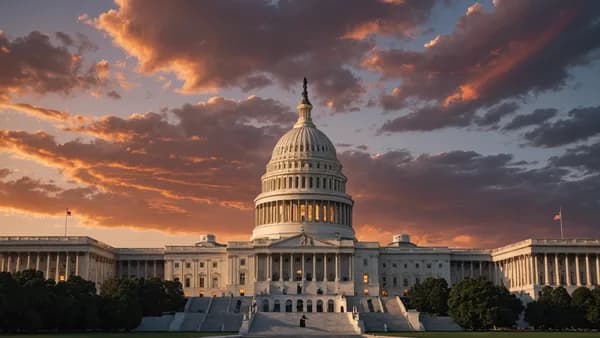
The Warner Bros. Discovery sale is now a $111 billion test of whether Hollywood can cure its debt, streaming pressure, and cable decline by getting even bigger.
XOOMAR Intelligence
Analyst Take
That is the real story behind Paramount’s planned acquisition of Warner Bros. Discovery, according to TechCrunch. Netflix first appeared to have won the prize with an $82.7 billion deal for WBD’s studios and streaming assets. Then Paramount, led by David Ellison, came back with a richer offer for all of WBD, including HBO, streaming platforms, games, and TV networks such as CNN and HGTV.
This is not a clean victory lap. The U.S. Department of Justice approved the deal in June, but a coalition of 12 state attorneys general sued on July 13 to block it. A federal judge has now issued a 14-day pause, putting the deal on ice until August 3 unless the freeze is extended.
For readers tracking the legal fight, XOOMAR has separate coverage on the state action in States Freeze Paramount Warner Merger After DOJ Approval and the court order in Court Freezes $110B Paramount Warner Bros Merger Deal.
Paramount’s $111 Billion Warner Bros. Discovery Sale Turns Survival Anxiety Into an Auction
The Warner Bros. Discovery sale began after WBD said in October that it was exploring a potential sale following unsolicited interest from major industry players. That detail matters. This was not simply a trophy hunt for a famous studio.
WBD entered the process under pressure from billions of dollars in debt, declining cable viewership, and competition from streaming platforms. The company had already been considering major strategic changes, including selling entertainment assets to a rival.
Paramount’s logic is easy to see from the asset list. WBD brings Warner’s film and TV studios, HBO, streaming platforms, games, CNN, HGTV, and other networks. Paramount wanted the whole company, not just the streaming and studio crown jewels Netflix targeted.
XOOMAR analysis: that makes Paramount’s bid a scale play with a catch. Buying all of WBD gives Paramount more assets to manage, but also more legacy exposure. The same networks and debt that made WBD vulnerable would land inside the combined company.
The Deal Math: $31 a Share, $33 Billion of WBD Debt, and an $87 Billion Burden
The bidding war turned on structure as much as headline value.
| Bidder | Offer described in source | Scope | Key issue |
|---|---|---|---|
| Netflix | $82.7 billion | WBD studios and streaming | WBD board initially saw it as attractive |
| Paramount | Approximately $108 billion, later $31 per share | All WBD assets | Debt and financing concerns |
| Paramount final deal | About $111 billion | Studios, HBO, streaming, games, TV networks | Approved by DOJ, now paused by court |
Netflix later amended its agreement in January to an all-cash offer at $27.75 per share. Paramount kept pushing. It offered a $0.25 per share “ticking fee” to WBD shareholders for each quarter the deal failed to close by December 31, 2026, and said it would pay the $2.8 billion breakup fee if Warner backed out of the Netflix agreement.
Then Paramount raised its offer to $31 per share in February. Netflix declined to match.
“The transaction we negotiated would have created shareholder value with a clear path to regulatory approval,” Netflix co-CEOs Ted Sarandos and Greg Peters said in a statement on February 26. “However, we’ve always been disciplined, and at the price required to match Paramount Skydance’s latest offer, the deal is no longer financially attractive, so we are declining to match the Paramount Skydance bid.”
The debt load is the hardest number in the story. TechCrunch reports that Paramount is set to assume approximately $33 billion in WBD debt. WBD’s board had also worried that Paramount’s proposal would leave the combined company burdened with $87 billion in debt.
The financing stack is equally revealing: a $54 billion debt commitment from Bank of America, Merrill Lynch, Citi, and Apollo Global Management, plus $45.7 billion in equity from Larry Ellison.
XOOMAR analysis: the deal only makes sense if Paramount can extract enough cost savings and strategic value to offset the leverage. The source does not provide subscriber totals, free cash flow, or streaming loss figures, so the clearest hard signals are valuation, assumed debt, financing, and regulatory resistance.
Streaming, Cable, News, and Games Would Sit Under One Heavier Roof
Paramount’s offer is broader than Netflix’s because it includes WBD’s full mix of assets. That is both the attraction and the risk.
A buyer of WBD’s studios and streaming assets would get the parts investors usually prefer: premium IP, HBO, production capacity, and direct-to-consumer reach. Paramount’s bid adds TV networks such as CNN and HGTV, plus games and other assets.
That creates more optionality. It also creates more complexity. Cable viewership decline is one of the pressures that pushed WBD toward strategic alternatives in the first place.
The news assets sharpen the politics. TechCrunch reports concerns among CNN employees because Ellison’s ownership of CBS News has been seen by critics as sympathetic to the Trump administration. The source also says reporting critical of the administration has been shelved or received increased scrutiny under Ellison or his appointed head of CBS News, Bari Weiss.
That puts CNN at the center of a larger question: would a Paramount-owned WBD treat news as an editorial asset, a political liability, or a bargaining chip? The supplied source supports the concern. It does not yet support a firm answer.
Regulators, State AGs, Workers, and Shareholders Are Not Looking at the Same Deal
To executives, the Warner Bros. Discovery sale is about size, libraries, studios, and bargaining power. To regulators, it is about concentration.
California attorney general Rob Bonta said on February 26 that:
“these two Hollywood titans have not cleared regulatory scrutiny — the California Department of Justice has an open investigation, and we intend to be vigorous in our review.”
A coalition of 11 state attorneys general had already urged the DOJ to review the merger, arguing it could stifle competition and increase subscription prices. Senators Elizabeth Warren, Bernie Sanders, and Richard Blumenthal also warned the DOJ’s Antitrust Division that the merger could give the new company excessive market power.
The current lawsuit is broader and more direct. The 12-state coalition, led by Bonta and joined by Arizona, Colorado, Connecticut, Massachusetts, Minnesota, Nevada, New Jersey, New Mexico, New York, Oregon, and Washington, argues the merger would lessen competition and harm movie theaters, cable distributors, and viewers.
Labor risk is also explicit. Ellison has warned about significant job reductions expected in the near future, and TechCrunch notes widespread concerns among critics about job losses and lower wages.
XOOMAR analysis: that creates a classic merger split. Shareholders may focus on deal certainty and price. Employees and creators will focus on consolidation of decision-making power. Regulators will ask whether the same transaction that rewards investors also narrows choices for the market.
Disney Fox Is the Supplied Merger Comparison, Not a Free Pass
The provided background says this deal would be the second major horizontal integration of two legacy media conglomerates and film studios in recent history, after Disney’s acquisition of 21st Century Fox’s entertainment assets and cable networks in 2019.
That comparison helps frame the stakes, but it does not settle the outcome. WBD itself was created on April 8, 2022, through AT&T’s divestment of WarnerMedia and WarnerMedia’s merger with Discovery. The supplied material says WBD carried an initial debt load of over $43 billion and later pursued cost-cutting, reorganization, tax write-offs, and removal of movies and shows from HBO Max.
The lesson is blunt. Owning a legendary library does not automatically fix the economics around it.
Paramount is not buying a clean growth story. It is trying to absorb a company that already reflects the strain of prior media consolidation.
Subscribers, Theaters, Advertisers, and Hollywood Workers Face Different Trade-Offs
For viewers, the lawsuit’s core claim is the practical one: fewer competitors could mean higher prices or fewer choices. The state coalition specifically argues the deal would harm viewers, movie theaters, and cable distributors.
For theaters, the risk cited in the lawsuit is not abstract. A combined Paramount-WBD would control a larger studio footprint. The source does not provide release-slate details, so claims about specific film cuts would go too far. But the antitrust argument clearly treats theatrical distribution as one affected market.
For workers, the concern is more immediate. Ellison has already warned about significant job reductions. If the deal closes, overlap across studios, networks, streaming operations, and corporate functions becomes the obvious pressure point.
Advertisers and distributors would be watching the same consolidation from another angle. A larger combined company could bring more inventory and more negotiating heft. Whether that strengthens competition or reduces it is exactly the fight now moving from deal rooms to courtrooms.
The Next Test Is Not DOJ Approval, It Is Whether the Court Pause Becomes a Real Block
Paramount initially aimed to finalize the WBD acquisition as early as July. That timeline is now broken. The transaction is temporarily paused until August 3, when a hearing will assess whether the freeze should extend further.
The clearest confirmation of Paramount’s thesis would be a path through litigation without major concessions, followed by evidence that the combined company can manage debt without gutting the assets it just bought. The clearest warning sign would be an extended freeze, forced divestitures, or deeper scrutiny around news ownership, labor effects, and competition.
The Warner Bros. Discovery sale has already answered one question: legacy media companies still believe size can buy time. The harder question is whether time is enough when the bill comes with $33 billion of assumed WBD debt, state-level antitrust litigation, and a Hollywood workforce bracing for cuts.
Impact Analysis
- The deal could reshape Hollywood by combining major studios, streaming platforms and cable networks under Paramount.
- The legal challenge from 12 state attorneys general shows regulators remain concerned about media consolidation.
- WBD’s debt, cable decline and streaming pressure highlight the survival challenges facing legacy entertainment companies.
Warner Bros. Discovery Sale Offers
| Bidder | Deal value | Assets targeted | Status |
|---|---|---|---|
| Netflix | $82.7 billion | WBD studios and streaming assets | Initially appeared to have won the prize |
| Paramount | $111 billion | All of WBD, including HBO, streaming platforms, games, CNN and HGTV | DOJ-approved but paused by federal court after state lawsuit |
Reported Warner Bros. Discovery Offer Values
Primary Sources & Disclosures

Written by
XOOMAR Insights Team
Research and Editorial Desk
The XOOMAR Insights Team pairs automated research with human editorial judgment. We track hundreds of sources across technology, fintech, trading, SaaS, and cybersecurity, cross-check the facts, and explain what happened, why it matters, and what to watch next. We do not just rewrite headlines. Every article is fact-checked and scored for reliability before it goes live, and we link back to the original sources so you can verify anything yourself.