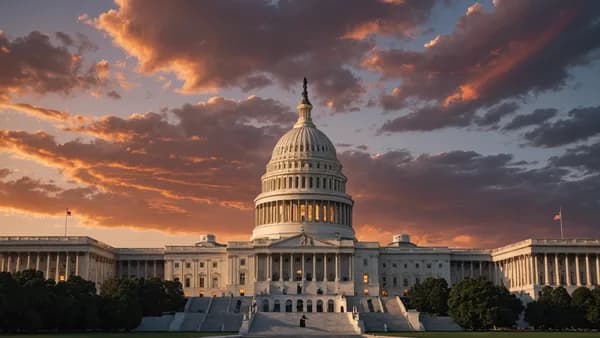
Federal approval now looks less like a finish line and more like the start of a second fight for CFOs managing major deals. The proposed Paramount-Warner Bros. Discovery combination had already cleared the U.S. Department of Justice, but a coalition of 12 states, led by California, still persuaded a federal judge to temporarily halt it, according to PYMNTS.
XOOMAR Intelligence
Analyst Take
That is the real signal beneath the headline. Federal approval no longer gives finance chiefs a clean closing assumption. It gives them one cleared checkpoint in a market with many veto points.
“Federal approval no longer guarantees regulatory certainty.”
Federal approval is now only one checkpoint in the Paramount-Warner fight
The Paramount-Warner Bros. Discovery pause is temporary, but temporary is enough to change the math.
On Monday, a federal judge imposed a 14-day restraining order on the proposed combination after state attorneys general argued the deal could reduce competition in theatrical film distribution and cable programming. The court scheduled an August 3 hearing on a potential preliminary injunction.
That sequence matters. The deal cleared the DOJ, then stalled anyway.
For CFOs, this is the uncomfortable part: a transaction can be legally alive, strategically intact, and financially modeled, while still being frozen by litigation that sits outside the expected federal path. As we covered in the Paramount Warner Bros merger freeze, the immediate market story is the court pause. The deeper finance story is that regulatory timing has become a balance sheet input.
The old assumption was simpler:
- Before: Clear federal review, prepare to close, execute integration.
- After: Clear federal review, then test state litigation, local concerns, court timing, and revised economics.
XOOMAR analysis: CFOs don’t need a permanent injunction to face damage. A 14-day freeze can interrupt closing calendars, board communications, integration planning, and the credibility of financial forecasts tied to deal timing. The source does not provide financing terms or synergy targets, so those numbers remain unknown. But the operational risk is clear: federal clearance did not settle the transaction.
The veto map is wider than the federal merger review file
The United States still functions as one national commercial market. Large companies, however, increasingly face a fragmented approval map.
PYMNTS names several layers of resistance: state attorneys general, privacy agencies, utility commissions, environmental authorities, and local zoning boards. Each can challenge or complicate projects that have already received federal clearance or were built around the assumption that federal policy would dominate.
The Paramount-Warner case shows one version of the problem. The source also points to the Nexstar-Tegna transaction, which states challenged after federal approval. It cites state roles in challenges involving Kroger and Albertsons, JetBlue and Spirit Airlines, and other nationally significant combinations.
That does not mean every major deal now faces the same risk. It means federal approval is no longer the only approval that matters.
For CFOs, the shift is from compliance as a legal cost to compliance as a capital variable. Timing, collateral, infrastructure spending, expected return, and project design can all move when state or local authorities intervene.
State attorneys general are turning antitrust into a finance problem
State attorneys general have long had independent authority to enforce federal and state antitrust laws. PYMNTS argues the change is their willingness to use that authority apart from Washington.
That distinction is crucial. A company may satisfy a federal regulator’s competition theory and still collide with a state’s view of harm. PYMNTS lists possible state-level concerns: employment, local suppliers, consumer prices, media diversity, and the economic effects of consolidation inside state borders.
Those are not always the same questions federal agencies emphasize. They can produce different pressure points, even when the transaction survives the main federal review.
XOOMAR analysis: this changes deal planning before signing, not after a lawsuit lands. A CFO who treats state litigation as a late-stage legal nuisance risks building a valuation case around assumptions that a court, state AG, or local regulator can interrupt. The better approach is to treat approval as staged and conditional.
That means finance teams should pressure-test:
- Timing: What happens if closing slips past the original calendar?
- Capital needs: Which costs rise if the deal is delayed or modified?
- Operating assumptions: Which projected benefits depend on a clean close?
- Disclosure: How clearly has the company described non-federal approval risk?
- Governance: Has the board seen a state-level regulatory map before voting?
The Paramount-Warner halt doesn’t prove the deal fails. It proves state litigation can seize momentum.
Local regulators can break infrastructure economics too
This is not just a merger issue.
PYMNTS also points to Oracle data center mega-campuses in Wisconsin and El Paso, Texas, where reported cost surprises tied to energy requirements could run into the billions of dollars. Wisconsin regulators said their requirements are designed to prevent utility customers from absorbing costs if a large-load customer fails to meet its obligations.
That example broadens the CFO lesson. A project can be modeled around electricity rates, tax incentives, financing structures, and construction schedules, then face new demands from utility commissions, local zoning boards, environmental challengers, or state lawmakers.
The source says Oracle has sued in response and is seeking greater tax cuts to offset compliance and environmental costs. The important point is not whether Oracle wins. It is that local and state-level decisions can alter the economics of national-scale infrastructure.
That connects directly to AI infrastructure, where energy access and local approvals can matter as much as capital spending. It also echoes the audit and control burden we examined in Black-Box AI forcing CFOs to rethink audit playbooks, even though this case is about regulatory fragmentation rather than model governance.
CFOs need a closing strategy that survives state scrutiny
Boards should stop asking only whether federal approval is likely. That question is now too narrow.
A better board package would separate federal, state, local, and sector-specific risks. It would identify which approvals are binary, which are negotiable, and which could delay the project without formally killing it.
Deal advisers should also expect tougher conversations around timing assumptions. The source does not give deal value, break fees, financing packages, or synergy targets for Paramount-Warner, so those cannot be responsibly priced here. But the framework is obvious: the more a deal’s value depends on speed, integration, or clean execution, the more state intervention can erode confidence.
For CFOs, the new playbook looks like this:
| Old deal model | Fragmented approval model |
|---|---|
| Federal clearance drives the closing case | Federal clearance is one stage |
| Compliance cost is estimated after strategy | Regulation shapes strategy upfront |
| State risk is secondary | State risk can halt momentum |
| Local issues are operational details | Local issues can change project economics |
| Board focus centers on approval odds | Board focus shifts to approval resilience |
The practical takeaway is blunt: companies can’t treat federal approval as a green light anymore. They need a closing strategy built for local politics, courtroom timing, and public scrutiny.
The next merger cycle will test who modeled the second fight
The next wave of large mergers will show whether CFOs have absorbed the lesson from Paramount-Warner.
Evidence that the market has adapted would include wider closing ranges, earlier outreach to state officials, more detailed state-by-state risk mapping, and board materials that model delays rather than assume a clean federal path. Evidence against the thesis would be a return to deals closing smoothly once Washington signs off, with state challenges failing to slow timelines or change economics.
For now, the safer assumption is fragmentation. Federal approval still matters. It just no longer ends the conversation. The CFOs best positioned for this era won’t be the ones who celebrate the first clearance. They’ll be the ones who designed the deal to survive the next challenge.
Impact Analysis
- Federal approval is no longer enough for CFOs to assume a major deal can close on schedule.
- State-level litigation can freeze transactions even after DOJ clearance, adding uncertainty to deal models.
- Regulatory timing is becoming a direct financial risk that can affect balance sheets, integration plans, and closing assumptions.
CFO Deal Assumptions Before vs. After Rising State Challenges
| Before | After |
|---|---|
| Clear federal review | Clear federal review |
| Prepare to close | Test state litigation and local concerns |
| Execute integration | Account for court timing and revised economics |
Primary Sources & Disclosures

Written by
XOOMAR Insights Team
Research and Editorial Desk
The XOOMAR Insights Team pairs automated research with human editorial judgment. We track hundreds of sources across technology, fintech, trading, SaaS, and cybersecurity, cross-check the facts, and explain what happened, why it matters, and what to watch next. We do not just rewrite headlines. Every article is fact-checked and scored for reliability before it goes live, and we link back to the original sources so you can verify anything yourself.