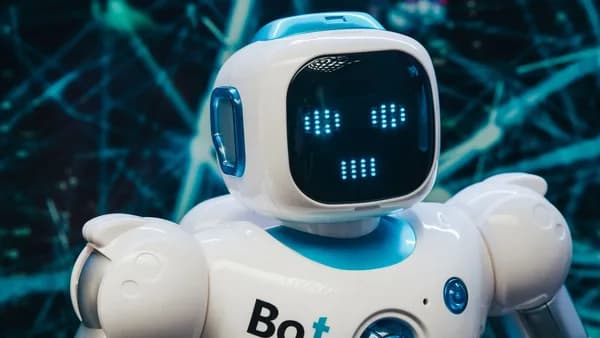
China’s pending restrictions on human-like AI services in China signal a sharper boundary for consumer AI: chatbots can help, search, shop, and answer, but regulators are moving against systems that simulate emotional attachment itself. ByteDance and Alibaba have already begun halting features that let users create and chat with AI companions, according to PYMNTS, citing a Bloomberg News report published Monday (July 6).
XOOMAR Intelligence
Analyst Take
The thesis is simple: emotional AI will be one of the hardest consumer AI categories to scale in China because it sits at the intersection of youth protection, mental health, data privacy, platform control, and political oversight. That doesn’t mean every chatbot is in trouble. It means products designed around simulated intimacy are becoming a regulated risk class.
China’s AI companion crackdown targets synthetic intimacy, not ordinary chatbot utility
China’s AI companion crackdown appears aimed at a specific design pattern: AI systems that simulate human personality, emotional engagement, and continuous interaction. The reported restrictions are not framed as a ban on AI assistants as such. They focus on the part of the product that makes a bot feel less like software and more like a relationship.
That distinction matters. The regulatory target is not a chatbot that answers a travel query or helps find a product link. It is a chatbot that imitates emotional bonds, encourages ongoing attachment, or behaves like a synthetic companion. The new rules, set to take effect on July 15, 2026 according to a Xinhua report carried by People’s Daily Online, place strict safeguards on content for minors and prohibit systems from encouraging self-harm, suicide, verbal abuse, emotional dependency, or emotional manipulation that pushes users toward irrational decisions.
The strongest counterpoint is that human-like AI can serve legitimate uses. The rules themselves recognize applications in areas such as cultural communication, childcare, and elderly companionship, according to the supplied Xinhua summary. But Beijing is not treating those uses as a free pass. It is conditioning them on safety, supervision, and compliance.
That is why human-like AI services in China are becoming a product governance problem, not just a content moderation issue.
Doubao and Qwen pull back before the rules bite
ByteDance’s Doubao, described in the source material as China’s most popular AI chatbot, is set to shut down a feature on July 15 that lets users customize their own AI personas, PYMNTS reported, citing an app notification viewed by Bloomberg. Alibaba’s Qwen and other major AI platforms are taking similar steps, the report added.
That timing is the signal. Major platforms are not waiting to test enforcement. They are trimming features before the rules take effect.
| Product area | Regulatory pressure based on supplied sources | Likely product posture |
|---|---|---|
| General AI assistant functions | Lower, if not built around emotional dependency | Preserve and refine |
| Custom AI personas | Higher, especially when tied to human-like emotional interaction | Pause, restrict, or redesign |
| Minor-facing emotional content | Very high under the new rules | Add strict controls or remove |
| Emotional and interaction data | High, with consent and protection requirements | Tighten data handling |
The reported move by Doubao is especially important because this is not a marginal app adjusting a niche feature. It is a leading consumer chatbot from ByteDance. When a platform of that scale preemptively cuts a persona feature, it tells developers that enforcement risk is being priced into product decisions now.
For XOOMAR readers tracking China policy risk across sectors, this AI file sits beside separate China coverage such as €360B China Gap Forces EU Steel, E-Commerce Crackdown and China Ethnic Unity Law Turns Minority Identity into a Test. Those are different issues, but they are useful reminders that China-related rule changes can reshape market behavior quickly once compliance becomes the constraint.
The only adoption number in the source points to a trust ceiling
The supplied material does not provide market size, revenue, or user-count figures for China’s chatbot sector beyond Doubao’s described leadership. That limits any hard market-sizing claim. The one consumer adoption statistic in the source comes from PYMNTS Intelligence: 31.4% of respondents had used AI to find product links, the highest rate of adoption for any task in that research.
That figure matters because it shows where user trust is forming first: low-stakes utility. Finding links is not the same as handing over emotional judgment, financial authority, or personal vulnerability.
Sarah Dooley, founder of AI-Empowered Mom, made the trust gap explicit in her PYMNTS interview:
“There is a big trust deficit that AI is gonna have to make up before we really hand over the wallet or the purse strings and let AI make those purchase decisions,” she said.
XOOMAR analysis: China’s crackdown fits that same trust boundary from a different angle. If users hesitate to let AI spend money, regulators are asking whether users should be nudged into emotionally dependent relationships with AI at all, especially minors and other vulnerable groups.
The investment implication should be kept narrow. The sources support a clear conclusion that human-like companion functions face tighter limits. They do not support claims about which revenue lines will replace them. A defensible read is that companies with broader AI use cases have more room to adjust than companies built mainly around companion-style interaction.
Beijing’s AI rulebook is moving from labels to behavior control
The draft and final-rule summaries supplied here show a regulatory structure built around full-chain responsibility. Providers face expectations around AI identity disclosure, safeguards for minors and the elderly, restrictions on sensitive emotional and interaction data, and formal security assessments for certain services or scale thresholds, according to the additional source material.
The rules also include content red lines tied to national security, public order, misinformation, obscenity, gambling, violence, defamation, self-harm, psychological harm, and emotional manipulation. App stores are expected to play an enforcement role through listing reviews and removals, according to the draft summary.
This is more than a chatbot safety checklist. It treats human-like interaction as a lifecycle risk, from model design and data handling to deployment and ongoing operations.
The counterpoint is that regulators are leaving room for supervised experimentation. The draft framework includes regulatory sandboxes, according to the supplied analysis from The AI Insider, citing official interpretation. That matters because Beijing is not saying emotional AI has no acceptable use. It is saying the acceptable uses must be demonstrably safe before they scale.
Users, platforms, parents, and regulators are pulling in different directions
Users may want AI companions for comfort, entertainment, conversation, or companionship. The supplied sources specifically mention applications in cultural communication, childcare, and elderly companionship. Those use cases explain why regulators are not simply shutting the category down.
Platforms want consumer AI products people return to. ByteDance, Alibaba, and other major AI platforms have an obvious reason to experiment with sticky interaction formats, though the supplied sources do not provide monetization details. Their immediate problem is different: they need to stay inside the lines before those lines harden.
Parents and regulators are focused on another risk set. The new rules bar content for minors that could encourage unsafe behavior, trigger extreme emotional responses, or promote harmful habits affecting physical or mental well-being. They also prohibit inducing emotional dependency that could distort real-life social relationships.
That is the core conflict. A feature that feels engaging to a user can look manipulative to a regulator if it blurs the human-machine boundary or collects deeply personal interaction data without enough protection.
Human-like AI services in China may set a global compliance template
The China case gives AI companies a preview of what stricter companion-bot compliance can look like: clearer AI identity notices, age controls, limits on emotionally intense interactions, stronger intervention duties, and tighter handling of emotional or behavioral data.
The source material also notes that OpenAI and Character.ai have faced lawsuits in the United States over allegations involving dangerous emotional dependencies and vulnerable users, including suicide-related claims. Those cases are not Chinese enforcement actions, but they show that the concern around AI companions is not confined to Beijing.
A likely product response in China is colder design. More utility. Fewer ambiguous emotional loops. Clearer reminders that the user is interacting with AI. Stronger controls around minors. More documentation for regulators.
The evidence that would weaken this thesis would be major Chinese platforms restoring emotionally intensive companion features after July 15 without meaningful redesign. The evidence that would confirm it is more pruning by large apps, app-store removals, formal security assessments, or approved categories for chatbot personas. For now, human-like AI services in China are moving from growth experiment to regulated social risk.
Impact Analysis
- China is drawing a regulatory line between useful AI tools and systems that simulate emotional intimacy.
- ByteDance and Alibaba halting companion features shows major platforms are already adjusting to the coming rules.
- The restrictions could make emotional AI one of the hardest consumer AI categories to scale in China.
China’s AI Rules: Utility Chatbots vs. AI Companions
| Category | Likely Treatment | Reason |
|---|---|---|
| Ordinary AI assistants | Less directly targeted | Used for tasks like search, shopping, travel queries, and answers |
| Human-like AI companions | Facing greater restrictions | Designed to simulate personality, emotional bonds, and ongoing attachment |
Primary Sources & Disclosures

Written by
XOOMAR Insights Team
Research and Editorial Desk
The XOOMAR Insights Team pairs automated research with human editorial judgment. We track hundreds of sources across technology, fintech, trading, SaaS, and cybersecurity, cross-check the facts, and explain what happened, why it matters, and what to watch next. We do not just rewrite headlines. Every article is fact-checked and scored for reliability before it goes live, and we link back to the original sources so you can verify anything yourself.