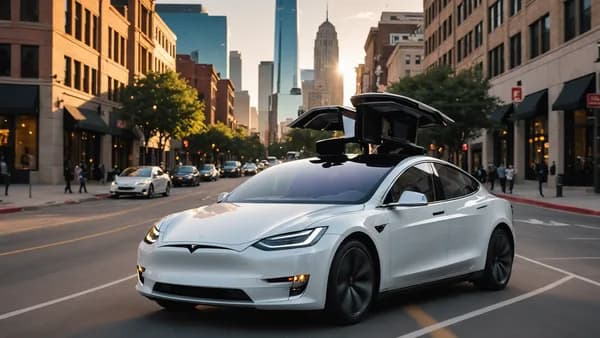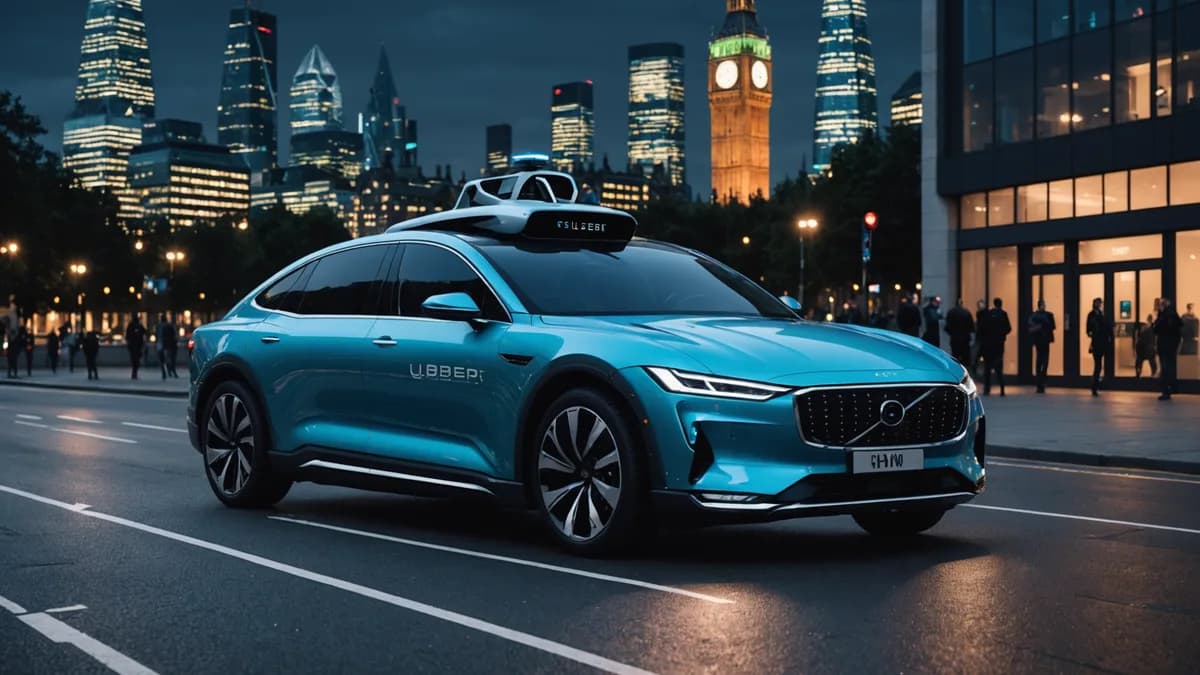
Uber has just launched London's first commercial robotaxi service, beating its longtime rival Waymo to the European market. The milestone, reported by The Verge, marks the culmination of a multi-year plan by Uber and its autonomous driving partner, British startup Wayve. Starting today, a select group of riders can be paired with a Wayve-equipped Ford Mustang Mach-E through the Uber app.
XOOMAR Intelligence
Analyst Take
The vehicles will have safety drivers behind the wheel to monitor the system, which Uber says will gradually be phased out. Crucially, these robotaxis operate without a geofence, the virtual boundary that constrains most self-driving services, and they do not use lidar, relying instead on cameras and radar.
This launch shifts the global robotaxi race into a new phase, moving the battleground beyond the established hubs of the US and China. It's a direct win for Uber's strategy of partnering with multiple tech providers against Waymo's vertically integrated, driver-free model. The pressure is now squarely on Waymo, which has said it will launch in London before year's end.
Uber Deploys Robotaxis on London Streets, Beating Waymo to Launch
The launch is a strategic victory for Uber, which has been plotting a UK launch with Wayve for several years. While the two giants, Uber and Waymo, continue to operate together in cities like Austin and Atlanta, their visions are increasingly divergent. Uber is pushing for a hybrid network of human and robot drivers, while Waymo focuses on a purely driverless system. By launching first, Uber gets to set the standard for the robotaxi experience for thousands of Londoners before its rival can even get started.
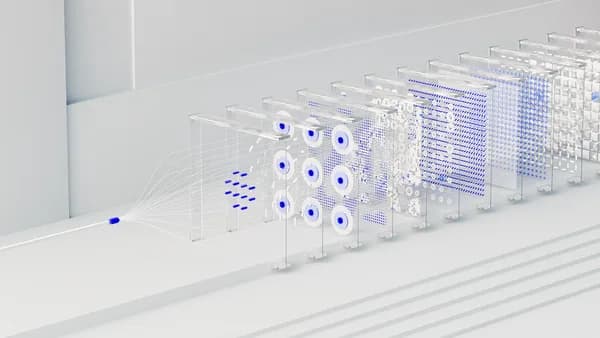
The technology powering these initial rides comes from Wayve's AV2.0 system. The startup, founded by Cambridge PhDs in 2017, describes its approach as a "single, learned AI driver" designed to understand the world, anticipate risk, and adapt to new environments. This contrasts with what Wayve calls the "AV1.0" approach, which relies on hand-engineered software, high-definition maps, and strict rules.
"Wayve’s AV2.0 takes a different path, a single, learned AI driver trained to understand the world, anticipate risk, and adapt to new environments."
For riders, the experience will be integrated into the existing Uber app. Customers can indicate a preference for the new service in their settings. When booking a ride through UberX, Uber Comfort, or Uber Electric, they may be matched with a Wayve autonomous vehicle, though it's not a guarantee.
Why London Became Uber's Crucial Proving Ground
This launch isn't just a market entry. It's an early, high-profile test of a critical hypothesis: is there real appetite for driverless ride-hailing outside the US and China? Most of the world's commercial robotaxis are clustered in those two countries, with a smattering in the Middle East. Europe, with its dense, historic cities and stringent regulations, represents a much harder challenge.
XOOMAR Analysis: By going first, Uber absorbs the initial regulatory and public scrutiny, allowing it to shape the narrative. It also forces competitors like Waymo and Lyft, which is working with China's Baidu on a robotaxi service in London's Brent neighborhood, to play catch-up on Uber's home turf. Success here would validate Uber's partnership-heavy, market-by-market expansion playbook.
The operational reality, however, remains cautious.
- Safety Drivers: Initially, all rides will have a licensed Transport for London safety driver in the front seat. Uber states these drivers will not control the vehicle and will be phased out over time.
- Fleet Operations: The Ford Mustang Mach-E fleet will be maintained by Uber in partnership with UK fleet operator Otto Car. Wayve will remain solely in charge of the autonomous driving software.
- Sensor Suite: The cars use cameras and radar, deliberately omitting the expensive lidar sensors used by Waymo and others. This puts Wayve's vision closer to Tesla's camera‑only approach, as detailed in our previous coverage on Tesla Bets Everything On Camera‑Only Robotaxi Vision.
- No Geofence: Unlike most robotaxi services, there is no programmed geographic boundary. Wayve's system is designed to learn and adapt to new roads on the fly.
The High-Stakes Race for Europe's Robotaxi Future
With Uber's flag now planted, the competitive dynamics in Europe have instantly changed. Waymo must now accelerate its own London launch, which it has promised before the end of 2026. Every day Uber operates solo is a day it collects invaluable real-world data, refines its public relations strategy, and builds rider habits.
The path to scaling this service is riddled with hurdles that go far beyond technology.
Navigating Public Trust and Complex Streets London's streets are a relentless test. They are dense, shared with cyclists and pedestrians, and governed by a cautious regulatory body. A single high-profile incident could stall progress for years. Uber and Wayve must prove their system is not just technically capable, but also socially acceptable.
The Billion-Duel Endgame This is not a side project for Uber. The company has said it plans to spend upwards of $10 billion to build its robotaxi business. Wayve, for its part, is well-funded, having raised $1.2 billion earlier this year from backers including Uber, Nvidia, Stellantis, Nissan, and Mercedes-Benz.
XOOMAR Inference: Watch for two critical inflection points.
- The Removal of Safety Drivers: The moment Uber and Wayve feel confident enough to pull the human monitor from the front seat will be the true commercial and technological milestone. Every month they operate with safety drivers is a month of burning capital.
- Competitive Response: Waymo's launch timeline will tighten. The company may also feel pressure to showcase its own advanced hardware, potentially like the system we examined in Waymo Unveils Liquid-Cooled Brain Inside Its Robotaxis, as a point of differentiation against Uber and Wayve's leaner sensor suite.
The race is no longer about who has the best test fleet in Phoenix or San Francisco. It's about who can build a viable, scalable business on the rainy, crowded streets of a European capital. Uber just fired the starting gun.
The Stakes
- This marks the first commercial robotaxi service in Europe, moving the competitive battleground beyond the US and China.
- Uber's launch sets the early standard for the robotaxi experience in London, giving it first-mover advantage over key rival Waymo.
- The technology employs a novel camera-based, 'geofence-free' approach, potentially influencing future urban self-driving regulations worldwide.
Uber vs. Waymo Robotaxi Approaches
| Company | Launch Status in London | Tech Approach | Driver Policy | Use of Lidar |
|---|---|---|---|---|
| Uber | Launched first, commercial service | Partner with Wayve (AV2.0 system) | Safety drivers present, phased out over time | No, uses cameras & radar |
| Waymo | Planned before year's end | Vertically integrated, self-owned tech | Aims for purely driverless system | Yes (typical) |
Primary Sources & Disclosures

Written by
XOOMAR Insights Team
Research and Editorial Desk
The XOOMAR Insights Team pairs automated research with human editorial judgment. We track hundreds of sources across technology, fintech, trading, SaaS, and cybersecurity, cross-check the facts, and explain what happened, why it matters, and what to watch next. We do not just rewrite headlines. Every article is fact-checked and scored for reliability before it goes live, and we link back to the original sources so you can verify anything yourself.