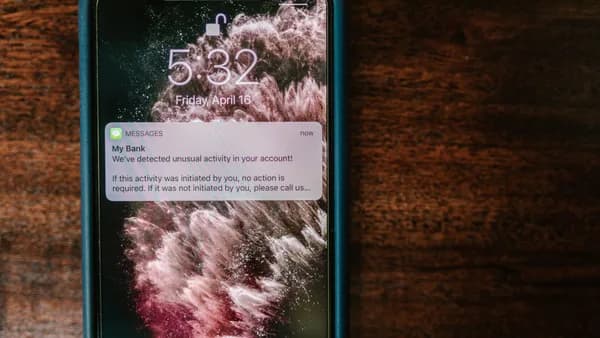
Software flaws can turn into institution-wide cyber exposure when they sit inside cloud services, payment vendors, open-source libraries, or third-party platforms that banks don’t directly control.
XOOMAR Intelligence
Analyst Take
That is the problem behind the Gold Eagle AI cybersecurity initiative, a voluntary White House clearinghouse meant to speed up how software vulnerabilities are found, verified, prioritized, and patched, according to PYMNTS. It is not a banking program. But banks, fintechs, payments companies, and software vendors should treat it as more than a federal cyber experiment.
Gold Eagle was launched under President Trump’s June 2, 2026 executive order, “Promoting Advanced Artificial Intelligence Innovation and Security,” and the White House said the program has already begun collecting vulnerability information across industries, coordinating validation, and helping with software patch deployment.
“Under President Trump’s leadership, the Treasury Department is working hand in hand with the private sector to safeguard our financial institutions, close vulnerabilities, and protect the integrity of the U.S. financial system,” Treasury Secretary Scott Bessent said.
That line is why financial firms should read the launch closely. Voluntary cyber programs can become reference points. Examiners may not require participation, but they can still ask whether an institution considered credible vulnerability intelligence from a federal clearinghouse.
Why banks and fintechs should care about the Gold Eagle AI cybersecurity initiative now
The immediate stake is speed. Software vulnerability management already depends on moving information across vendors, open-source maintainers, infrastructure operators, federal agencies, and enterprise security teams. Each handoff can slow remediation.
Gold Eagle is designed to compress that cycle. The White House describes it as a clearinghouse that uses frontier AI capabilities to reduce duplicative scanning, coordinate validation, and send prioritized remediation information to defenders in government and the private sector, according to the White House.
For financial institutions, the issue is not whether Gold Eagle is aimed only at banks. It is not. The issue is that banks rely on software supply chains that include cloud providers, fintech partners, payment platforms, software vendors, and open-source components. A serious flaw in one layer can create risk across the institution.
That makes the Gold Eagle AI cybersecurity initiative relevant to several bank control functions at once:
- Vulnerability management: How quickly critical flaws are identified, validated, and remediated.
- Third-party oversight: How vendors disclose and fix weaknesses that affect bank systems.
- Patch governance: How firms decide which fixes move first.
- Cyber resilience: How institutions prove they acted on credible threat and remediation information.
For XOOMAR readers tracking adjacent fintech risk, this sits beside operational questions raised in areas such as stablecoin treasury and trapped corporate cash and BNPL users splitting checkout credit across apps. Those are separate stories, but they share one lesson: financial products increasingly depend on technical infrastructure that can become a risk channel.
What Gold Eagle is trying to fix with AI vulnerability detection
Gold Eagle is best understood as a coordination layer. It is meant to pull vulnerability information into a common process, apply AI-assisted analysis, validate findings, and push actionable remediation information back out.
The White House says the effort brings together the Department of the Treasury, Department of Homeland Security through CISA, the Department of War, open-source software partners, and American critical infrastructure companies. PYMNTS and Ballard Spahr describe it as voluntary, which matters. Participation will depend on whether companies trust the rules around data sharing, confidentiality, and practical benefit.
The underlying condition is fragmentation. Vulnerability data can come from vendor disclosures, bug reports, security researchers, agency advisories, scanning tools, and internal security teams. Those channels do not always move in sync.
AI could help by looking for patterns across large sets of vulnerability reports, code signals, and remediation data. But the public materials do not explain which models are being used, how findings are ranked, or which companies are participating. SecurityWeek also reported that the White House has not specified which AI models are being used or how vulnerabilities are prioritized.
That gap is not minor. A clearinghouse only works if participants understand what happens after data enters the system.
How an AI-powered clearinghouse could change the vulnerability workflow
The likely operating model is simple at the surface: participants submit or share vulnerability information, the clearinghouse helps analyze and verify it, and defenders receive prioritized remediation guidance.
The White House says Gold Eagle has already begun to “intake and prioritize identified cybersecurity vulnerabilities from across industries and sectors, coordinate scanning verifications, and ultimately ensure the security of our nation’s software and networks.”
The hard part sits inside the word “prioritize.”
Not every bug deserves the same urgency. Security teams will want to know whether Gold Eagle’s process accounts for exploitability, exposure, affected software, available patches, and the role a system plays in critical operations. The sources do not say that Gold Eagle uses those factors. They only say the program is intended to deliver prioritized and actionable information.
That distinction matters. Discovery is not remediation. Finding a flaw is useful only if software maintainers, vendors, federal agencies, and enterprises can verify it, ship a fix, test the patch, apply compensating controls where needed, and document the response.
Human experts still sit in the middle. AI can flag patterns, reduce duplicate work, and accelerate triage. It can also generate false positives or miss context that a human responder would catch. The White House’s own framing recognizes this as coordination between government and industry, not an autonomous cyber defense system.
How Gold Eagle could shape bank cyber exams without becoming a formal rule
Gold Eagle does not rewrite banking supervision on launch day. It is voluntary, and the public materials do not say banks must participate.
The more interesting path is indirect. Ballard Spahr’s analysis, cited by PYMNTS, says federal banking regulators could eventually view participation in Gold Eagle, or at least consideration of information distributed through it, as consistent with sound cybersecurity risk management.
That would create a familiar compliance pattern: no formal mandate, but a new benchmark. If Gold Eagle becomes a credible source of vulnerability intelligence, examiners could ask whether a bank received relevant information, how it evaluated that information, how quickly it remediated the flaw, and whether affected third parties were pushed to act.
A comparison helps. Participation in a voluntary security channel may remain optional, but ignoring a credible warning can still look weak in hindsight.
For bank boards and risk committees, the practical question is not “Are we required to join?” It is sharper: “If Gold Eagle flags a vulnerability in software we depend on, can we prove we acted reasonably?”
A regional bank payment vendor scenario shows the promise and friction
No public source has provided a bank-specific Gold Eagle case study. So treat this as an illustrative scenario, not a reported event.
A regional bank uses a third-party payment processing platform. That platform includes an open-source component also used by other critical infrastructure operators. A new flaw surfaces through industry reporting and enters the Gold Eagle clearinghouse.
In a useful version of the program, AI-assisted analysis helps connect the flaw to affected software patterns, federal and private-sector experts validate the issue, and remediation guidance reaches the vendor and exposed institutions faster than scattered advisories would.
The response still takes work.
- Vendor confirmation: The payment software provider must verify whether its product is affected.
- Patch testing: The bank must test the fix before deployment, especially if the platform touches live payment flows.
- Compensating controls: If patching cannot happen immediately, security teams need temporary safeguards.
- Audit trail: Risk and compliance teams need documentation showing when the issue was identified, how it was assessed, and when remediation occurred.
- Third-party follow-up: Vendor management teams need proof that the fix worked.
Gold Eagle could shorten the warning-to-action cycle. It cannot remove the operational burden from the bank.
The unresolved questions that could decide whether Gold Eagle earns trust
The White House has not fully explained how private companies will participate, what information-sharing protocols will apply, how sensitive vulnerability data will be protected, or how Gold Eagle will interact with existing cybersecurity programs and information-sharing organizations.
Those are adoption questions, not paperwork questions.
Companies may hesitate to share vulnerability details if they fear legal exposure, reputational damage, or leaks that reveal proprietary systems. AI reliability also matters. A clearinghouse that produces noisy alerts will lose credibility fast. One that shares too little will fail to change behavior.
Governance will decide the program’s value:
- Access: Which companies can participate, and under what conditions?
- Verification: Who confirms that an AI-flagged issue is real?
- Disclosure timing: When does information move from private remediation to broader alerting?
- Data protection: How are sensitive vulnerability details kept away from attackers?
- Regulatory use: Will banking agencies treat Gold Eagle intelligence as a supervisory reference point?
The Gold Eagle AI cybersecurity initiative is a serious signal from Washington: AI is being framed not only as a cyber risk, but as a defensive tool for vulnerability coordination. For financial institutions, the next move is practical. Track whether Gold Eagle guidance starts appearing in CISA, Treasury, FFIEC, or banking agency materials, and be ready to show how credible vulnerability intelligence flows into patching, third-party oversight, and cyber risk governance.
Impact Analysis
- Gold Eagle could speed up how software vulnerabilities are identified, validated, and patched across critical industries.
- Banks, fintechs, and payments firms may face greater scrutiny over whether they use federal vulnerability intelligence.
- The initiative highlights how third-party software and cloud dependencies can create systemic cyber risk for financial institutions.
Primary Sources & Disclosures
- [1]PYMNTS
- [2]White House Launches Gold Eagle Initiative for Unprecedented Cybersecurity Vulnerability Coordination
- [3]White House Launches AI-Driven 'Gold Eagle' Vulnerability Coordination Initiative
- [4]Inside "Gold Eagle": The White House's New AI-Driven Clearinghouse for Critical Infrastructure

Written by
XOOMAR Insights Team
Research and Editorial Desk
The XOOMAR Insights Team pairs automated research with human editorial judgment. We track hundreds of sources across technology, fintech, trading, SaaS, and cybersecurity, cross-check the facts, and explain what happened, why it matters, and what to watch next. We do not just rewrite headlines. Every article is fact-checked and scored for reliability before it goes live, and we link back to the original sources so you can verify anything yourself.