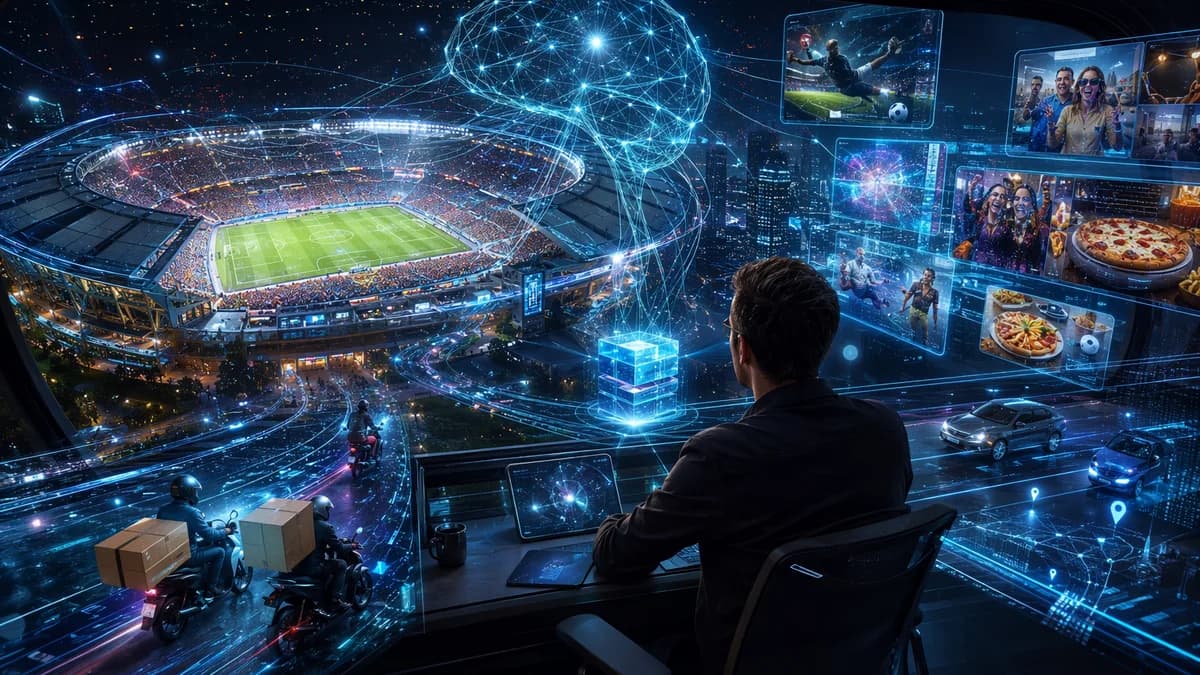
Who really owned the fan relationship at the 2026 World Cup digital economy: Spain, FIFA, or the platforms that turned every surge of emotion into a checkout?
XOOMAR Intelligence
Analyst Take
Spain beat Argentina 1 to 0 in extra time, but the sharper commercial story was off the pitch. Across 39 days and 104 games, the tournament showed how modern fandom now runs through Uber, delivery apps, social feeds, resale markets and payment flows, according to PYMNTS. XOOMAR’s view: the World Cup didn’t just measure attention. It converted attention into behavior.
Did Spain win the trophy while platforms won the habit war?
Yes. And that should bother anyone who still thinks sports consumption begins at kickoff and ends at the final whistle.
FIFA estimated that 5.2 billion people had engaged with the tournament by the end of the round of 16. By the quarterfinals, its digital channels had produced 34 billion impressions and two billion engagements. During the group stage alone, FIFA counted 11 billion video views, 17 billion impressions and 39 million new followers across its platforms.
That is not ordinary audience growth. That is synchronized global behavior at machine scale.
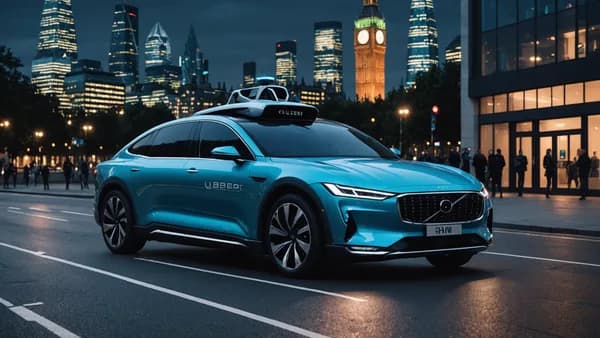
The best detail came from Uber data supplied to PYMNTS: one fan took a 266-mile ride from Arlington to Houston, while another logged trips at 10 venues across all three host countries. Those aren’t just quirky anecdotes. They’re proof that platforms have trained high-intensity consumers to treat distance, time and logistics as problems an app can price.
| Fan impulse | Platform conversion |
|---|---|
| Get to another city | Ride request |
| Watch with friends | Delivery basket |
| React to a goal | Social clip |
| Follow a team | Search, ticket, jersey |
| Keep the night going | Another transaction |
The 2026 World Cup digital economy made one point brutally clear: fandom is now a stack of monetizable micro-decisions.
Why does a 266-mile match-day ride matter?
Because a 266-mile Uber trip sounds absurd until you remember how apps are designed to make absurdity feel available.
A ride from Arlington to Houston would once have required planning, negotiation and a sober look at the map. In an app, it becomes a quote, a button and a driver. That shift matters. Platforms don’t only reduce effort. They reduce hesitation.
XOOMAR’s analysis: the commercial power here is psychological. When the path from desire to purchase shrinks, people don’t merely spend faster. They consider spending in situations they might have rejected before. A trip that once felt like a logistical overreach becomes a premium option.
That doesn’t mean every user is irrational. It means platforms are very good at making friction disappear at exactly the moment emotion peaks. A semifinal. A last-minute ticket. A friend texting from another venue. A fan thinking, for a few seconds, that “too far” is negotiable.
This is the same consumer reflex we track in Uncertainty Economy Hooks Apps on Suspense and Risk: when timing, suspense and instant action collide, the app often wins the argument before the user has finished making it.
How did pizza and late nights turn attention into revenue?
The World Cup turned meals into match infrastructure.
In India, late matches pushed pizzas, burgers, fries and beverages deep into the night. One Chandigarh customer placed a 16,444-rupees ($140) finger-food order. In Israel, Wolt reported match-hour orders up 20%, family pizzas up 35% and ice cream up 44%. Uber counted more than 10 million ranch-dressing delivery orders during the tournament, followed by water, electrolytes and Tylenol among convenience-store orders.
Deliverect data sharpened the point. The company said it recorded the busiest minute in its history just before kickoff in the Argentina vs Spain final, at 20:28, when orders flowed at more than three times the platform’s average pace for 2026, a 209% surge above a normal minute of the year.
“For ninety minutes the world stopped, but restaurants did not. What we saw during this World Cup goes beyond a record: ordering food has become part of how the world gathers to watch football, as much a part of the ritual as the shirt or the anthem,” said Zhong Xu, CEO of Deliverect.
The data also showed how attention changes basket size. During the final, the average order in the host market of the winning side was 17% larger than on a normal Sunday. Before the final, the pre-kickoff hour was up 30%. At England’s semifinal, that hour brought almost 8,000 extra orders, a 35% jump on a normal evening.
This is the real commercial trick. Sports don’t just create demand. They synchronize it. Millions of people feel hungry, excited, rushed and social at the same time. Platforms exist to catch that exact moment.
What are platforms really selling when fans hit buy now?
They’re selling a shorter distance between wanting and spending.
The product looks like food, transport or a jersey. The deeper product is instant conversion. A fan wants to be there, look affiliated, feed the room or extend the night. The platform turns that feeling into a payment before the mood cools.
Merchandise showed the same pattern. By kickoff, Nike national-team kits had sold 2.5 times more than at the comparable point in 2022, according to Reuters data cited by PYMNTS. Adidas, which outfitted both finalists, booked roughly 250 million euros ($285 million) in World Cup products in the first quarter and expected a similar second quarter.
Tickets pushed the logic to its extreme. Al Jazeera, citing Reuters, reported that FIFA’s resale platform had final tickets available from a little less than $10,000 to as high as $2.3 million less than 24 hours before kickoff. SeatGeek said the average final ticket listed for more than $11,000 as of Friday, making it the most expensive event the platform had sold, 8 percent above the 2024 Super Bowl.
Sports fandom is ideal for this model because it supplies urgency, identity and fear of missing out without the platform having to manufacture them. The match does that work. The app just presents the button.
Didn’t digital convenience also make the World Cup easier to experience?
Of course. The countercase is strong.
Fans from 122 countries used Uber during the tournament, according to PYMNTS. Uber also counted 35,000 shuttle riders, and a Dallas driver completed more than 70 stadium trips. Those are real logistics at a massive event, not just convenience theater.
Food delivery also produced measurable restaurant activity. Deliverect said England’s three matches alone generated nearly £1 million in extra takeaway revenue. On England’s Ghana match day, every one of the UK’s ten biggest delivery chains recorded more orders than normal. On Spain’s semifinal day, Deliverect said not a single major food category declined.
So no, the problem is not convenience. Convenience helps people move through crowded cities, organize watch parties and participate from couches, bars and hotel rooms.
The problem is a commercial system that keeps nudging participation toward overspending. That distinction matters. A tool helps you do what you meant to do. A behavioral machine keeps asking whether you want to do more, pay more and decide faster.
Who owns the fan relationship after a tournament like this?
This is the question sports organizers, cities and merchants should be asking now.
FIFA owns the tournament. Broadcasters own chunks of attention. Teams own loyalty. But platforms sit closest to the transaction. They see the ride, the delivery basket, the search, the resale click, the lost-and-found request and the late-night convenience order.
The supplied data does not show exactly how each company used those signals. That remains unclear. But it does show the breadth of the signals themselves: travel behavior, match-hour ordering, pre-kickoff spikes, venue movement and product demand.
That is why data governance is not a side issue. XOOMAR readers following the wider fight over platform data access should also read Big Tech Blocks Digital Services Act Data Access in EU Test. Different context, same strategic pressure: whoever controls the behavioral record gains power over everyone trying to reach the customer later.
For cities, that means mobility and delivery partners aren’t merely vendors. For merchants, it means the customer relationship can migrate to the interface that handles the order. For fans, it means every “quick” tap leaves a trail.
Before the next World Cup, who should set the rules of the tap?
Fans should enjoy the spectacle without pretending every transaction is harmless.
Set a match budget before the adrenaline hits. Decide whether the next ride, resale ticket or delivery order is part of the plan or just the platform catching you at peak emotion. That sounds basic. It’s also the only defense against interfaces built to collapse the pause between impulse and payment.
Cities and event organizers need their own discipline. They should demand clearer terms from mobility, delivery and payments partners around pricing, operational strain and data use. Not because platforms are villains, but because public events shouldn’t quietly become private behavioral laboratories.
The next World Cup will crown another champion on the field. The larger contest will happen in the margins, in ride requests, food baskets, ticket queues and checkout screens.
Use the platforms. Don’t let them coach the whole match.
The Bottom Line
- The tournament showed that global sports attention is increasingly monetized by platforms, not just organizers or broadcasters.
- FIFA’s massive engagement numbers reveal how live events now create synchronized digital behavior at global scale.
- Uber and other apps turned fan emotion into real-world spending across travel, food, social media and commerce.
Who Captured World Cup Value
| Actor | What They Won | Evidence |
|---|---|---|
| Spain | The trophy | Beat Argentina 1-0 in extra time |
| FIFA | Mass global attention | 5.2 billion people engaged by the end of the round of 16 |
| Platforms | Fan behavior and transactions | Uber rides, delivery baskets, social clips, ticket searches and payments converted emotion into purchases |
2026 World Cup Digital Scale
Primary Sources & Disclosures

Written by
XOOMAR Insights Team
Research and Editorial Desk
The XOOMAR Insights Team pairs automated research with human editorial judgment. We track hundreds of sources across technology, fintech, trading, SaaS, and cybersecurity, cross-check the facts, and explain what happened, why it matters, and what to watch next. We do not just rewrite headlines. Every article is fact-checked and scored for reliability before it goes live, and we link back to the original sources so you can verify anything yourself.