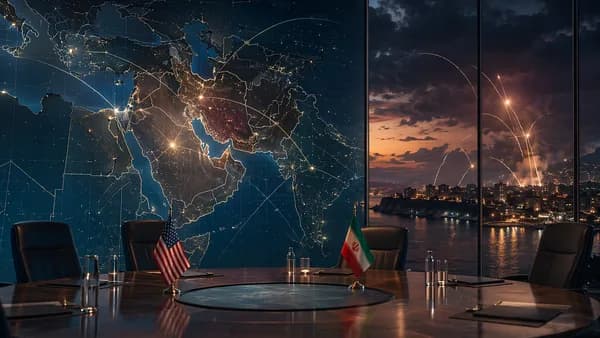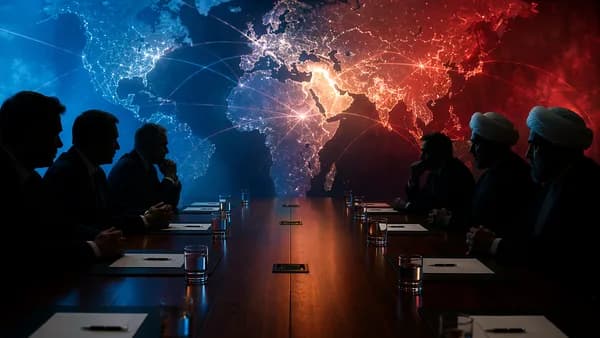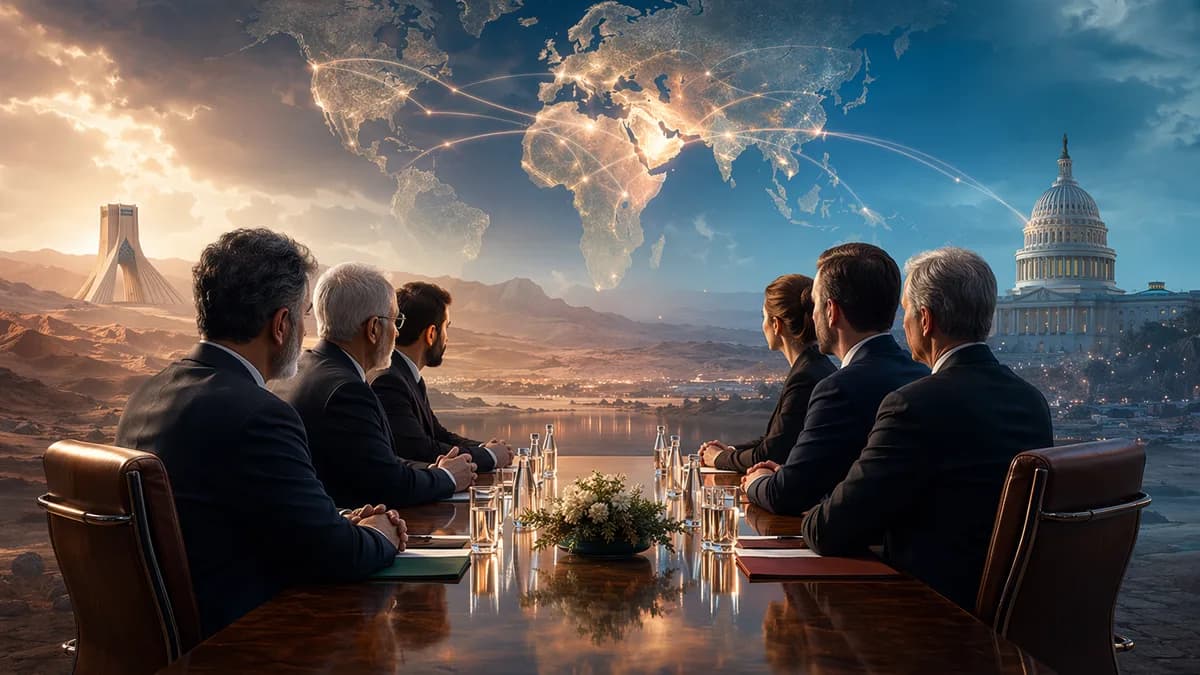
Vice President JD Vance says the U.S. has “laid a successful foundation” in Iran peace talks, but the harder test may now be whether Congress lets President Donald Trump turn that foundation into a deal.
XOOMAR
Summary
That is the central tension in the Switzerland talks: diplomacy with Tehran is moving, but the domestic coalition needed to sustain it is already cracking. Vance said the Strait of Hormuz is open and that Iran has agreed to allow international inspection of its nuclear program, according to Time. Those are material steps. They also land inside a political minefield.
Vance is selling Iran peace talks, but Congress may be the harder negotiation
Vance is trying to frame the first phase of the Iran peace talks as progress without pretending the final structure is finished. That distinction matters. A framework can calm a crisis for a few days. A durable nuclear and security agreement needs enforcement, financing, congressional tolerance, and buy-in from actors who do not share Washington’s timeline.
The most immediate audience is not only Tehran. It is Republican lawmakers who are warning that the administration may be giving away too much before Iran makes verifiable concessions.
“We set the foundation. We haven't built the house, but we've laid a successful foundation to get to a good place for the American people,” Vance said.
The question for Vance: can he keep negotiations alive while proving to hawks that the deal is not another executive-only bargain vulnerable to collapse?
The talks now sit inside the 60-day ceasefire created by the memorandum of understanding signed last week by the U.S. and Iran. That clock matters because every unresolved issue becomes a pressure point. XOOMAR previously covered that deadline in Vance Iran Talks Push Hormuz Deal Onto a 60-Day Clock, and the latest comments show why the timeline is both useful and dangerous. It creates urgency, but also compresses scrutiny.
The deal’s measurable stakes: 60 days, $300 billion, and a congressional veto fight
The framework described by Time includes several concrete pieces:
- 60-day ceasefire: The window for negotiating a longer-term agreement.
- International inspections: Iran has agreed to allow inspection of its nuclear program, according to Vance.
- Strait of Hormuz: Vance said it is currently open.
- Economic terms: The draft framework includes unfreezing Iranian assets, lifting sanctions on Iranian crude oil exports, and creating a $300 billion fund for Iran’s economic rebuilding with help from regional partners.
- Nuclear pledge: Iran would promise not to produce any nuclear weapon.
The problem is not that these terms are vague in the abstract. The problem is that the parts most likely to make or break the deal are still unresolved.
Time reports that it is not clear whether Israeli forces’ withdrawal from southern Lebanon is a condition for a final deal, who would pay for the $300 billion rehabilitation fund, or how the U.S. would ensure that unfrozen assets and fund money would not be used to support terrorist activity.
Congress has a formal role here. Under a 2015 law, the president must submit any nuclear-related agreement to Congress within five days after it is finalized. Congress then has 30 days to vote on a resolution of disapproval. A simple majority in both chambers can pass that resolution. If lawmakers also overcome a presidential veto with a two-thirds majority, the administration would be barred from lifting sanctions or providing economic relief.
That structure turns congressional skepticism into a negotiating variable. How much value does a U.S. promise have if Tehran thinks Congress can later weaken the bargain?
Republican doubts leave Vance boxed in between diplomacy and Iran hawkishness
Vance’s political problem is sharp. He has to defend a negotiation with Iran without sounding relaxed about Iran.
Sen. Ted Cruz said on his podcast that the memorandum of understanding “doesn’t make any sense.” He also attacked the economic component directly.
“The idea that we would have effectively a Marshall Plan for Iran is not remotely in America’s interests,” Cruz said.
Cruz added:
“Giving people who want to kill you billions and billions of dollars, from any source, historically has proven an enormous mistake.”
Rep. Don Bacon also opposed the deal in a social media post, according to Time. Sen. Lindsey Graham went further, saying on CBS News that he expected the diplomatic effort is “going to fail,” and that the U.S. would eventually take control of the Strait of Hormuz by force and start charging tolls.
“If Iran contests control of the Strait of Hormuz by the United States, we will obliterate them,” Graham said.
That is not routine grumbling. These are Trump-aligned Republicans challenging the core premise of the president’s diplomacy.
The likely flashpoints are clear:
| Issue | Why lawmakers are objecting |
|---|---|
| Sanctions relief | Critics worry economic relief could arrive before verified concessions. |
| Nuclear inspections | Vance says Iran agreed to inspections, but final access terms remain unclear. |
| $300 billion fund | Time reports uncertainty over who pays and how the money is controlled. |
| Lebanon and Israel | Israeli military action in Lebanon already disrupted the ceasefire environment. |
| Hormuz | Iran closed the Strait after the Lebanon strike, then Vance said it is currently open. |
The Vance strategy depends on making the deal look strict, reversible, and enforceable. If he cannot, congressional opposition becomes part of Tehran’s calculation.
Tehran, Israel, and lawmakers are reading different agreements
The same memorandum looks different depending on who is reading it.
For the Trump Administration, the visible gains are de-escalation, an open Strait of Hormuz, and a path back to nuclear inspections. For Republican skeptics, the visible risk is that Iran gets sanctions relief, frozen assets, and access to a rebuilding fund before the U.S. has enough proof of compliance.
For Iran, the source material supports only a narrower conclusion: Tehran has agreed to allow inspections and has accepted a framework involving Hormuz and nuclear limits. Its broader political motives are not stated in the available source material, so they should not be overstated.
For Israel, the pressure point is Lebanon. Over the weekend, Israel launched a deadly strike in Lebanon that killed at least 16 people, according to local authorities cited by Time. Iran then closed the Strait of Hormuz over what it called a violation of the agreement. Trump responded by calling on Iran to stop its proxies in Lebanon from “causing trouble” and threatened that the U.S. would “hit Iran very hard.”
The key question: is this deal mainly about Iran’s nuclear program, or is it also becoming a test of whether Washington can manage Lebanon, Israel, Hormuz, and sanctions at the same time?
That question tracks with our earlier analysis in Hormuz Closure Turns US-Iran Talks Into Leverage Test, where the waterway became the immediate measure of whether the ceasefire had any operational force.
The 2015 nuclear accord still shadows Vance’s pitch
Vance’s argument cannot escape the 2015 Iran deal. Time notes that international inspections were part of the agreement former President Barack Obama secured with Iran in 2015, and that Trump withdrew the U.S. from that deal in 2018 during his first term.
That history gives both sides ammunition.
Supporters of diplomacy can point to inspections as a necessary safeguard. Skeptics can point to the U.S. withdrawal as proof that any deal built mainly by the executive branch can be reversed. Iran can question whether Washington can keep its commitments. Congress can argue that it needs to scrutinize the details before economic relief begins.
A technically detailed agreement can still fail if it lacks domestic durability. That is the real lesson hanging over Vance’s press conference.
For markets and industry, the signal is policy uncertainty, not relief
The source material does not report oil prices, insurance moves, shipping costs, or investor reaction. So the grounded market read is narrower: any reader exposed to energy, shipping, sanctions compliance, or regional security should treat the next phase as a policy-risk event, not as a settled de-escalation.
The facts that matter are visible:
- Hormuz is open now, according to Vance.
- Hormuz was closed by Iran after the Lebanon strike, according to Time.
- Sanctions on Iranian crude oil exports are part of the potential relief package.
- Congress could block sanctions relief if it passes and sustains a resolution of disapproval.
That is enough to keep corporate planning cautious without inventing a market reaction. A deal that changes sanctions enforcement or keeps Hormuz open would matter. A deal that collapses under congressional pressure would matter too. The evidence is not in prices here. It is in the policy mechanics.
Three paths now define Vance’s Iran talks
The most plausible near-term paths are not equally stable.
First, Vance could land a narrow pause: inspections access, continued Hormuz reopening, and limited economic steps while the hardest issues move into technical talks. That would cool the crisis but leave hawks unsatisfied.
Second, Congress could harden against the framework. If Cruz, Graham, Bacon, and other skeptics gain momentum, the White House may have to narrow the deal or dare lawmakers to block it.
Third, a fragile bargain could survive. For that to happen, Vance has to show that verification is real, sanctions relief is conditional, the $300 billion fund has controls, and Lebanon-related escalation will not repeatedly break the ceasefire.
The next evidence to watch is specific, not rhetorical: the inspection terms, the funding source for the rehabilitation package, the treatment of frozen assets, and whether Congress receives a deal it can review before opposition becomes irreversible. If those details stay vague, Vance’s “successful foundation” may become the easiest part of the Iran peace talks.
Impact Analysis
- The talks could shape U.S.-Iran relations and nuclear oversight beyond the current ceasefire.
- Congressional resistance may determine whether any deal survives politically in Washington.
- The open Strait of Hormuz remains critical for global energy stability and security.
Key Positions in the Iran Talks Debate
| Actor | Position | Main Concern |
|---|---|---|
| Vice President JD Vance | Says the U.S. has laid a successful foundation for talks | Keeping negotiations alive while building support for a durable deal |
| Congressional skeptics | Warn the administration may be conceding too much | Ensuring Iran makes verifiable concessions before any agreement advances |
| Iran | Has agreed to allow international inspection of its nuclear program | Securing a deal within the 60-day ceasefire window |
Primary Sources & Disclosures

Written by
XOOMAR
Data desk
XOOMAR publishes free market data from primary sources, with an open API. When something we publish is wrong, it's corrected in place.